Fire-Damaged Structures: Material Standards Explained
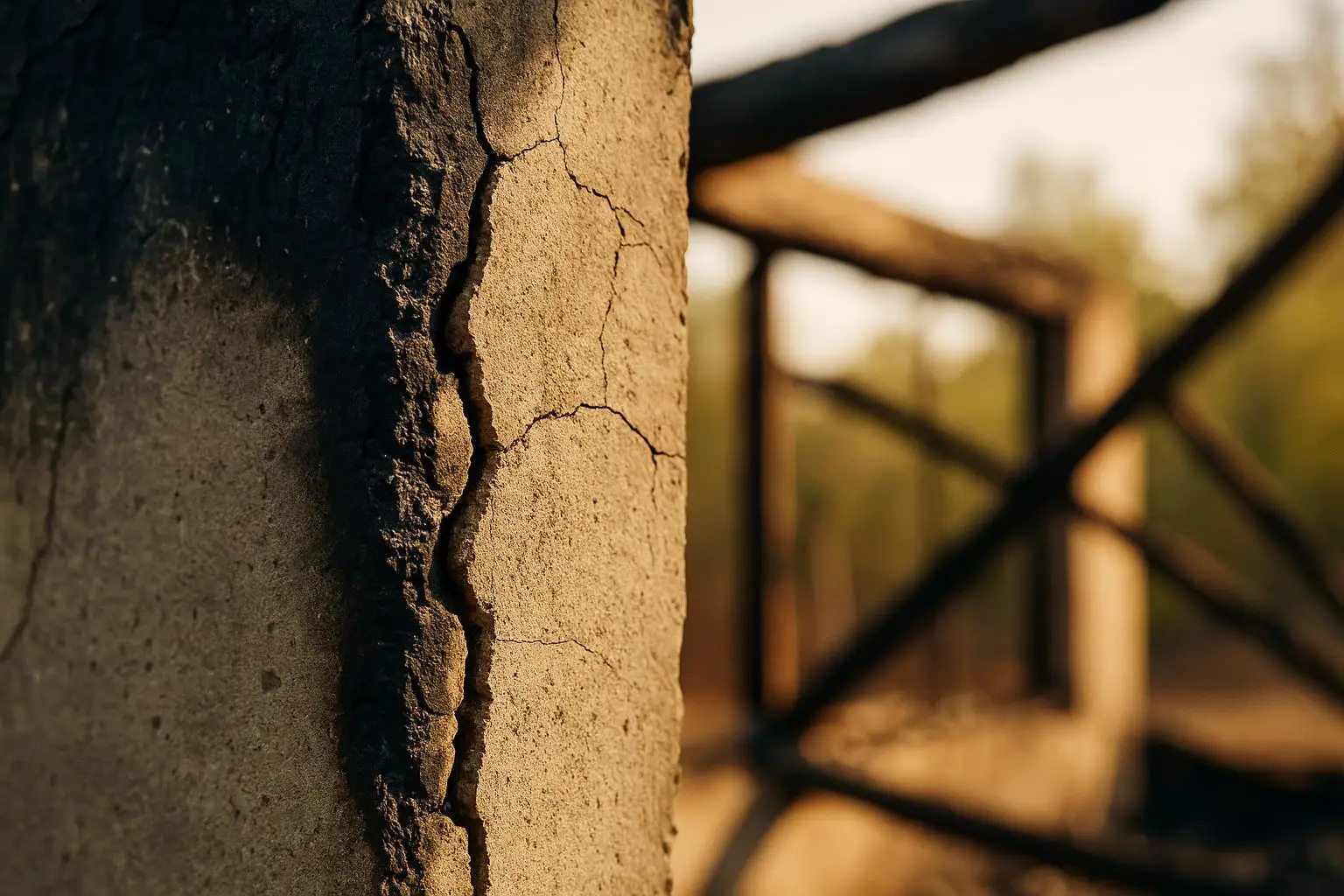
When a building is damaged by fire, its structural safety is often compromised. Materials like concrete, steel, wood, and masonry react differently to extreme heat, and proper restoration requires strict adherence to safety standards and building codes. Here’s what you need to know:
- Material Standards Matter: Guidelines ensure repairs restore safety and prevent future failures. Standards like ASTM and Intertek test fire resistance and structural performance.
- Building Codes Guide Repairs: Codes like the ICC (IBC) require that repairs meet modern safety requirements, often stricter than when the building was originally constructed.
- Material-Specific Repairs:
- Concrete: Noncombustible but prone to spalling and cracking. Damage is assessed using load tests and ultrasonic methods.
- Steel: Loses strength in high heat; repairs often involve re-coating or replacement.
- Wood: Chars under fire, weakening its structure. Char depth determines repair or replacement.
- Masonry: Highly fire-resistant but may suffer cracking or mortar deterioration.
- Compliance is Key: Repairs must meet updated codes to ensure safety and avoid insurance claim rejections.
- Expert Help: Certified professionals are essential for assessing damage, adhering to codes, and ensuring safe restoration.
For fire-damaged properties, following these standards is critical to restoring safety and structural integrity.
After the Fire: Can These Concrete Structures Be Saved?
Common Building Materials and Fire Resistance
Understanding how different materials respond to fire is crucial when deciding whether to salvage, reinforce, or replace them. Below is an overview of how various materials behave under fire conditions and the standards used to evaluate their performance.
Concrete: Properties and Standards
Concrete stands out as one of the most fire-resistant materials in construction. Being noncombustible, it doesn’t ignite or burn, making it a reliable choice for structural repairs. Its low thermal conductivity also helps preserve its structural integrity, even under high temperatures.
That said, fire can still cause damage to concrete. A common issue is spalling, where the surface flakes or chips off due to internal pressure created when moisture inside the concrete turns to steam. Rapid temperature shifts can also lead to cracking, weakening the material.
When assessing fire-damaged concrete, professionals rely on standards like ASTM E119 and UL 263 to determine fire endurance ratings. These tests help engineers decide whether the damage can be addressed with patching or if replacement is necessary. For example, concrete columns with surface spalling can often be repaired if load testing confirms the core remains strong.
Fire resistance ratings for concrete assemblies typically range from one to four hours, depending on factors like thickness and reinforcement, making it a dependable option for restoring fire-damaged structures.
Steel: Protection and Testing Methods
Steel presents unique challenges in fire-damaged buildings. While it is noncombustible, it loses strength when exposed to high temperatures. This can result in warping, buckling, or a reduction in its load-bearing capacity, compromising the integrity of beams and columns.
While visible damage is often easy to spot, subtler issues require specialized testing, such as hardness testing or metallurgical analysis. Standards like ASTM E119 and guidelines from the International Building Code (IBC) help determine whether fire-damaged steel can be salvaged or must be replaced.
In cases where salvage is possible, spray-applied fire-resistive materials (SFRMs) can be used to meet code requirements. Steel beams with minor deformations can often be straightened and re-coated, but severely damaged components will need to be replaced. The priority is ensuring any retained steel can safely handle the loads it was designed for.
Wood: Fire Damage and Repair Issues
Wood, being inherently combustible, poses complex challenges in Fire Damage Restoration assessments. When exposed to fire, it chars, forming a protective layer that slows further burning. However, this charring reduces the effective cross-sectional area of the wood, weakening its structural capacity.
To assess fire-damaged wood, professionals measure the depth of the char and calculate the remaining material’s load-carrying ability. If the damage is limited, the charred layer can be removed, and the remaining wood can be reinforced to meet safety codes.
Building codes often require that replacement wood meet updated standards. Fire-retardant-treated wood, approved as a Class B roof covering in structural applications, offers improved fire resistance while maintaining the usability of standard lumber. ASTM testing is commonly used to determine flame spread ratings for wood products, which are referenced in the IBC to ensure compliance during repairs.
Masonry: Fire Resistance and Repair
Masonry materials like brick, concrete block, and stone are highly resistant to fire. Since they are noncombustible, these materials can endure high temperatures without igniting, making them a solid choice for fire-resistant construction.
However, masonry can still sustain damage from fire, including cracking, spalling, and deterioration of mortar joints. Mortar, often the weakest part of a masonry assembly, tends to degrade faster under extreme heat than the masonry units themselves.
Standards like ASTM E119 are used to determine fire resistance ratings for masonry walls, which typically range from one to four hours depending on thickness and construction details. Repairing fire-damaged masonry often involves replacing damaged units, repointing mortar joints, or, in severe cases, rebuilding sections. One advantage of masonry is that individual units can be replaced without compromising the integrity of the entire structure, making repairs more cost-effective than full replacement.
| Material Type | Fire Performance | Common Fire Damage | Assessment Method |
|---|---|---|---|
| Concrete | Noncombustible and highly durable | Spalling, cracking | ASTM E119, UL 263, load testing |
| Steel | Noncombustible but heat-sensitive | Warping, buckling, reduced strength | Visual inspection, hardness testing |
| Wood | Combustible; chars under fire | Charring, reduced cross-section | Char depth measurement, ASTM E84 |
| Masonry | Noncombustible and highly durable | Cracking, mortar deterioration | ASTM E119, unit-by-unit inspection |
Accurate assessments of these materials are essential for planning repairs and ensuring compliance with safety codes. These evaluations guide the choice of repair methods, which will be explored further in the next section.
For expert assistance, Total Care Restoration‘s certified technicians are available 24/7 to evaluate and restore fire-damaged properties. Call them anytime at (786) 610-6317 for professional guidance.
Standards and Regulations for Fire-Damaged Repairs
Restoration efforts for fire-damaged structures must adhere to strict building codes and safety standards to ensure the safety and well-being of occupants. These standards provide a clear roadmap for property owners and contractors to navigate the restoration process while meeting current safety requirements. By aligning repairs with modern codes, buildings can be restored to meet today’s safety benchmarks.
ICC (IBC) Requirements
The International Building Code (IBC) serves as the foundation for Fire Damage Restoration a Step By Step Guide, with Chapter 7 addressing fire-resistance-rated construction. This section outlines the requirements for structural elements, walls, partitions, and horizontal assemblies to ensure they meet updated safety standards.
When restoring fire-damaged structures, contractors must use materials that match or exceed the fire-resistance ratings of the original components, typically measured in hours. These ratings are determined based on factors such as the building’s occupancy type, height, and the amount of combustible material present. For example, a warehouse storing flammable goods will require different fire-resistance specifications than an office building. Structural elements must be able to withstand the fire severity expected from the complete combustion of the building’s contents.
Building codes are updated every three years, and restoration work must comply with the latest version adopted by the local jurisdiction. This can sometimes mean adhering to stricter requirements than those in place during the original construction.
For instance, the IBC allows unprotected roof framing or coverage with an incombustible ceiling for roof structures more than 20 feet above floors with low combustible loads (less than 6 pounds per square foot). However, areas with higher combustible loads require proportionally greater fire-resistance ratings. These guidelines ensure that restored structures are both safe and reliable.
ASTM and Intertek: Fire Testing Standards
In the United States, ASTM E119 and UL 263 are the primary standards for fire resistance testing. These protocols establish consistent methods to evaluate how long materials and assemblies can endure standard fire exposure without failing.
Both standards set clear failure criteria, which include loss of structural integrity, excessive temperature rise on the unexposed surface, or the passage of flames and hot gases through the material. By subjecting materials to a standard fire curve, these tests simulate real-world conditions and validate performance.
When choosing replacement materials, contractors must ensure they are tested and rated according to these standards. For example, if a building originally featured steel beams coated with spray-applied fire-resistant material rated for two hours, the replacement materials must meet or exceed that rating.
Documentation such as test reports, certifications, and installation specifications is crucial for confirming compliance. A practical example is Type X gypsum board, which undergoes chemical treatment and rigorous testing to achieve enhanced fire resistance compared to standard drywall. This makes it a common choice for fire-resistant wall and ceiling assemblies.
NFPA: Safety During Restoration Work
Beyond material standards, safety protocols during restoration are equally critical. NFPA 241 outlines safety measures for construction, demolition, and restoration projects involving fire-damaged structures. This standard addresses the unique hazards these projects pose, such as structural instability, hidden fire damage, hazardous materials, and potential environmental risks.
NFPA 241 mandates that restoration work be overseen by qualified personnel who understand the specific risks associated with fire-damaged buildings. This is vital because fire damage often weakens structural components in ways that may not be immediately visible, and hidden damage can complicate restoration efforts.
Key safety provisions include conducting a structural assessment before starting work, shoring and bracing unstable elements, and safely removing damaged materials. Additionally, the standard emphasizes protecting workers from exposure to hazardous substances like asbestos or lead, which are common in older buildings.
Fire prevention during restoration is another major focus. NFPA 241 requires that fire detection and suppression systems remain operational throughout the project, as restoration activities can introduce new fire risks. Workers must also receive training on the specific hazards they may encounter during the restoration process.
The standard extends its scope to protect surrounding structures and the public. Measures such as fire watches, hot work permits, and coordination with local fire departments ensure that restoration activities don’t compromise the safety of nearby areas.
For immediate assistance with fire restoration, Total Care Restoration offers 24/7 services and direct insurance billing. Call (786) 610-6317 to ensure your repairs meet all required codes and standards.
Repair Methods for Fire-Damaged Structures
Restoring structures damaged by fire requires careful evaluation, tailored repair strategies, and strict adherence to building codes. It’s essential to address both the visible damage and any hidden structural issues that could compromise long-term safety. Selecting the right materials and methods for each part of the structure is key to ensuring a safe and durable restoration.
Damage Assessment Methods
A thorough damage assessment is the first step in the repair process. This involves both visual inspections and non-destructive testing (NDT) to uncover visible and hidden damage. The goal is to determine whether the structure is safe for a detailed inspection and identify any temporary support needs.
For concrete structures, NDT methods like Schmidt (rebound) hammer tests measure surface hardness, while ultrasonic pulse velocity testing can detect internal cracks. Drilling resistance tests help assess the depth of heat damage. These techniques reveal areas where concrete strength has been compromised, even if surface damage seems minor.
Steel components require different evaluation methods. Indentation hardness tests provide quick field measurements of strength loss, while magnetic particle testing identifies stress cracks caused by the fire. Portable hardness testers are useful for on-site strength evaluations, but laboratory testing may be necessary for critical load-bearing elements.
Wood-framed structures benefit from moisture meter readings to detect water damage from fire suppression efforts. Resistance drilling measures the depth of char penetration, while visual inspections identify warped or twisted members that may have lost their structural integrity.
Masonry structures require inspection of both the masonry units and mortar joints. Infrared thermography can locate areas where the bond between bricks and mortar has weakened due to thermal stress during the fire.
All inspections should be well-documented for insurance purposes and code compliance. This includes detailed reports, photographs, NDT results, material records, and permits. Keeping these documents organized ensures smooth communication with local authorities and insurance adjusters.
Once the damage is thoroughly assessed, the next step is to apply repair methods suited to each material type.
Repair Approaches by Material Type
Each material reacts differently to fire damage, so repair strategies need to match the material’s properties and the extent of the damage.
Concrete repairs focus on restoring strength where heat has reduced compressive capacity. Damaged sections with spalling or deep cracks must be removed and replaced with high-strength concrete. Surface-level damage can often be fixed with patching compounds, while severe damage may require fiber-reinforced polymers for additional support. Core sampling and ultrasonic testing guide decisions on whether to replace or reinforce damaged areas.
Steel repairs depend on the heat exposure and resulting deformation. Some steel members can be straightened and reinforced with additional steel plates, but others may need complete replacement. It’s crucial to restore fire protection coatings to their original specifications and test for yield strength loss before finalizing the repair approach.
Wood repairs involve removing all charred material and replacing or reinforcing damaged components. Fire-retardant treatments can be applied to new wood to improve future resistance. The depth of char penetration, measured during the assessment, determines whether partial repairs are sufficient or full replacement is needed.
Masonry repairs focus on replacing damaged bricks or blocks and repointing mortar joints where bond strength has been compromised. Hidden cracks and weakened bonds must be addressed, and steel reinforcement ties may be added for stability in heavily damaged walls.
| Material | Assessment Method | Primary Repair Approach | Key Consideration |
|---|---|---|---|
| Concrete | Ultrasonic testing, core sampling | Remove and replace damaged sections | Depth of heat penetration |
| Steel | Hardness testing, strength analysis | Reinforce or replace members | Loss of yield strength |
| Wood | Resistance drilling, visual inspection | Replace charred members | Extent of char penetration |
| Masonry | Visual assessment, infrared scanning | Replace units, repoint mortar | Bond strength integrity |
After repairs, ensuring compliance with local codes is the final step in the restoration process.
Meeting Local Code Requirements
Compliance with local building codes and fire safety regulations is mandatory throughout the restoration process. These codes dictate minimum fire-resistance ratings, approved materials, and installation methods based on the building’s type and fire risk assessment.
One challenge is that current codes are often stricter than those in place when the building was originally constructed. Repairs must meet the latest code requirements, which may require upgrades beyond simply restoring the structure to its pre-fire condition.
Early communication with local code officials is crucial. Building departments typically require detailed repair plans, material specifications, and compliance documentation before issuing permits. This upfront coordination ensures that all repairs align with current safety standards.
Material selection must meet or exceed the required fire-resistance ratings. For example, if the original construction used steel beams rated for two-hour fire resistance, replacements must match or surpass that performance.
Inspections are required at multiple stages during restoration, including after demolition, during structural repairs, and before final occupancy approval. These checkpoints confirm that all work complies with approved plans and code requirements.
Working with Commercial simplifies the process. Companies like Total Care Restoration specialize in fire damage assessment, code compliance, and safe repair methods. Their certified technicians are well-versed in current standards and work closely with local authorities to ensure a smooth restoration process.
"Alexander’s team at Total Care Restoration were nothing short of amazing. The team was always on time, respectful, clean. They protected my home as if it was their own to make sure that other damage did not occur. They explained everything in detail and took photos of every step. Words cannot express the gratitude my family and I will always have for Total Care Restoration and their entire team. We are immensely grateful."
For expert assistance with Fire Damage Restoration Guide and code-compliant repairs, contact Total Care Restoration at (786) 610-6317. Their certified team ensures that all work meets safety standards while coordinating directly with insurance providers to make the recovery process as seamless as possible.
Conclusion: Safe and Proper Restoration
Restoring a fire-damaged structure requires strict adherence to safety standards designed to protect both the building’s integrity and the lives of its occupants. This step-by-step approach ensures that every aspect of the repair process – from initial evaluation to the final touches – aligns with crucial safety regulations.
Every material involved in the construction – be it concrete, steel, wood, or masonry – demands a tailored assessment and repair strategy to regain or surpass its original fire resistance. Navigating these repairs often involves complying with modern building codes, which can be more stringent than those enforced at the time of the structure’s original construction. This is where professional expertise plays a critical role. Careers collaborate with local officials, select materials that meet current codes, and meticulously document repairs to meet both regulatory and insurance requirements.
The certified technicians at Total Care Restoration are experts in assessing fire damage and employing restoration techniques that comply with up-to-date safety standards. Their team works directly with insurance providers, simplifying the recovery process for property owners while ensuring every repair is executed to the highest standard.
Cutting corners on material standards or skipping compliance checks can lead to severe consequences, including unsafe structures, legal liabilities, and rejected insurance claims. Property owners are strongly encouraged to seek professional help immediately after a fire. This ensures a thorough assessment, proper documentation, and repairs that not only meet safety codes but also restore the property’s value and security.
For expert assistance with fire damage restoration, reach out to Total Care Restoration’s 24/7 emergency response team at (786) 610-6317. They’re ready to help you rebuild with safety and peace of mind.
FAQs
How do different building materials react to fire damage, and what does this mean for repairs?
When a fire strikes, different building materials react in distinct ways, which influences how repairs are handled. Take wood, for instance – it often becomes charred or structurally compromised. Metal, on the other hand, might warp or lose its strength when exposed to extreme heat. Even concrete, known for its resistance to fire, isn’t invincible; it can crack or experience spalling under intense temperatures.
The repair process hinges on the extent of damage to each material. In cases where components are too damaged to be salvaged, full replacement might be necessary. However, some materials can be restored using specialized methods. Throughout the repair process, it’s critical to adhere to local building codes and material standards to ensure everything is safe and compliant. If you’re looking for expert help, Total Care Restoration offers professional services to bring your property back to its best.
How do building codes and fire safety standards influence the restoration of fire-damaged structures?
Building codes and fire safety standards are essential when it comes to restoring fire-damaged properties. These rules are in place to guarantee that repairs and replacements uphold safety, structural strength, and long-term durability – safeguarding both the people who live or work there and the property itself.
Restoration experts must carefully follow these regulations when choosing materials and techniques for rebuilding. This often involves selecting fire-resistant materials, meeting local building code requirements, and complying with national safety standards. Partnering with specialists like Total Care Restoration ensures your property is rebuilt with safety as the top priority, while all necessary regulations are thoroughly addressed.
Why should certified professionals handle the assessment and repair of fire-damaged buildings?
Involving qualified professionals in assessing and repairing fire-damaged buildings is essential for ensuring safety, meeting regulations, and maintaining quality. Fire damage often affects a building’s structural integrity in ways that aren’t immediately obvious, and experienced experts have the skills and tools to uncover these hidden dangers.
These professionals adhere to industry standards and local codes, ensuring that repairs are both safe and compliant. They also simplify the insurance claims process by providing thorough documentation of the damage and necessary repairs, reducing the hassle and saving time. For dependable The Future of Restoration Innovations in Water Fire And Mold Remediation, Total Care Restoration offers round-the-clock emergency support and skilled technicians to help you rebuild with peace of mind.
Related Blog Posts
Want to Learn More?
Read our comprehensive guide covering everything you need to know about this topic.
The Complete Guide to Fire Damage RestorationNeed Professional Help?
Our expert team is ready to assist with your fire damage restoration needs.
View Fire Damage Restoration Services