Signs of Structural Damage After a Fire
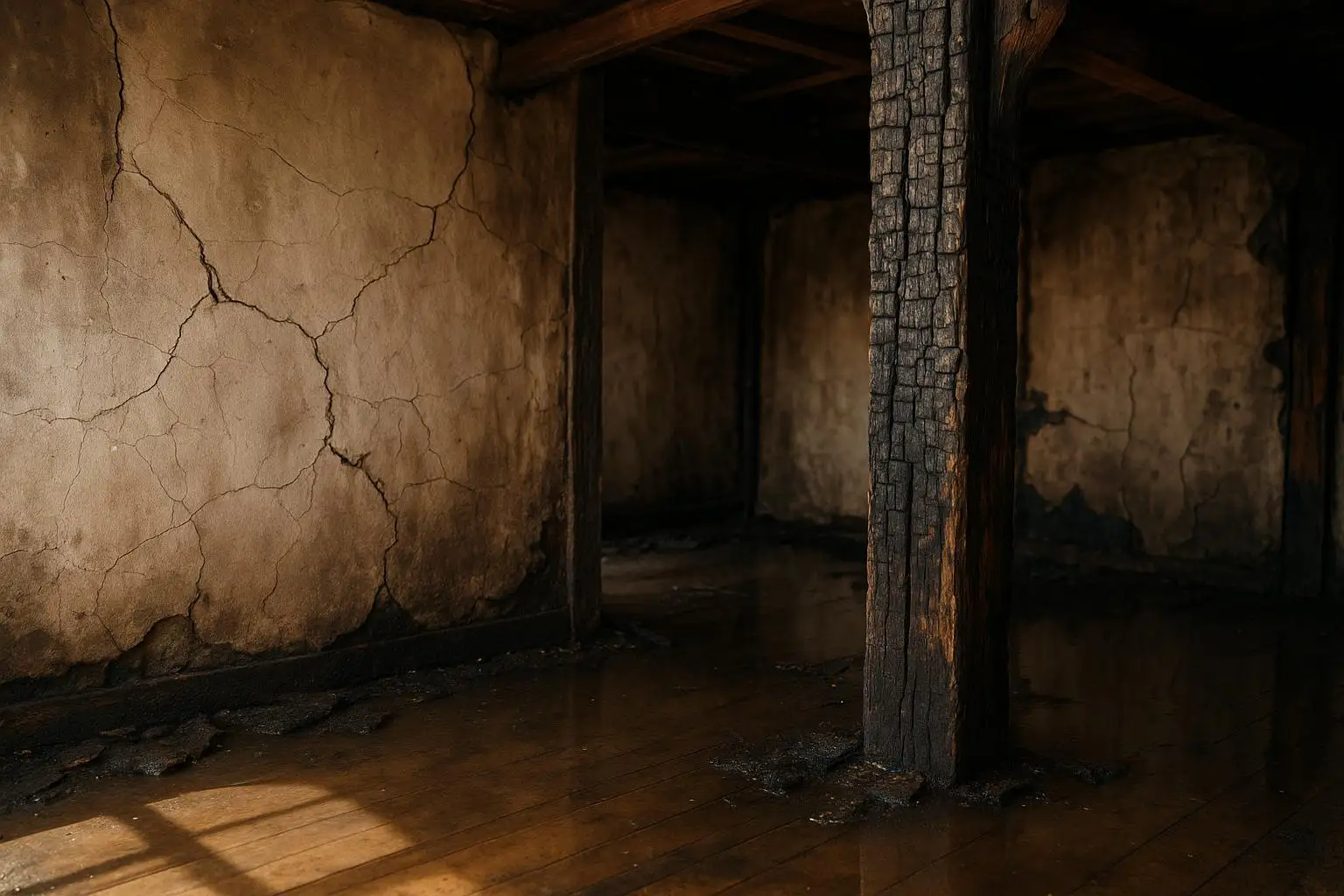
After a fire, the damage goes far beyond what’s visible. Cracks, warped materials, weakened load-bearing elements, smoke residue, and water Fire Damage Restoration Guide can severely compromise a building’s safety. Ignoring these signs risks further deterioration and potential collapse. Here’s what you need to know:
- Cracks: Look for darkened, uneven cracks in walls, ceilings, or foundations. These can indicate weakened structural integrity.
- Warped Materials: Heat can bend steel beams, twist wood, and distort floors or walls, causing misalignment and instability.
- Load-Bearing Damage: Charring, spalling, or sagging in beams, columns, or walls can lead to sudden failure.
- Smoke and Soot: Residues weaken materials over time and pose health risks due to toxic compounds.
- Water Damage: Firefighting water can Fire Damaged Wood Repair Or Replace, weaken drywall, and create conditions for mold growth.
Act fast: Professional inspection and restoration are critical to address hidden damage and ensure safety. Don’t attempt DIY fixes – trained experts use advanced tools to detect and repair these issues effectively. For How To Safely Reenter Fire Damaged Properties, contact restoration services equipped to handle fire, water, and structural damage.
1. Cracks in Walls, Ceilings, and Foundations
Visible Physical Damage
Cracks caused by fire are distinct from the usual settling cracks found in buildings. Hairline cracks often emerge near windows and doors, areas prone to extreme temperature fluctuations. Meanwhile, larger cracks may stretch diagonally across walls or form intricate spider-web patterns on ceilings. Foundations, too, can show signs of stress, with horizontal cracks along basement walls or vertical splits in concrete slabs.
The appearance of these cracks holds valuable information. Fire-related cracks often have darkened edges from smoke or show evidence of material expansion, like crumbling or flaking. In contrast, cracks from normal wear tend to have consistent widths. These visual clues point to the intense forces at work, affecting the building’s structural integrity.
Impact on Structural Integrity
Fire can wreak havoc on concrete foundations, as extreme heat turns trapped moisture into steam, creating internal pressure that leads to cracking.
When cracks form in walls and ceilings, load distribution is disrupted. A single crack in a load-bearing wall can shift weight to other parts of the structure, placing stress on elements that aren’t designed to handle it. Over time, this uneven weight distribution can cause additional cracks and further weaken the building.
Efforts to extinguish a fire can also worsen the damage. The sudden cooling effect of firefighting water – known as thermal shock – can accelerate cracking, causing materials that seemed intact to fail unexpectedly.
As these forces compound, the building’s overall stability declines, increasing safety risks.
Potential Safety Risks
Cracks in foundations can allow water to seep in, leading to soil erosion and settlement issues. In regions with freeze-thaw cycles, water trapped in cracks can freeze, expand, and widen the damage, creating a repeating cycle of deterioration.
Ceiling cracks pose an immediate danger, especially when combined with water damage from firefighting efforts. Water-soaked insulation and drywall add weight, which can cause sections of the ceiling to collapse without warning. Cracks near electrical outlets or switches are another concern, as they provide a pathway for moisture to reach wiring, raising the risk of electrical fires or electrocution.
When multiple load-bearing elements show signs of cracking, the threat of structural collapse becomes real. Even minor cracks can signal that the building’s capacity to handle normal stresses – like wind, snow, or seismic activity – has been compromised.
Given these risks, professional intervention is essential.
Need for Professional Restoration
To fully assess the damage, engineers use advanced tools like ground-penetrating radar and thermal imaging to locate hidden voids and compromised materials.
Stabilization efforts often start with temporary measures, such as installing steel braces, reinforcing weakened beams, or sealing cracks to prevent water intrusion. These emergency actions buy time while a comprehensive restoration plan is developed.
At Total Care Restoration, certified technicians understand that repairing cracks means addressing the root causes, not just surface issues. Their expertise ensures the structure’s strength is restored, preventing further deterioration. With 24/7 emergency services available at (786) 610-6317, they can act quickly to stabilize the damage and begin the path to recovery.
2. Warped and Distorted Structural Materials
Visible Physical Damage
After checking for cracks, warped materials can provide additional evidence of structural damage. Steel beams, for example, are prone to weakening and bending when exposed to extreme heat. Wood components, such as floor joists, support beams, and wall studs, may twist or bow, leading to uneven surfaces and visible bulges. In some cases, the wood grain becomes more noticeable as the fibers shrink unevenly.
Metal parts show their own unique signs of distortion. Steel support columns might bend into curves, metal roofing can take on a wavy appearance, and ductwork may collapse inward. These changes often point to serious issues with how the structure distributes weight.
Impact on Structural Integrity
When materials responsible for bearing loads warp, their ability to evenly distribute weight is compromised. For instance, a bent steel beam can’t carry its intended load, forcing nearby structural elements to absorb the extra weight. This added stress can weaken the entire framework of the building.
Warped floors can create a chain reaction. As floor joists bend and pull away from their attachment points, the entire floor system can lose strength, leading to sagging or uneven surfaces. In multi-story buildings, these misalignments may shift stress to walls and foundations, creating even more instability.
Thermal expansion and the rapid cooling of materials often lock these deformations in place permanently, making it nearly impossible for them to return to their original shape.
Potential Safety Risks
Warped structural elements present both immediate and long-term dangers. Sagging floors and distorted stairways increase the risk of falls and may even fail under normal use, especially in areas where multiple support joists are damaged.
Misaligned door and window frames can prevent proper closure, compromising both security and emergency exits. Hidden hazards may also emerge, such as pinched electrical wiring in twisted metal conduits or leaks in distorted gas lines and plumbing, which could lead to fires or water damage.
Need for Professional Restoration
Warping, like cracking, is a clear sign of structural failure that requires immediate professional attention. Identifying the extent of the damage often calls for specialized tools, including advanced measurement devices and thermal imaging, to detect subtle distortions that aren’t visible to the naked eye.
Restoration techniques depend on the material and severity of the damage. Slightly warped steel beams might be realigned using hydraulic systems, while severely damaged ones often need complete replacement. Similarly, wooden components significantly affected by fire are typically replaced to ensure the building’s safety.
Addressing fire-damaged structures is a complex process, and timely professional intervention is essential. Total Care Restoration’s certified experts are equipped to handle both emergency stabilization and long-term restoration planning. Available 24/7 at (786) 610-6317, they can quickly evaluate and repair warped structural elements, ensuring the property is restored safely and meets current building codes.
3. Damaged Load-Bearing Elements
Visible Physical Damage
After examining warped materials, the next step is to closely inspect load-bearing components for any signs of fire-related damage. These elements are the backbone of a structure, and any fire-induced compromise is often easy to spot. For instance, concrete columns might show spalling, where chunks of concrete break away, exposing the steel reinforcement inside. This exposed rebar often appears rusted or corroded due to extreme heat.
Steel I-beams and columns can show discoloration, with surfaces that look scaled or flaky. In more severe cases, they may buckle or sag under the strain. Wooden beams and posts, on the other hand, typically exhibit charring and deep cracks along the grain.
Foundation walls, particularly where they meet load-bearing walls, may develop horizontal or stepped cracks. Masonry walls might have missing or loose mortar joints, with bricks or blocks showing fractures or cracks. These visible signs highlight the importance of assessing how much the fire has affected the structure’s load-bearing capacity.
Impact on Structural Integrity
Fire damage to load-bearing components can disrupt the building’s entire weight distribution system. For example, steel beams or concrete columns that have lost their strength may shift the load onto adjacent elements, leading to unintended stress. Similarly, wooden members weakened by charring lose their ability to bear weight effectively. These changes can create a chain reaction, where one failure leads to others, jeopardizing the whole structure.
Potential Safety Risks
Damaged load-bearing elements are a serious safety hazard in fire-damaged buildings. Structural failures can happen without warning, potentially causing floors, walls, or even entire sections to collapse. If one critical element gives way, it can trigger a progressive collapse, increasing the risk of falling debris, unstable flooring, and blocked exit routes – all of which pose life-threatening dangers.
Need for Professional Restoration
When fire damage affects load-bearing elements, a thorough evaluation by structural engineers is essential. Professionals use advanced tools like ultrasonic testing and core sampling to assess the condition of damaged steel and concrete. These assessments help determine whether components need to be replaced or stabilized. Temporary supports, such as hydraulic jacks, may be used during the restoration process, and in some cases, full reconstruction of concrete columns might be required.
Given the complexity of these repairs, certified structural restoration experts are indispensable. Total Care Restoration’s team is equipped to evaluate compromised load-bearing elements and create detailed restoration plans to ensure long-term safety. With their 24/7 emergency response at (786) 610-6317, they can provide immediate stabilization services to prevent further damage while preparing the structure for a complete and secure restoration.
4. Smoke and Soot Damage
Visible Physical Damage
Smoke and soot damage often goes beyond what meets the eye. While cracks and warping may be obvious signs of fire damage, smoke and soot leave behind distinct marks that can compromise a building’s integrity over time. Smoke tends to create dark stains on walls, ceilings, and other structural surfaces, while soot settles as a fine, powdery residue. This residue isn’t just cosmetic – it signals deeper chemical changes that can weaken materials.
These residues are often heaviest near ventilation systems, electrical outlets, or areas where air currents carried the particles during the fire. Wood structures may show darkened patches where smoke has penetrated the grain. Painted surfaces can exhibit bubbling or peeling, as heat and smoke cause the paint to lose adhesion. Drywall and plaster may appear yellowed or brown, with the discoloration often extending deeper than the surface layer.
Impact on Structural Integrity
The damage caused by smoke and soot isn’t always immediate or visible. Over time, these residues can lead to chemical deterioration that weakens structural components. Acidic smoke residue, for example, corrodes metal elements such as steel beams, fasteners, and reinforcement bars in concrete. This process can persist long after the fire is extinguished, with metal surfaces often showing signs of discoloration and corrosion where soot has made contact.
Wooden structural components absorb smoke particles deep into their fibers. These particles contain acidic compounds that gradually erode the wood’s natural strength. Concrete surfaces may develop micro-cracks due to the heat differential caused by the fire, while acidic residues can degrade the concrete’s binding agents over time.
Soot also has moisture-attracting properties, which can exacerbate the problem. By drawing humidity from the air, the residue keeps surfaces damp, accelerating corrosion and decay. This ongoing chemical degradation not only weakens materials but also creates serious safety concerns.
Potential Safety Risks
Smoke and soot damage extend beyond structural issues, posing significant health and safety risks. The residue contains toxic compounds like carbon monoxide, formaldehyde, and other carcinogens. These harmful substances can be re-released into the air through building vibrations or normal air circulation, compromising indoor air quality.
Electrical systems are particularly vulnerable. Conductive soot particles can infiltrate electrical panels, outlets, and wiring, increasing the risk of short circuits and electrical fires. Even after the fire is extinguished, these hazards remain unless properly addressed.
Until thorough remediation is completed, microscopic soot particles can continue to circulate through HVAC systems, further degrading air quality and creating ongoing health risks for occupants.
Need for Professional Restoration
When it comes to smoke and soot damage, professional restoration is not optional – it’s essential. Specialized equipment and techniques are required to fully address the damage. This includes industrial-grade air scrubbers, thermal fogging equipment, and chemical neutralizers designed to break down acidic residues.
Effective restoration must go beyond visible surfaces, targeting hidden areas such as wall cavities, ductwork, and structural voids. This often involves partial disassembly of building components to ensure no residue is left behind.
Total Care Restoration employs certified technicians who use advanced tools and methods to neutralize Smoke Damage Long Term Effects And Restoration Techniques comprehensively. Their approach not only addresses visible damage but also prevents ongoing structural deterioration. With emergency services available at (786) 610-6317, they can act quickly to mitigate further harm. Immediate professional intervention is key to preserving structural integrity and ensuring safety after a fire.
How we survey fire damaged properties
5. Water Damage from Firefighting Efforts
When battling a fire, the aftermath isn’t just about heat and smoke damage. The water used to extinguish the flames often leaves behind its own set of problems, significantly affecting a building’s structural soundness.
Visible Physical Damage
Water damage from firefighting efforts often leaves behind clear, yet sometimes overlooked, signs. Watermarks and stains can form on walls, ceilings, and floors, appearing as dark rings or discolored patches that spread beyond the fire’s reach. These marks are just the beginning.
Flooring takes a heavy hit. Hardwood floors may warp or buckle, creating uneven surfaces, while laminate flooring tends to swell at the seams. Carpets become waterlogged, pulling away from tack strips and developing wrinkles. Drywall often bubbles, sags, or crumbles, as water weakens its paper backing and gypsum core.
Ceilings aren’t spared either. Tiles can sag or even collapse, exposing insulation, while paint and wallpaper start to peel or blister. These visible signs are just the surface indicators of deeper issues.
Impact on Structural Integrity
The Fire Damage Restoration a Step By Step Guide can rival that of the fire itself. Water seeps deep into building materials, causing wood framing to swell, warp, and even rot. Load-bearing wooden beams, when weakened by moisture, lose their strength, leading to sagging or, in severe cases, failure.
Saturated drywall becomes soft and unstable, posing collapse risks and compromising the building’s internal framework. Insulation absorbs water, losing its effectiveness and adding extra weight to walls and ceilings, which can lead to further structural strain.
Foundations are particularly vulnerable. Water pooling in basements or crawl spaces can cause micro-cracks in concrete, especially when exposed to rapid temperature changes. Metal reinforcements within the concrete may corrode, while wooden subflooring absorbs moisture, leading to weakness in the entire floor system above.
Potential Safety Risks
Water damage doesn’t just threaten the structure – it creates immediate and long-term safety hazards. Electrical systems exposed to water become dangerous, increasing the risk of electrocution, short circuits, or even secondary fires. Moisture can linger in wiring and components, posing hidden dangers even after power is shut off.
"Prompt and thorough drying of your property is essential to prevent mold and mildew growth, which can occur as soon as 48 hours after water exposure." – PuroClean Restoration Specialists
Another major concern is mold growth, which can quickly develop in moist environments. Mold not only compromises air quality, leading to respiratory issues, but it also further weakens building materials. Hidden water in wall cavities or beneath floors creates the perfect environment for mold colonies to thrive.
Adding to the complexity, water from firefighting often mixes with toxins from burned materials, creating a hazardous cocktail that demands specialized cleanup. Addressing these dangers requires immediate, expert attention.
Need for Professional Restoration
Given the hidden and extensive nature of water damage after firefighting, professional restoration is essential. Experts use advanced tools like thermal imaging and moisture meters to detect water damage that’s invisible to the naked eye.
"In many cases, the water used to extinguish a fire can cause as much damage as the fire itself." – Diamond Certified
Restoration teams bring in industrial-grade dehumidifiers, air movers, and water extraction equipment to tackle moisture levels that household tools simply can’t handle. They understand the urgency of preventing mold growth and halting further structural decay.
Companies like Total Care Restoration offer 24/7 emergency services at (786) 610-6317, ensuring immediate action to mitigate damage. Their certified technicians thoroughly assess all damage, including hidden moisture, and employ advanced techniques to restore the property. Professional intervention not only prevents further deterioration but also simplifies insurance claims, as many policies require swift action for coverage. With the right tools and expertise, restoration can often prevent the need for complete reconstruction.
Damage Types and Recommended Actions
Understanding the different types of damage and responding appropriately is essential for ensuring safe and effective restoration. Each type of damage requires a tailored approach, and assessing its severity helps prioritize necessary actions.
Crack damage can range from minor hairline fractures to serious foundation shifts that threaten a building’s stability. Foundation cracks, in particular, demand immediate attention from professionals.
Warping and distortion present another set of challenges. Materials showing signs like discoloration or melting have often lost their original strength. Walls that bend due to heat exposure may no longer provide adequate support, and warped beams can fail without warning.
Load-bearing element damage is especially dangerous and requires urgent attention. Charred or weakened beams, joists, or load-bearing walls compromise the structure’s stability, potentially leading to sudden collapse. In such cases, evacuation is often necessary until experts can evaluate the situation.
Here’s a quick guide to damage types, key indicators, and immediate actions:
| Damage Type | Severity Indicators | Immediate Actions | Professional Requirements |
|---|---|---|---|
| Wall Cracks | Hairline to wide gaps, running patterns | Take photos and measure cracks | Seek a structural inspection for major cracks |
| Foundation Cracks | Shifts, settling, horizontal cracks | Mark crack endpoints for documentation | Get an immediate professional evaluation |
| Material Warping | Discoloration, melting, visible bending | Avoid contact and photograph damage | Evaluate material integrity; replace if needed |
| Beam Charring | Surface burns, deep charring, visible weakness | Evacuate and restrict access | Conduct load capacity testing and assess supports |
| Framework Damage | Sagging or multiple compromised elements | Evacuate and secure the area | Perform full structural analysis and engineering review |
Accurate documentation – using photographs, measurements, and detailed notes – is vital for expert assessments and insurance purposes. Any compromised structural element should be evaluated by professionals without delay. For comprehensive fire damage assessments and restoration, Total Care Restoration offers 24/7 emergency services at (786) 610-6317, ensuring expert evaluations when safety is at risk.
Conclusion
Identifying structural damage after a fire is essential for ensuring your safety and protecting your property. Key warning signs include cracks in walls, ceilings, and foundations; warped or distorted materials; compromised load-bearing elements; smoke and soot residue; and water damage from firefighting efforts. Each of these issues poses specific risks that demand immediate attention.
Acting quickly can prevent further deterioration. Time is of the essence – what might seem like minor surface damage could hide serious structural issues, such as shifting foundations or weakened beams. Additionally, mold can begin to grow within just 24 to 48 hours, adding another layer of complexity to the situation.
Given the complicated nature of post-fire damage, seeking a professional evaluation is vital. Experts have the tools and knowledge to uncover hidden damage that might be missed during a casual inspection. They can assess whether your property is safe to occupy and create a detailed restoration plan. This kind of prompt, professional intervention not only protects the structure but also simplifies the insurance claims process.
Total Care Restoration offers comprehensive fire restoration services, addressing not only fire damage but also secondary issues like water damage and potential mold growth. Their certified technicians are ready to help – just call (786) 610-6317 for a fast response to safeguard your home or business.
In addition to fire restoration, Total Care Restoration provides water damage restoration and mold remediation services, often necessary after fire incidents. Their direct insurance billing eases the claims process, while dedicated account representatives guide you every step of the way during this challenging time.
Avoid attempting to assess damage on your own. Professional evaluation is critical to ensure your safety and maintain your property’s structural integrity. When fire strikes, having experienced professionals on your side ensures a thorough and effective restoration process.
FAQs
What steps should I take right after a fire to ensure my property is safe?
After a fire, the most important thing is to make sure everyone is safe. Get everyone out of the building right away, account for everyone, and stay out until authorities confirm it’s safe to return. Call 911 to alert emergency services, secure the area, and follow their instructions for next steps.
Once the fire has been extinguished and it’s safe to check the damage, carefully inspect for any structural problems. Look for cracks, warping, or any signs that load-bearing parts of the building may be compromised. If you notice anything concerning, stay out of the building and contact professionals to assess the situation. For reliable fire damage restoration, Total Care Restoration is available 24/7 with certified technicians and direct insurance billing to help get your property back on track.
How can I tell if cracks in my home are from fire damage or normal wear?
Cracks that emerge from regular wear and tear are typically small, consistent in size, and develop gradually over time due to natural settling or aging. Cracks caused by fire, however, tell a different story. These tend to be wider, uneven, and may show up suddenly after exposure to high heat. You might also notice other signs of heat damage nearby, like warping, bulging, or discoloration.
It’s especially important to look closely at cracks near load-bearing walls, beams, or columns, particularly if they’re new or seem to be expanding. Fires generate intense heat that can compromise these critical structural components, potentially leading to more serious issues. If you suspect that fire-related damage has impacted your home’s structure, don’t hesitate to call in a professional to assess the situation and ensure everything is safe.
Why is it important to hire professionals for smoke and soot damage restoration, and what happens if it’s ignored?
When it comes to dealing with smoke and soot damage, bringing in professionals is a must. They have the skills and specialized equipment needed to safely remove harmful residues that can otherwise stick around long after the fire is out. Smoke and soot can seep deep into surfaces, leaving behind stubborn odors, posing risks to respiratory health, and even weakening the structure of your property if not properly handled.
If ignored, this damage can spiral into bigger problems – poor air quality, corrosion of materials like metal and wood, and skyrocketing repair costs down the line. Hiring experts ensures your home or business is thoroughly cleaned, safe to occupy, and restored to the condition it was in before the fire.
Related Blog Posts
Want to Learn More?
Read our comprehensive guide covering everything you need to know about this topic.
The Complete Guide to Fire Damage RestorationNeed Professional Help?
Our expert team is ready to assist with your fire damage restoration needs.
View Fire Damage Restoration Services