Post-Fire Concrete Repairs: Moisture Effects
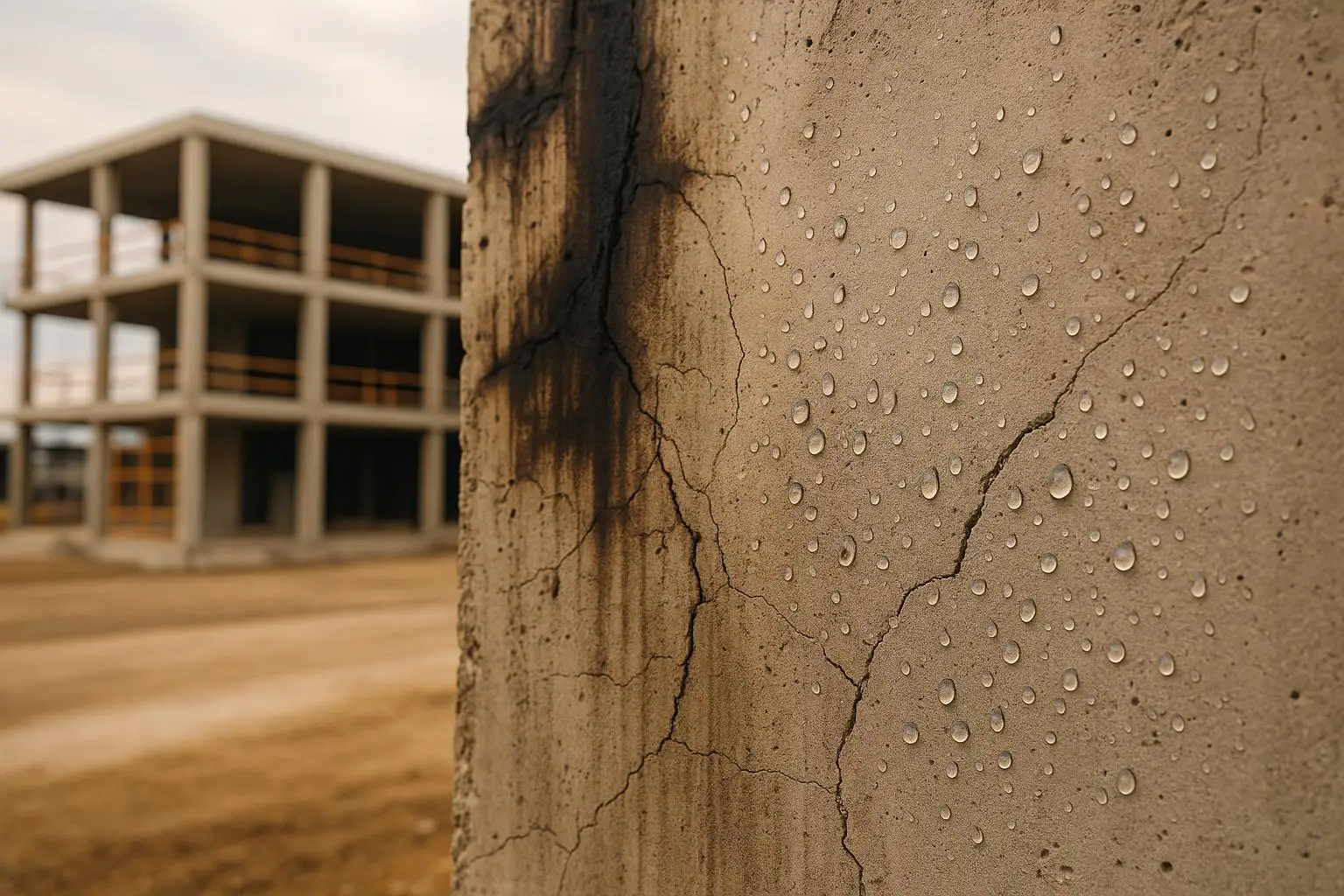
When fire damages concrete, it’s not just the heat that weakens it – moisture plays a major role in its deterioration and complicates repairs. High temperatures cause cracks, spalling, and permanent chemical changes, while firefighting water and altered pore structures lead to unpredictable moisture movement, salt buildup, and long-term damage. Best Practices For Restoring Fire Affected Concrete requires careful moisture control to prevent further deterioration and ensure durable repairs.
Key takeaways:
- Fire causes thermal stress, spalling, and chemical breakdown in concrete.
- Moisture trapped during firefighting or repairs worsens cracks, spalling, and corrosion.
- Proper rehydration, curing, and moisture management are critical for successful repairs.
- Common repair methods include cement and epoxy injection, FRP wrapping, and controlled rehydration.
Without addressing moisture issues, even high-quality repairs can fail, leading to recurring structural problems. Professional restoration services ensure proper moisture control and long-term stability.
Spalling of Concrete in a Fire
How Moisture Worsens Fire-Damaged Concrete
When concrete is exposed to fire, its properties change significantly, making it more vulnerable to damage caused by moisture. This process accelerates the material’s deterioration and creates long-term challenges.
Cracking and Spalling from Moisture Movement
Fire alters how moisture moves through concrete, creating new pathways for water to seep in. When firefighting water comes into contact with the heated concrete, it rapidly cools the surface layers while the inner layers remain hot. This temperature difference causes the outer layers to contract while the interior stays expanded, leading to tensile stresses and the formation of microcracks.
Once these cracks form, moisture infiltrates them, and during freeze-thaw cycles, the water expands as it freezes. This process gradually widens the cracks and contributes to spalling, where layers of concrete break apart over time.
Additionally, fire-damaged concrete develops an altered pore structure, which redirects moisture to unexpected areas within the material. This creates localized pressure points that worsen cracking and surface damage. These structural changes set the stage for further complications, particularly involving salt deposits and steam buildup.
Steam Pressure and Salt Buildup Problems
Firefighting water often contains dissolved minerals and salts, which concentrate in the concrete’s pores as the water evaporates. Over time, these salts undergo cycles of dissolution and recrystallization, generating internal pressures that weaken the already damaged concrete.
When temperatures rise again – whether from sunlight or heating systems – trapped moisture in the altered pore structure can quickly vaporize. The resulting steam pressure may cause sudden spalling or exacerbate existing cracks, further compromising the concrete’s integrity.
In addition to these issues, the dehydration caused by fire introduces another layer of changes to the material.
How Moisture Loss Changes Concrete Properties
High temperatures during a fire dehydrate concrete, reducing its strength and increasing its porosity. This increased porosity provides more pathways for moisture to penetrate, which can weaken the structure’s load-bearing capacity and durability over time.
As the concrete cools, it shrinks. However, the chemical changes caused by dehydration and moisture loss prevent it from fully contracting. This leads to internal stresses and the development of fine cracks, which act as channels for further moisture infiltration, perpetuating the cycle of deterioration.
The heightened porosity also makes the material more permeable, allowing moisture to reach deeper into the structure. This not only accelerates damage from freeze-thaw cycles but also complicates repairs. The increased permeability can interfere with the bonding and curing of repair materials, making moisture control a critical aspect of the restoration process.
Managing Moisture in Fire-Damaged Concrete
After a fire, restoring the strength of concrete requires careful rehydration to prevent further damage. A structured approach to moisture reintroduction and curing is key to achieving this.
Post-Fire Curing Methods
Controlled rehydration is essential to bring back structural integrity. This involves gradually introducing moisture in a carefully managed, high-humidity environment to minimize thermal shock. Typically, the process begins by stabilizing the concrete in a humid setting before slowly transitioning to direct water application. This step-by-step method allows the concrete’s altered pore structure to adapt, reducing the chance of additional cracks. These techniques help determine the best approach for restoring moisture based on the extent of the damage.
Effective Moisture Reintroduction Techniques
The severity of the damage dictates the most suitable method for rehydration:
- For severe damage, carefully saturate the affected areas while avoiding oversaturation, which could worsen the problem.
- For moderate damage, maintain a consistently moist environment to support gradual recovery.
- For surface-level issues, periodic water application combined with proper airflow can be effective.
By stabilizing the structure and applying moisture in a controlled manner, weakened areas can regain their strength.
Ideal Curing Conditions and Duration
Stable curing conditions are crucial for successful restoration. Avoid extreme temperatures – high heat can accelerate moisture loss, while cold conditions slow the rehydration process. Consistent temperature and humidity levels help prevent additional cracking. The exact curing time will depend on the damage’s severity and the chosen method, but ensuring the concrete is fully rehydrated before starting further repairs is essential.
Regular inspections during curing are equally important. Early detection of new cracks or surface degradation can prevent setbacks. Monitoring environmental factors such as temperature, humidity, and airflow gives valuable insights into the progress of the restoration. Additionally, protecting the area from contaminants ensures that the controlled conditions remain intact, supporting a successful recovery process.
Repair Techniques for Fire-Damaged Concrete
Once moisture levels are stabilized, specific repair techniques can restore the structural strength of fire-damaged concrete. These methods must align with moisture control strategies to ensure the repairs are durable and effective.
Cement and Epoxy Injection Repairs
After achieving stable moisture levels, injection repairs can address cracks and compromised bonds in concrete. Cement injection is ideal for larger cracks and voids where restoring structural support is critical. This process involves injecting a cement-based grout under pressure to fill gaps and reinforce load-bearing capacity. However, moisture levels in the substrate are key – if the concrete is too dry, the grout won’t bond; if it’s too wet, it may not cure properly.
For smaller cracks (less than 0.125 inches), epoxy injection is a better option. Epoxy not only seals cracks but also prevents future moisture intrusion while restoring tensile strength. For proper adhesion, the substrate’s moisture content should be between 4-6%. If recent rehydration efforts leave the concrete overly saturated, the epoxy may fail to penetrate or cure.
To avoid bond failures, begin injection repairs only after controlled rehydration has stabilized moisture levels.
Fiber-Reinforced Polymer (FRP) Wrapping
FRP wrapping strengthens fire-damaged columns and beams by applying carbon fiber or glass fiber sheets with epoxy resin. This method is particularly effective for restoring structural capacity in severely weakened elements.
Before applying FRP, the surface must be dried to below 4% moisture. Trapped moisture can create steam pockets during resin curing, leading to delamination and compromising the repair. This is especially challenging with recently rehydrated concrete, as only the surface layers should be dried while maintaining internal moisture balance.
For maximum strength and durability, carbon fiber FRP is the preferred choice, though glass fiber may be used when cost is a concern. Regardless of the material, ensuring proper surface dryness is critical.
The resin typically cures in 24–48 hours under stable temperature and humidity conditions. Even minor condensation on the concrete surface during this time can jeopardize the entire repair.
These repair methods emphasize the importance of precise moisture control. Without it, even the most carefully executed techniques can fail.
Problems from Poor Moisture Control During Repairs
Inadequate moisture control during repairs can lead to significant structural issues. Poor handling of moisture levels compromises the effectiveness of restoration efforts.
For example, improper moisture content can cause patch failures. If the substrate is too dry, the repair material may shrink and crack. Conversely, wet substrates prevent full curing, leaving the material soft and ineffective.
Spalling during future fires is another serious risk. Repairs that trap moisture within the concrete matrix can lead to steam pressure during subsequent fire exposure, causing explosive spalling. This not only damages the structure but also poses safety risks for occupants and firefighters.
Interface delamination occurs when moisture levels differ between the original concrete and repair materials. These differences cause the materials to expand and contract at varying rates, leading to separation at the bond line. This issue is particularly problematic for epoxy repairs, as the rigid material cannot accommodate the movement of the more flexible concrete substrate.
Additionally, corrosion of embedded steel reinforcement can accelerate when moisture becomes trapped against the steel. This creates wet zones that speed up corrosion, leading to further concrete damage and potential structural failure.
Thorough moisture testing before, during, and after repairs is essential to avoid these problems. Each repair technique has specific moisture requirements, and failing to meet these conditions significantly increases the risk of premature failure. Proper moisture management is the foundation of successful concrete restoration.
Comparing Different Moisture-Based Repair Methods
When it comes to repairing damage caused by moisture, the best method often depends on factors like the extent of the damage, budget, timeline, and how durable the repair needs to be. There are several approaches available, each with its own strengths and weaknesses, making it important to choose based on the specific needs of your project.
Water Re-curing is a budget-friendly option for restoring surface moisture. This method involves continuously applying water to rehydrate the material over time. It’s particularly effective for horizontal surfaces and areas with light structural loads. However, its ability to penetrate deeply into severely damaged concrete is limited.
High-Humidity Curing creates a controlled environment with elevated moisture levels to ensure even rehydration throughout the concrete. This makes it a good choice for vertical surfaces or complex shapes. The downside? It takes longer and requires a well-controlled setting to be effective.
Cement-Based Injection is a dual-purpose technique that not only restores moisture but also addresses structural cracks. This method is highly effective for localized repairs but requires skilled technicians and specialized equipment, which can increase costs.
Other methods include surface sealing and external reinforcement. For example, epoxy injection is great for sealing small cracks and providing waterproofing but works best on dry surfaces. Meanwhile, FRP wrapping (fiber-reinforced polymer) enhances load-bearing capacity and provides external reinforcement, making it ideal for immediate structural support. However, it requires meticulous surface preparation to ensure proper adhesion.
Here’s a quick breakdown of these methods to help you weigh the options:
Repair Method Comparison Summary
| Method | Cost | Strength Recovery | Duration | Best Applications | Limitations |
|---|---|---|---|---|---|
| Water Re-curing | Low | Moderate, effective for surface rehydration | Moderate | Horizontal surfaces; light damage areas | Limited penetration for deeper damage |
| High-Humidity Curing | Moderate | High, with uniform moisture distribution | Long | Vertical surfaces; complex geometries | Requires controlled environment |
| Cement-Based Injection | High | Very high in localized repair areas | Short | Localized damage; critical structural elements | Demands skilled labor and specialized tools |
| Epoxy Injection | High | Moderate to high when properly applied | Short | Sealing small cracks; waterproofing | Requires dry substrate |
| FRP Wrapping | High | Excellent for reinforcing and load-bearing | Short | Structural reinforcement for immediate use | Requires precise surface preparation |
Choosing the right repair method often involves balancing cost, time, and performance. Environmental factors, like ambient humidity, can also influence how effective these methods are. In many cases, combining multiple techniques can provide a more comprehensive solution, addressing both moisture restoration and structural integrity.
Ultimately, these comparisons highlight the importance of a strategic approach to moisture-related repairs, emphasizing the value of consulting certified professionals before starting any restoration project.
Why Professional Fire Restoration Services Are Needed
Fire-damaged concrete often conceals critical moisture problems. Fires can cause chemical and physical changes in concrete, altering its ability to absorb moisture and compromising its structural strength. Professional restoration specialists are trained to recognize these changes and apply the most effective repair methods tailored to each situation.
Using advanced tools like thermal imaging, moisture meters, and infrared cameras, experts can detect hidden moisture pockets that might otherwise go unnoticed. Acting quickly to address these issues is key to preventing further damage. By thoroughly assessing all affected areas, professionals ensure that no damage is overlooked, highlighting the importance of expert intervention.
Benefits of Certified Restoration Services
Certified restoration professionals bring a science-backed approach to moisture control. They use industrial-grade equipment such as dehumidifiers, high-capacity air movers, and controlled heating systems, all tailored to the specific needs of each project. This methodical process is built on years of experience and adherence to industry standards.
A major advantage of professional services is continuous monitoring. Specialists use tools like moisture meters and thermo-hygrometers to keep track of moisture, air temperature, and humidity throughout the restoration process. This real-time data allows for precise adjustments, ensuring proper drying conditions and preventing issues like mold, warping, or structural weakening.
In addition, professionals document moisture levels throughout the process, creating a clear timeline that is invaluable for insurance claims and accountability.
Total Care Restoration is a trusted name in fire restoration, particularly in managing moisture to protect structural integrity. Their certified technicians are equipped to handle even the most complex fire damage scenarios with safety and expertise. Offering 24/7 emergency services at (786) 610-6317, they respond quickly to minimize further damage to fire-damaged concrete.
Addressing fire damage promptly with professional help is far more cost-effective than dealing with recurring issues caused by inadequate repairs. Proper moisture management is crucial to ensuring the long-term stability of restored structures.
FAQs
What impact does moisture have on fire-damaged concrete over time?
Moisture can have a damaging effect on fire-damaged concrete, making it weaker over time. It often leads to problems like cracking, spalling, and the formation of microcracks. When moisture gets trapped inside the concrete and the material is exposed to heat, the internal pressure increases, which can cause surface damage and weaken the structure.
On top of that, too much moisture speeds up deterioration by triggering chemical reactions that further undermine the concrete’s durability. Managing moisture effectively during repair work is crucial for bringing back the concrete’s strength and ensuring it remains stable in the long run.
How can moisture be effectively managed when repairing fire-damaged concrete?
Managing moisture is a critical step when repairing fire-damaged concrete to ensure the structure’s strength and longevity. This process often involves using controlled heating systems to carefully speed up evaporation without causing additional damage. Additionally, applying vapor barriers helps block future moisture from seeping in, protecting the repaired areas.
Proper ventilation plays a significant role in this process. Tools like desiccant dehumidifiers and air scrubbers are commonly used to remove excess moisture and improve air quality, reducing the chances of mold growth or other structural complications.
Effectively managing moisture not only helps the concrete heal properly but also supports its long-term durability. If you need expert help, Total Care Restoration provides 24/7 emergency services to assist in restoring your property efficiently and professionally.
Why is it important to have professionals repair fire-damaged concrete, especially when dealing with moisture issues?
Restoring concrete damaged by fire is a job that calls for skilled professionals to guarantee both safety and durability. Experts can evaluate the extent of the damage – whether it’s reduced strength, surface spalling, or hidden moisture issues that could lead to mold or further breakdown.
Using advanced repair techniques, professionals stabilize the concrete and address moisture concerns to prevent future complications. This process not only restores the structural integrity of the concrete but also helps avoid long-term issues. Relying on trained specialists ensures the repairs are done thoroughly and effectively, giving you confidence in the results.
Related Blog Posts
Want to Learn More?
Read our comprehensive guide covering everything you need to know about this topic.
The Complete Guide to Fire Damage RestorationNeed Professional Help?
Our expert team is ready to assist with your fire damage restoration needs.
View Fire Damage Restoration Services