Post-Disaster Assessment for Commercial Properties
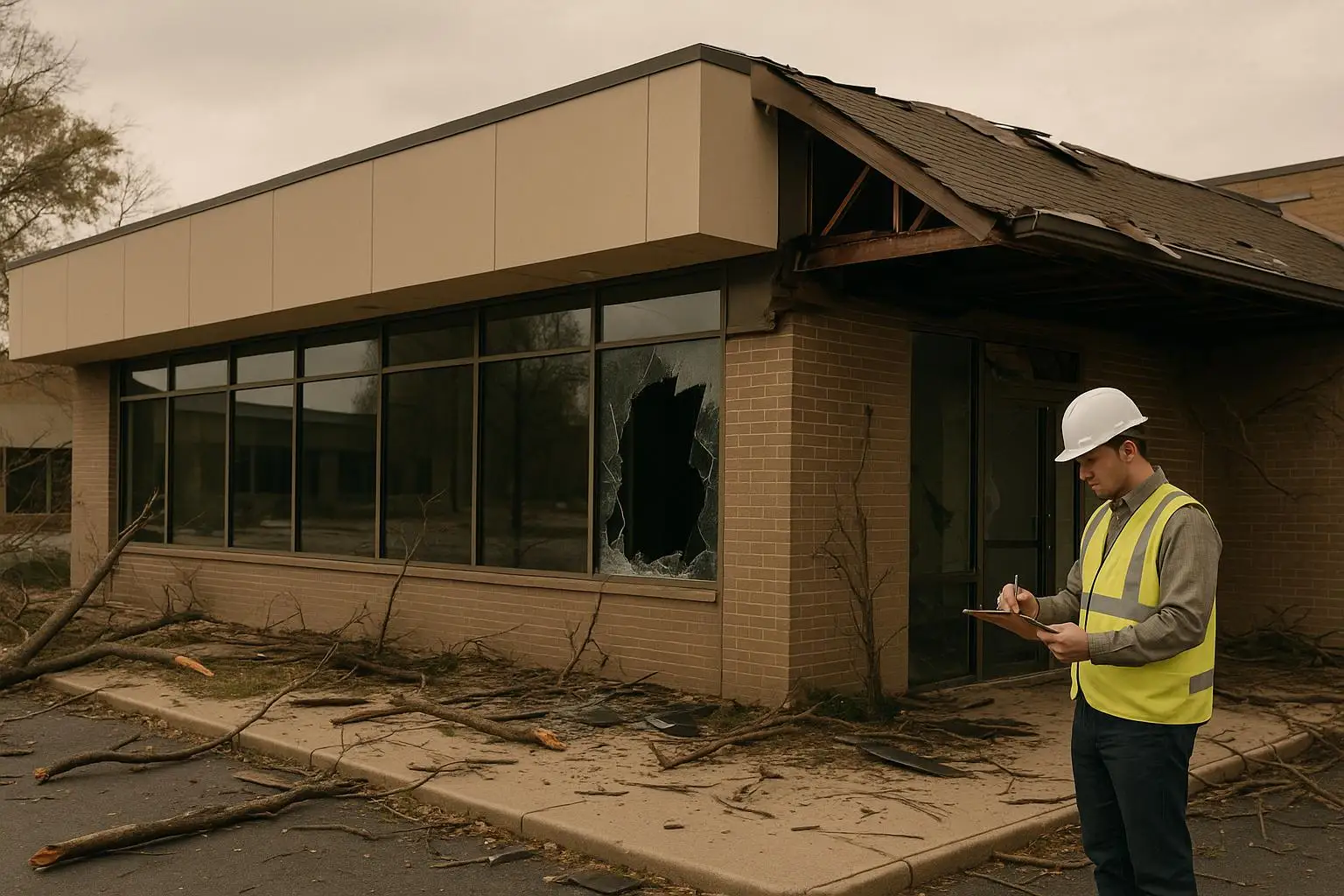
Post-disaster property assessments are critical for ensuring safety, documenting damage, and planning recovery after events like natural disasters or emergencies. These evaluations help identify structural issues, safety risks, and compliance problems, providing a clear roadmap for restoration and insurance claims. Skipping this step can lead to hidden damage, prolonged downtime, and financial losses.
Key steps include:
- Prioritizing safety: Secure the site, control access, and address immediate hazards like gas leaks or unstable structures.
- Building a skilled team: Include experts in structural systems, safety, and business operations to ensure thorough evaluations.
- Documenting damage: Use photos, videos, and written records to support insurance claims and guide repairs.
- Checking equipment and structure: Safeguard critical systems and evaluate the building for hidden risks.
- Engaging professionals: Work with Commercial for efficient recovery and compliance.
Proper assessments and professional support ensure a safer, faster, and more organized recovery process.
How to Inspect Damage for Insurance Claims: A Step-by-Step Guide
Safety Protocols and Site Access Control
Before any damage assessment begins, establishing proper safety measures and controlling access to the site are essential steps. These actions ensure a safer environment for evaluation.
Preparing the Site for Safe Assessment
Always wait for official clearance and adhere to evacuation orders before entering a site. Authorities need to address immediate dangers like downed power lines, gas leaks, or unstable structures first.
"Act swiftly using available emergency responders. There are going to be firefighters potentially, and even think about things like sanitation workers." – Gregg Varner, Director of Solid Waste (Retired), County of Charleston, SC
Downed power lines are a serious hazard, causing fatalities in the U.S. nearly every year. Once the site has been cleared by authorities, take steps to stabilize it and prevent further injuries or damage. This might include shutting off utilities, securing loose debris, or reinforcing weakened structures to create a safer working environment.
Before deploying teams for assessments, conduct a thorough safety briefing. These briefings should cover critical topics like weather conditions, identified hazards, required personal protective equipment (PPE), identification protocols, and communication procedures. Teams must remain alert to new risks, and no one should enter the site without the proper PPE.
Managing Site Access and Security
Controlling who enters the site is key to maintaining security and ensuring only qualified individuals are present in hazardous areas. Law enforcement typically oversees perimeter control.
Establish clear entry points, such as designated gates or doorways, to simplify monitoring and access management. Use fences and clear signage to secure the property. Implement identification systems – such as keycards, biometric scanners, or physical keys – to verify that only authorized personnel can enter. For temporary disaster recovery situations, local law enforcement can help coordinate standardized credentials, such as access tokens or QR codes.
Keep detailed entry logs to track who accesses the site and when. A visitor registration process should require proper identification, specify the purpose of the visit, and, if needed, assign an escort. Time-based access restrictions can help streamline operations while maintaining security.
Emergency access protocols must also be in place, allowing responders to enter quickly without compromising safety. Regularly audit these access control measures and provide training to ensure they remain effective throughout recovery efforts.
Once safety and access controls are in place, the next step is to assemble your assessment team.
Building and Preparing Your Assessment Team
Recovering after a disaster requires a coordinated effort, and the key to success lies in assembling a skilled and prepared team. The way you build and equip your team will directly affect how effectively and safely you can assess damage to your commercial property. With the right people and tools in place, you’ll be ready to document damage thoroughly and plan your next steps toward recovery.
Assembling a Team with Diverse Expertise
Your team should bring together individuals with knowledge of different aspects of your property and its operations. Start by including someone familiar with the building’s mechanical systems – HVAC, electrical, and plumbing. This person will quickly identify damage to critical infrastructure and potential hazards.
You’ll also need a structural expert to assess the foundation, walls, and roof for stability. This doesn’t always mean hiring an external engineer right away. A facilities manager or maintenance supervisor with construction experience can often handle initial evaluations.
A business operations expert is essential for identifying priority areas, especially spaces that house vital equipment or generate revenue. Their insights will help you focus on what’s most critical for getting your business back on track.
Safety is another priority. Include a safety specialist who understands OSHA requirements and can ensure the team operates within safety guidelines. Training programs like the American Institute of Architects (SAP) provide architects, engineers, and building officials with the skills to assess buildings post-disaster. Pair this with Incident Command System (ICS) courses to familiarize your team with mission control protocols.
"Plan education, training, and exercises should comprise the largest part of the preparedness effort." – Croker Risk Management
Finally, appoint a team leader who can coordinate efforts, make quick decisions, and keep the team focused on recovery priorities. This individual should have experience managing people under pressure and a clear understanding of your company’s recovery goals.
Equipping Your Team for Success
Having the right tools and resources can make all the difference between a thorough assessment and a rushed walkthrough. Start with personal protective equipment (PPE) for every team member, including hard hats, safety glasses, steel-toed boots, and work gloves. In areas with mold or chemical exposure, provide respirators and disposable coveralls.
Equip the team with documentation tools to systematically record damage. Digital cameras or smartphones are ideal for photos, but don’t forget backup batteries and portable chargers. Waterproof clipboards can protect assessment forms in wet conditions, while measuring tapes help quantify damage for insurance claims.
Make sure your team has access to building documentation like floor plans, utility layouts, and equipment manuals. These references are invaluable for identifying damaged or missing components. Keep a list of contact information for utility companies, contractors, and emergency services on hand.
Reliable communication equipment is critical, especially in areas where cell service may be disrupted. Two-way radios can keep the team connected, and establishing regular check-in procedures ensures everyone stays safe. Use a simple code system to quickly communicate urgent safety concerns.
Provide assessment forms and checklists tailored to your property type. Tools like SafetyCulture templates incorporate industry best practices and help ensure consistent documentation. Standardized forms also make it easier to file accurate insurance claims.
Additional equipment like flashlights, moisture meters, and basic hand tools can help your team uncover hidden damage. Set up a mobile command station with essentials like tables, chairs, weather protection, first aid supplies, water, and emergency contact information.
Training: The Foundation of Preparedness
Training your team before a disaster strikes is an investment that pays off when time is of the essence. FEMA's National Preparedness Course Catalog offers a range of training options from CDP, EMI, and NTED, which you can search by topic. The National Domestic Preparedness Consortium (NDPC) also provides resources to enhance emergency responder readiness.
With a well-trained team and the right tools, you’ll be prepared to document damage systematically and take the first steps toward recovery.
How to Document Damage Properly
Accurate documentation is crucial when filing insurance claims and planning restoration efforts. The way you record damage can influence how quickly you receive compensation and how effectively restoration crews can address the issues. A clear, organized approach ensures nothing is missed and sets the stage for a smoother recovery process.
Room-by-Room Damage Assessment
Start at the main entrance and work through the property systematically. This method ensures every area is evaluated and nothing is overlooked.
Before entering any room, check for hazards like standing water, exposed wiring, or structural issues. Clearly mark unsafe areas and avoid entering them until professionals have assessed the risks.
Inspect each room using a consistent approach. Begin with the ceiling, then move to walls, floors, fixtures, and equipment. This top-to-bottom method helps you catch less obvious issues, such as water stains on ceilings or cracks in walls that could indicate deeper problems.
Classify the damage based on its severity:
- Minor damage: Issues that don’t interfere with operations.
- Moderate damage: Repairs needed but not urgent.
- Severe damage: Safety risks or damage that could worsen without immediate attention.
Take inventory of affected items, noting details like make, model, serial numbers, and estimated age or value. If possible, use measuring tools to quantify the damage. For example, measure the depth of standing water or the dimensions of damaged areas. This level of detail helps insurance companies process your claim more efficiently.
Document any immediate actions you’ve taken, such as shutting off utilities or making temporary repairs, to demonstrate your efforts to minimize further damage.
Once you’ve completed your written records, move on to visual documentation.
Taking Photos and Recording Details
Photographs and videos are essential for supplementing your written notes. They provide visual proof for insurance claims and help restoration teams understand the full scope of the damage.
Start with wide-angle shots to capture the overall context of each room. Then, take close-ups of specific issues, such as cracks, water stains, burned materials, or damaged equipment. Ensure your photos are well-lit – use flash or portable lights if necessary – and take multiple angles for clarity.
For damaged equipment or items, photograph nameplates, serial numbers, and any identifying marks. This information strengthens your claim for specific losses.
Consider creating a video walkthrough of the property. Videos are particularly effective for showing how damage spreads across connected spaces, like water damage moving through multiple rooms. A walkthrough can also capture the sequence and flow of the damage, providing a comprehensive view.
Make sure all photos and videos are timestamped. While most smartphones add timestamps automatically, you can also use a naming system to label files by location and type of damage. This makes it easier to find specific images later.
Use standardized forms during your assessment. These forms ensure you consistently record key details, such as the date and time of the inspection, names of assessors, descriptions of the damage, measurements, and any immediate safety concerns.
Back up all your documentation in multiple locations. Cloud storage and emailing copies to yourself are good options to prevent losing critical information if devices are damaged during the recovery process.
Finally, don’t dispose of any damaged items until they’ve been properly documented and approved for removal by your insurance company. Even items that seem like total losses may hold salvage value or serve as important evidence for your claim.
For more complex situations, companies like Total Care Restoration can provide professional documentation services. Their expertise ensures that even the most intricate damage is thoroughly assessed and recorded.
Investing time in detailed documentation not only speeds up the insurance process but also helps restoration teams work more effectively. It creates a clear baseline for tracking progress as your property is restored to normal operations.
Checking Equipment and Building Structure
After thoroughly documenting damages, the next step is to ensure that both your equipment and building structure meet safety standards. This evaluation helps determine what can be salvaged, what needs urgent attention, and what poses ongoing risks to your business operations.
Protecting Important Equipment from Further Damage
Safeguarding critical equipment is essential to protect your investments. Even after the initial disaster, water, debris, and unstable conditions can continue to cause harm.
Start by identifying equipment that remains functional but is still at risk. Systems like HVAC units, servers, manufacturing machinery, and electrical panels are particularly vulnerable to moisture, dust, and temperature fluctuations. If it’s safe to do so, use dehumidifiers to minimize moisture damage and reduce the risk of short circuits. Cover equipment with secured plastic sheeting or tarps to shield it from water intrusion, especially if the roof or windows have been compromised.
For equipment already exposed to water, disconnect power sources immediately to avoid Home Safety Tips Preventing Electrical Fires or short circuits. Portable items such as computers, tools, and smaller machinery should be moved to dry, secure areas. If space is limited, consider setting up a temporary storage area in the least affected part of your building or arranging off-site storage.
Document the condition of all equipment for insurance purposes. Avoid using damaged machinery until it has been professionally inspected to ensure safety and prevent further issues.
Once your equipment is secure, shift your focus to evaluating the structural integrity of your building.
Checking if the Building Structure Is Safe
Assessing your building’s structural stability is a key part of post-disaster recovery. Surface appearances can often hide serious underlying damage.
Start by inspecting the foundation for new cracks, shifted walls, or uneven settling. Cracks wider than ¼ inch or those showing signs of movement should be addressed by a professional immediately. Examine load-bearing walls and columns for horizontal cracks, bowing, or leaning, as well as damaged support beams. Pay close attention to where walls meet ceilings, as these areas often reveal stress caused by structural shifts.
If it’s safe, check the interior roof structure for sagging sections, visible sky, or water stains on ceilings – these are all signs of potential roof damage that could worsen over time. Test doors and windows to ensure they open and close properly; difficulty in operation or visible damage might indicate shifts in the building’s frame.
"A significant hindrance to emergency response following disasters is often the lack of detailed information on the spatial extent and severity of damages".
To minimize risks, clearly mark unsafe areas and restrict access until professional structural engineers can conduct a thorough evaluation. Use caution tape, signs, or barriers to keep people out of hazardous zones.
For a complete assessment, professional evaluations are crucial. FEMA P-2055 offers guidelines for post-disaster safety evaluations, covering structural safety, habitability, and management of assessment teams.
Immediate vs. Delayed Repairs: Pros and Cons
When it comes to repairs, timing plays a major role in both costs and recovery success.
| Repair Timing | Advantages | Disadvantages |
|---|---|---|
| Immediate Repairs | Prevents further damage; quicker business recovery; may lower costs overall | Higher emergency rates; limited contractor availability; possible insurance delays |
| Delayed Repairs | Allows better contractor selection; lower costs; ensures complete insurance documentation | Risk of additional damage; longer business disruptions; potential safety hazards |
Immediate repairs are critical for issues that could worsen quickly, such as water leaks, exposed electrical systems, or structural concerns. Delaying these can lead to higher costs as damage spreads. Emergency measures like tarping, water extraction, and temporary supports are often covered under insurance policies designed to prevent further damage.
On the other hand, delayed repairs may be more appropriate for non-urgent tasks like painting, flooring, or equipment upgrades. These can often wait until insurance processes are complete and approvals are secured.
Your business priorities should guide these decisions. If immediate repairs allow partial operations to resume and revenue to flow, the higher costs of emergency services may be worth it to reduce overall downtime. Weather conditions can also affect timing – if more storms are expected, temporary fixes become even more critical.
Partnering with experienced Miramar water damage restoration can help you make informed decisions. For example, Total Care Restoration offers 24/7 emergency services to stabilize your property immediately while helping you plan a complete restoration strategy. Their certified technicians can advise on which repairs are urgent and which can be scheduled to minimize costs and disruptions.
Lastly, keep detailed records of all repair decisions and the reasoning behind them. This documentation not only supports your insurance claims but also demonstrates responsible property management during the recovery process.
Working with Professional Restoration Companies
When disaster strikes your commercial property, teaming up with Sunrise area water damage restoration can make all the difference in how quickly and effectively you recover. These professionals bring specialized skills, tools, and experience that most business owners simply don’t have access to during such critical times.
Choosing Qualified Restoration Professionals
Start by confirming that the restoration company is licensed, bonded, and IICRC-certified. The IICRC (IICRC) ensures that technicians are trained in essential areas like Emergency Water Damage Checklist: First 24 Hours, Fire Damage Restoration, and Mold Remediation. This certification is a strong indicator of their expertise and professionalism.
Availability is another key factor. Disasters don’t stick to a schedule, so it’s crucial to choose a company that offers 24/7 emergency services. Quick action can prevent further damage – like mold growth, which can start within 24–48 hours if water damage isn’t addressed promptly.
Before committing, ask for references from past commercial clients. Focus on projects similar to yours in terms of size and type of damage. Online reviews on platforms like Google, Yelp, and the Better Business Bureau can also provide valuable insights into a company’s reputation.
Make sure to get a detailed written estimate outlining costs and timelines for every stage of the restoration process, including inspection, cleanup, repairs, and additional services like temporary storage or content restoration. Knowing these details upfront helps you avoid unpleasant surprises and plan your recovery effectively.
For businesses, safeguarding equipment and inventory is often a top priority. Ask about the company’s pack-out process – this involves securely storing your belongings in climate-controlled facilities and using inventory systems to keep track of everything.
Choosing a company that offers insurance claim assistance can also save you time and stress. Experienced restoration companies often know how to navigate the claims process efficiently, helping you get the compensation you need to rebuild.
Be cautious of scams. Avoid companies that demand upfront payments, and always verify their licensing and insurance. It's also wise to contact your insurance provider before signing on with any restoration service. For detailed information on recognizing and avoiding restoration scams, see our guide on How to Avoid Scams in Restoration Services.
Example: Total Care Restoration
A great example of a reliable The Future of Restoration Innovations in Water Fire And Mold Remediation partner is Total Care Restoration. They specialize in services like water damage restoration, fire cleanup, mold remediation, commercial restoration, and roof tarping. In short, they cover the full range of disaster recovery needs for businesses.
Their 24/7 emergency response line – reachable at (786) 610-6317 – ensures they’re ready to act whenever disaster strikes. This swift action is essential for minimizing damage and getting your business up and running again as quickly as possible.
One standout feature of Total Care Restoration is their direct insurance billing. This means you won’t need to pay large sums upfront while waiting for your insurance company to reimburse you. Their experience with commercial insurance policies also ensures they can handle the paperwork and approval processes that often slow down recovery.
Total Care Restoration’s team includes certified technicians trained through IICRC programs. They bring advanced technology and expertise to every project, whether it’s water extraction, structural drying, fire damage cleanup, or mold remediation. Their ability to handle complex commercial restoration challenges sets them apart.
To make the process even smoother, they assign personalized account representatives to each client. This single point of contact ensures clear communication and coordination throughout the restoration, which is especially important for businesses trying to remain operational during recovery.
They also offer free preliminary evaluations, giving you a clear picture of the damage and restoration requirements before committing to a project. This transparency helps you make informed decisions about your recovery plan and budget.
For commercial properties, Total Care Restoration goes beyond basic cleanup. They provide complete reconstruction services when needed, ensuring your building meets safety codes, accessibility standards, and any industry-specific regulations. This comprehensive approach is invaluable for businesses looking to fully restore their operations.
With their rapid response, insurance expertise, and full-service restoration capabilities, Total Care Restoration is well-equipped to help businesses recover from disasters. Their focus on minimizing downtime while delivering thorough restoration solutions aligns perfectly with the priorities of commercial property owners after a crisis.
Conclusion: Steps for Safe and Quick Recovery
Recovering from a disaster requires careful planning and a balance between acting swiftly and ensuring thoroughness. By building on the strategies for assessment, safety, and documentation discussed earlier, you can create a solid foundation to restore your business while safeguarding your employees, customers, and assets.
Start by securing your property. Control access to the site, use appropriate protective equipment, and address any immediate hazards. Even after the initial disaster subsides, issues like structural damage, electrical risks, and contamination can pose serious threats.
Detailed documentation is your guide throughout the recovery process. Photos, videos, and written records gathered during your assessment will be invaluable for everything from filing insurance claims to setting restoration priorities. This step also helps you identify what can be salvaged and what needs replacing, potentially saving on costs.
Partnering with Careers is another essential step. These experts can help speed up the recovery process while ensuring compliance with safety codes and insurance requirements. Companies like Total Care Restoration, which offers 24/7 emergency services at (786) 610-6317, can begin stabilizing your property immediately, allowing you to focus on critical decisions for your business.
Taking prompt action and working with professionals not only prevents additional damage but also ensures adherence to industry standards. Together, these steps provide a clear path to recovery.
Key Points to Remember
Here’s a quick recap of the essential steps to keep in mind as you move forward:
- Prioritize safety above all else. No task is worth risking injury.
- Document thoroughly. Capture wide and close-up photos of all damage, maintain detailed inventory lists, and save receipts for emergency repairs. This will streamline insurance claims and restoration planning.
- Act quickly to minimize further damage. Secure windows, tarp damaged roofs, and relocate undamaged equipment to safe areas. These immediate actions help stabilize the site for a complete assessment.
- Engage certified restoration experts early. Look for professionals with 24/7 availability to ensure a timely and efficient recovery.
- Plan for business continuity. Communicate any operational changes with employees, customers, and suppliers. Explore options like temporary relocation or remote work to maintain services during the restoration process.
FAQs
What safety precautions should I take before inspecting a commercial property after a disaster?
Before stepping into a commercial property following a disaster, safety should be your top priority. Start by making sure the area is secure and free of immediate threats. Look out for potential hazards like gas leaks, exposed electrical wiring, or structural damage. If necessary, turn off utilities to prevent further risks. Always adhere to local authorities’ instructions about when it is safe to re-enter the premises.
Take the time to perform a detailed hazard assessment to spot any risks, such as contaminated water or debris. Equip yourself with the right protective gear and have a clear emergency plan ready to ensure everyone involved stays safe during the inspection.
What steps should businesses take to ensure they are prepared for post-disaster property assessments?
To properly evaluate commercial properties following a disaster, businesses should organize a dedicated team with clearly defined roles. This team might include safety officers to oversee on-site conditions, damage evaluators to assess the extent of harm, and technical specialists to address specific structural concerns. Regular disaster preparedness drills can help the team become familiar with assessment procedures, ensuring they can act quickly and effectively when the need arises.
Incorporating advanced tools like drones, structural assessment software, and imaging technologies can greatly enhance both the accuracy and speed of evaluations. However, it’s crucial to provide thorough training on using these tools and to maintain a detailed disaster response plan. This approach ensures assessments are conducted both safely and efficiently.
For expert support, Total Care Restoration is available around the clock. Their certified technicians are ready to help businesses recover promptly and effectively. Reach them at (786) 610-6317 for immediate assistance.
How can I document property damage effectively for insurance claims and restoration after a disaster?
To properly document property damage, begin with a careful inspection of the impacted areas. Use clear, high-resolution photos and videos to record all visible damage, making sure to include both close-up shots and wider views for context. Additionally, compile a detailed list of damaged items, noting their descriptions, quantities, and estimated values.
Maintain a record of essential details, such as the dates and times of the damage, descriptions of what occurred, and any repair activities. Collect and organize critical documents like receipts, repair estimates, and insurance policies. This thorough documentation will not only strengthen your insurance claim but also serve as a roadmap for the restoration process.
If you need expert help with restoration or navigating insurance claims, Total Care Restoration offers 24/7 support. Their certified team is ready to help restore your property to its pre-damage condition.
Related posts
Need Professional Help?
Our expert team is ready to assist with your commercial restoration needs.
View Commercial Restoration Services