Smoke Damage Restoration: Professional vs DIY Methods
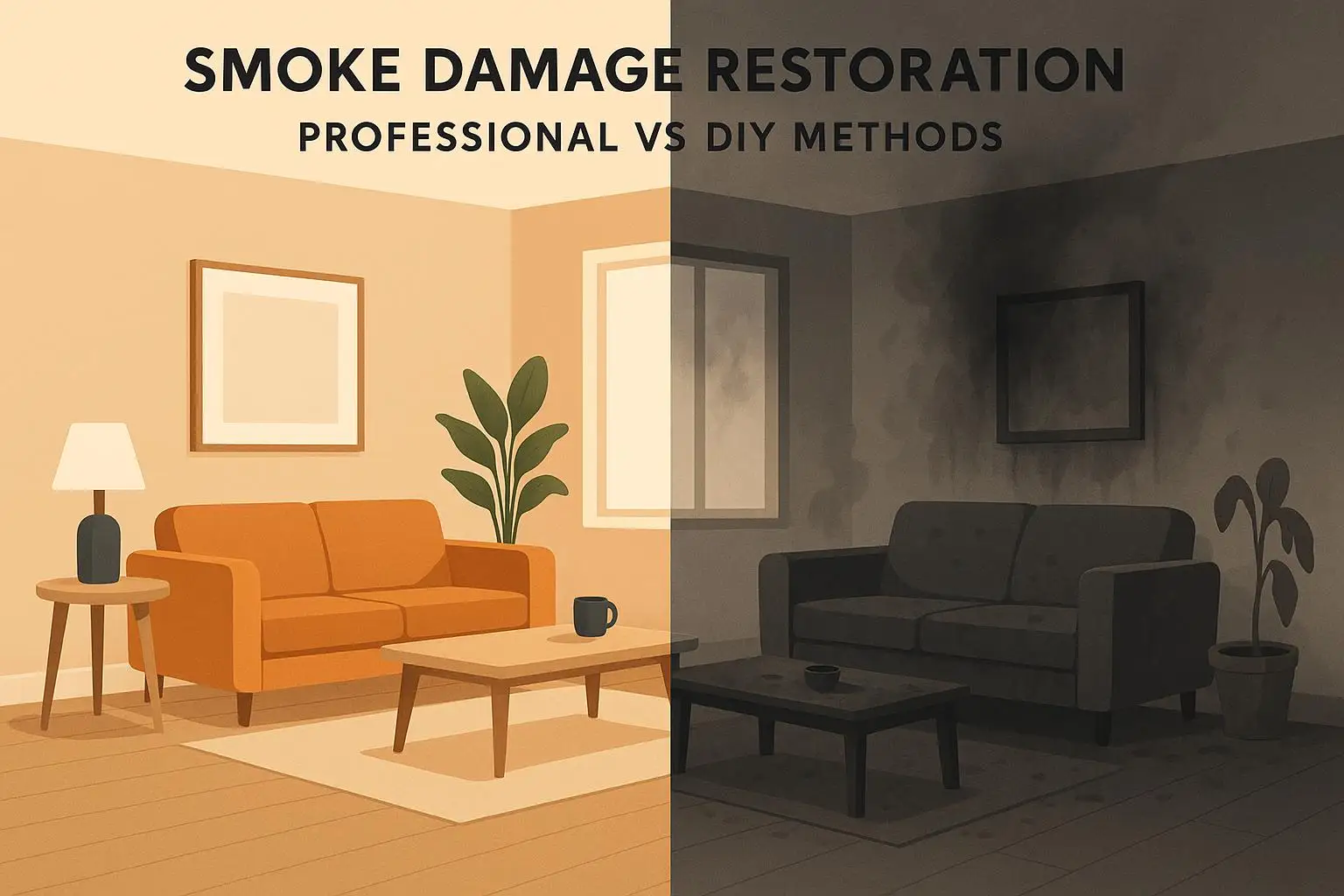
Smoke damage can ruin your property and health if not handled correctly. Should you hire professionals or try DIY methods? Here’s a quick breakdown:
- Professionals: Use advanced tools (e.g., air scrubbers, thermal foggers) and expertise to clean and restore even severe damage. Costs range from $800 to $4,000 per room but ensure thorough cleanup, odor removal, and insurance documentation.
- DIY: Best for minor, surface-level damage. Requires tools like HEPA vacuums, soot sponges, and protective gear. Costs are lower ($50–$200 for supplies) but may not address hidden damage or persistent odors.
Quick Comparison Table:
| Aspect | Professional Services | DIY Methods |
|---|---|---|
| Cost | $800–$4,000/room | $50–$200 for supplies |
| Effectiveness | Thorough, handles hidden damage | Limited to surface cleaning |
| Health & Safety | Strict safety protocols | Requires PPE and ventilation |
| Time Required | Faster, 2–3 days for minor damage | Can take longer with trial-and-error |
When to Choose Professionals:
- Severe damage
- Lingering odors
- Hidden residues (e.g., in HVAC systems)
- Insurance claim needs
When DIY Works:
- Small, isolated damage
- Non-porous surfaces
- No structural or health risks
Act quickly – smoke damage worsens after 48 hours. For extensive damage, professional help is often the safest and most effective choice.
How To Properly Clean Fire / Smoke / Soot Damage Following …
Smoke Damage Basics
Smoke damage comes with unique challenges depending on the type of fire and materials involved. Knowing the basics helps in deciding whether to handle it yourself or call in professionals.
Common Smoke Residue Types
Here’s a breakdown of the main types of smoke residue and the cleaning challenges they present:
| Residue Type | Characteristics | Cleaning Challenge |
|---|---|---|
| Dry Smoke | Powdery residue from high-temperature fires (e.g., paper/wood) | Easier to clean but can settle into cracks |
| Wet Smoke | Sticky, dense residue from smoldering fires (plastics/rubber) | Difficult; prone to smearing during cleaning |
| Protein Residue | Often invisible but leaves a strong odor (organic materials) | Hard to address; can cause discoloration |
| Fuel/Oil Residue | Sticky, dense residue from oil-based materials | Extremely tough to clean; strong lingering odor |
Wet smoke, in particular, is tricky to handle. Its sticky nature and tendency to smear require specialized cleaning techniques to avoid worsening the damage. Fires involving plastics often produce this type of residue, which adds to the complexity of cleanup efforts. Beyond cleaning, these residues also pose serious risks to health, which we’ll explore next.
Health Effects of Smoke Damage
Smoke damage isn’t just about stains and odors – it can have serious health consequences. Smoke particles are loaded with toxic compounds that can harm both short-term and long-term health.
"Smoke particles put your health and that of your family at risk because they are toxic."
Here’s how smoke damage can affect your health and home:
- Respiratory Issues
Prolonged exposure to smoke residue can lead to persistent coughing, breathing problems, sinus irritation, and even serious lung conditions. - Hidden Risks
Smoke particles can infiltrate HVAC systems, wall cavities, and other hard-to-reach areas, making them difficult to remove. - Material Damage
Smoke can also cause lasting harm to various materials:- Plastics and fiberglass may yellow and degrade quickly.
- Fabrics can trap odors and stains.
- Electronics may fail due to acidic soot deposits.
If left untreated, smoke particles can settle as soot, causing skin irritation and worsening respiratory problems. Acting quickly is crucial to minimize both health risks and permanent damage.
Professional Restoration Services
Dealing with smoke residue is no simple task, which is why professional help is often essential. Smoke damage restoration uses advanced cleaning methods and specialized tools that go well beyond standard cleaning. This work requires trained expertise to handle the different forms of smoke damage effectively.
Professional Cleanup Steps
- Initial Assessment Trained technicians perform a detailed inspection of the smoke damage to choose the best cleaning methods and tools for the job.
- Air Quality Management High-grade equipment like industrial air scrubbers and hydroxyl generators is used to remove airborne smoke particles, significantly improving indoor air quality.
- Surface Cleaning Different types of smoke residue call for specific cleaning techniques:
- Wet cleaning for heavier residues
- Dry cleaning for lighter residues
- Abrasive cleaning for stubborn buildup
- Foam cleaning for delicate materials
Advantages of Professional Services
Hiring professionals for smoke damage restoration brings several key benefits that make the process more effective and thorough:
| Benefit | Description | Impact |
|---|---|---|
| Advanced Equipment | Tools like industrial air scrubbers, thermal foggers, and HEPA filters | Efficiently removes smoke particles |
| Tailored Techniques | Methods like wet, dry, abrasive, and foam cleaning | Reduces the risk of further damage during cleanup |
| Insurance Assistance | Direct billing and detailed documentation | Simplifies the claims process |
| Complete Deodorization | Techniques such as thermal fogging and ozone treatment | Eliminates odors at the source |
"Specialized techniques and equipment ensure complete removal of smoke damage without further harm to your property."
Total Care Restoration Services
Total Care Restoration provides round-the-clock smoke damage restoration services using certified professionals and advanced tools. Their offerings include:
- Free initial damage assessments
- Customized restoration plans
- Direct insurance billing
- Certified restoration experts
- High-tech cleaning and deodorization tools
These services address both the immediate damage and any potential long-term effects, ensuring a thorough restoration process with minimal disruption.
DIY Smoke Damage Cleanup
For minor smoke damage, tackling the cleanup yourself can be effective – if you follow the right techniques and safety measures.
Basic DIY Methods
Start by gathering the right tools: PPE (like an N95 mask, safety goggles, and chemical-resistant gloves), a HEPA vacuum, soot sponges, microfiber towels, TSP or a specialized soot remover, and plastic sheeting.
Different surfaces require specific cleaning approaches:
| Surface Type | Cleaning Method | Required Materials |
|---|---|---|
| Walls/Ceilings | Dry cleaning, then wet cleaning | Soot sponges, TSP solution |
| Hard Surfaces | Wet cleaning with a degreaser | Mild detergent, microfiber cloths |
| Fabrics | HEPA vacuuming, then spot cleaning | HEPA vacuum, fabric cleaner |
These methods are best for small-scale damage. Keep reading to learn when DIY is a good choice.
When to Try DIY Cleanup
DIY cleanup works well for minor, surface-level smoke issues:
- Small, contained incidents with limited smoke exposure
- Soot on non-porous surfaces
- Well-ventilated areas
- No structural damage present
"Smoke and Soot Cleanup: DIY or Hire Professionals?" – ServiceMaster Restore
DIY Cleanup Limits
- Safety Concerns
Without the right techniques, you risk releasing harmful particles. Always ensure proper ventilation and wear protective gear. - Technical Challenges
DIY methods fall short when dealing with:- Persistent odors
- Contaminated HVAC systems
- Damage hidden inside walls
- Heavy soot accumulation
- Time Sensitivity
Smoke damage worsens quickly. If you don’t see progress fast, it’s time to call in professionals.
Professional vs DIY: Key Differences
When it comes to smoke damage restoration, professional services and DIY approaches differ in cost, effectiveness, and safety. Here’s a closer look at how they compare.
Cost and Results Comparison
While DIY might appear more budget-friendly, unexpected costs can quickly add up. Here’s a breakdown:
| Aspect | Professional Services | DIY Methods |
|---|---|---|
| Average Cost | $3,000 ($800-$4,000) | Costs for materials and personal labor |
| Single Room | $200-$1,200 | $50-$200 for supplies |
| Multiple Rooms | $600-$3,600 (for 3 rooms) | Varies depending on damage |
| Specialized Services | Thermal fogging ($200-$600), ozone treatment ($200-$800), duct cleaning ($150-$800) | Limited to basic cleaning tools and supplies |
Effectiveness and Expertise
Professionals bring advanced tools and techniques to the table, such as specialized deodorization, detecting hidden damage, and full HVAC cleaning. These methods ensure a thorough and lasting solution.
Time and Effort
DIY methods often involve trial-and-error and repeated cleaning, while professionals typically resolve issues in a single treatment.
"Smoke and soot damage can be tricky to clean, and if not done properly, you could end up spreading the soot and making the problem worse." – ServiceMaster Restore
Insurance Considerations
Professional services often include documenting damage and working with insurance companies. DIY efforts may fall short due to incomplete records and overlooked damage.
Safety and Health Impact
Professionals follow strict safety protocols and use protective equipment to handle hazardous residues safely.
For extensive damage, professional restoration costs can average $27,175, with a range of $3,107 to $51,243. These services address both visible and hidden damage, ensuring your home is safe and secure long-term.
Selecting Your Cleanup Method
Decision Points
Choosing between professional services and a DIY approach depends on several factors, including the extent of damage, the materials involved, hidden residues, and how much time has passed since the incident.
Key Factors to Consider:
- Extent of Damage: Determine if the problem is confined to a small area or affects a larger portion of your property.
- Material Types: Porous items like carpets and upholstery often need specialized treatment, which professionals are better equipped to handle.
- Hidden Residues: Check less obvious places, such as HVAC systems or inside wall cavities, where smoke residue might linger.
If these factors suggest significant damage or complexity, it’s best to involve professionals. The next section outlines scenarios where expert help is essential.
When to Call Professionals
Professional help is necessary in situations like:
- Structural damage impacting multiple rooms
- Smoke affecting electronics
- Presence of hazardous substances
- Requirements for insurance claims
- Concerns about health and safety
Smoke damage often demands professional expertise, especially when hidden residues or hazardous materials are involved.
"Because it’s not as obviously destructive as fire damage, smoke damage often gets overlooked as a job for professionals. Unfortunately, that is rarely the case, and because of the nature of smoke, it becomes nearly impossible to adequately clean the affected areas without professional equipment." – Forefront Building & Restoration
Time Sensitivity
Acting quickly – ideally within 24 to 48 hours – can make a big difference in preventing permanent damage.
Impact of Response Timing:
- Within 24 hours: Best chance for full restoration
- 24–48 hours: Higher risk of stains becoming permanent
- After 48 hours: Greater likelihood of severe material deterioration
Professional restoration timelines depend on the severity of the damage:
- Minor smoke damage: 2–3 days
- Moderate damage: 1–2 weeks
- Severe damage: Several weeks
The National Institute for Occupational Safety and Health (NIOSH) classifies fire-damaged properties as "immediately dangerous to life and health" (IDLH). This underscores how critical it is to act quickly and appropriately when dealing with smoke damage.
Next Steps for Smoke Damage Cleanup
Take quick action to safeguard your property and health from harmful smoke residues.
Initial Safety Check
Before starting any cleanup, assess your surroundings for dangerous smoke particles or burned material residues. If you notice extensive damage or strong chemical odors, reach out to professionals right away.
Steps to Reduce Damage Quickly
Acting fast can help prevent long-term issues:
- Ventilate the Space
Open windows and doors to allow fresh air to circulate. Use fans or blowers to help clear out airborne particles and improve air quality. - Document the Damage
Capture detailed photos and videos of all affected areas. This will be crucial for insurance claims and professional assessments. - Inspect the Area
Look for visible soot, discolored surfaces, lingering odors, and other signs of damage. This will help you decide if you need professional assistance.
When to Call in the Experts
If the smoke exposure is severe, it’s critical to get a professional evaluation.
How to Reach Out for Help
When contacting Total Care Restoration’s 24/7 emergency team, be ready to provide details like:
- The fire’s source and type
- Areas impacted
- How much time has passed
- Any immediate safety concerns
Why Speed Matters
Delaying cleanup can lead to permanent stains, stubborn odors, and worsening damage to your property.
For immediate help, Total Care Restoration’s technicians are available with advanced tools to restore your property effectively.
FAQs
What are the risks of trying to clean up smoke damage on your own?
Taking on smoke damage restoration by yourself can come with several risks. Without the right tools and expertise, you may not fully remove smoke odors or harmful soot residues, which can lead to long-term health issues and lingering smells. Soot particles, for example, can penetrate deep into porous materials, causing permanent stains and making future repairs more expensive.
Additionally, exposure to smoke and soot without proper protective gear or ventilation can pose serious health hazards, especially to your respiratory system. DIY methods also often lack the precision and efficiency needed to ensure your property is restored safely and effectively. For severe or widespread damage, professional help is strongly recommended to avoid these risks and ensure thorough cleanup.
How do I know if I should hire a professional for smoke damage restoration or handle it myself?
Deciding between professional smoke damage restoration and a DIY approach depends on the severity of the damage, the areas impacted, and potential health risks. Professional intervention is crucial for extensive damage, hard-to-reach areas, or situations involving toxic residues, lingering odors, or structural issues. Experts have the tools and expertise to safely and effectively restore your property.
DIY methods may work for minor damage in accessible areas, such as cleaning soot from walls or furniture, as long as you have the proper cleaning supplies and protective gear. However, always prioritize safety and consider consulting professionals if you’re unsure about the extent of the damage or the risks involved.
What tools and safety precautions do I need for a DIY smoke damage cleanup?
For a DIY smoke damage cleanup, it’s essential to have the right tools and prioritize safety. Start with personal protective equipment (PPE), including an N95 mask, gloves, and goggles, to protect yourself from harmful particles. You’ll also need a vacuum with a HEPA filter, microfiber towels, dry cleaning sponges, and a mild detergent or degreaser for cleaning surfaces.
Ensure proper ventilation by opening windows and using fans to circulate air. To protect your floors and furniture, cover them with plastic sheeting. Always work methodically and avoid overexertion, as smoke damage cleanup can be physically demanding and time-consuming.
Related posts
Want to Learn More?
Read our comprehensive guide covering everything you need to know about this topic.
The Complete Guide to Fire Damage RestorationNeed Professional Help?
Our expert team is ready to assist with your fire damage restoration needs.
View Fire Damage Restoration Services