5 Steps for Emergency Mold Mitigation
When mold shows up, quick action is critical to protect your health and property. Mold thrives in damp areas, spreads fast, and can cause respiratory problems or allergies. Here’s a quick guide to handle it:
- 1. Inspect and Document: Assess the damage, take photos, and measure the affected area.
- 2. Contain the Area: Use plastic sheeting and tape to block mold from spreading.
- 3. Improve Air Circulation: Ventilate by directing air outside and using dehumidifiers.
- 4. Remove Affected Items: Safely discard porous items and clean non-porous ones.
- 5. Clean and Dry Thoroughly: Scrub surfaces with cleaning solutions and dry completely.
For mold larger than 10 square feet, in HVAC systems, or causing health issues, call a professional. Acting fast can prevent bigger problems.
How To Do a Mold Remediation In Your Home
Safety First
Before starting cleanup, make sure to protect yourself and check for potential hazards. Damaged structures can create additional risks.
Protective Gear You’ll Need
Here’s the gear you should use to stay safe:
| Equipment Type | Specifications | Purpose |
|---|---|---|
| Respirator | N95 respirator or higher | Blocks mold spores from being inhaled |
| Gloves | Heavy-duty rubber | Shields your skin from direct contact |
| Eye Protection | Sealed goggles | Protects eyes from irritation |
| Protective Clothing | Long sleeves, pants | Reduces skin exposure |
| Footwear | Waterproof boots | Keeps feet dry and safe |
Make sure your N95 respirator fits snugly – regular dust masks won’t block mold spores. Once you’re geared up, carefully examine the area for any dangers.
What to Look Out For
Inspect the space for the following hazards:
- Electrical Safety: Shut off power in affected areas and look for:
- Exposed or damaged wiring
- Waterlogged outlets
- Wet electrical equipment
- Structural Problems: Be on the lookout for:
- Sagging ceilings
- Warped or uneven floors
- Cracks or bulges in walls
- Water Issues: Check for:
- Active leaks
- Pools of standing water
- Areas prone to moisture
If you find major structural damage or severe water problems, stop and consult a professional. Open windows for ventilation, but skip using fans if mold is visible – they could spread the spores.
5 Steps to Control Mold
Once you’ve taken safety precautions, follow these steps to manage mold and minimize damage.
1. Inspect and Document the Damage
Examine the area to determine the extent of the mold. Measure the affected surfaces and take photos – both close-ups and wide-angle shots – to capture the full situation. These records can be useful for insurance claims and planning the cleanup process.
2. Contain the Area
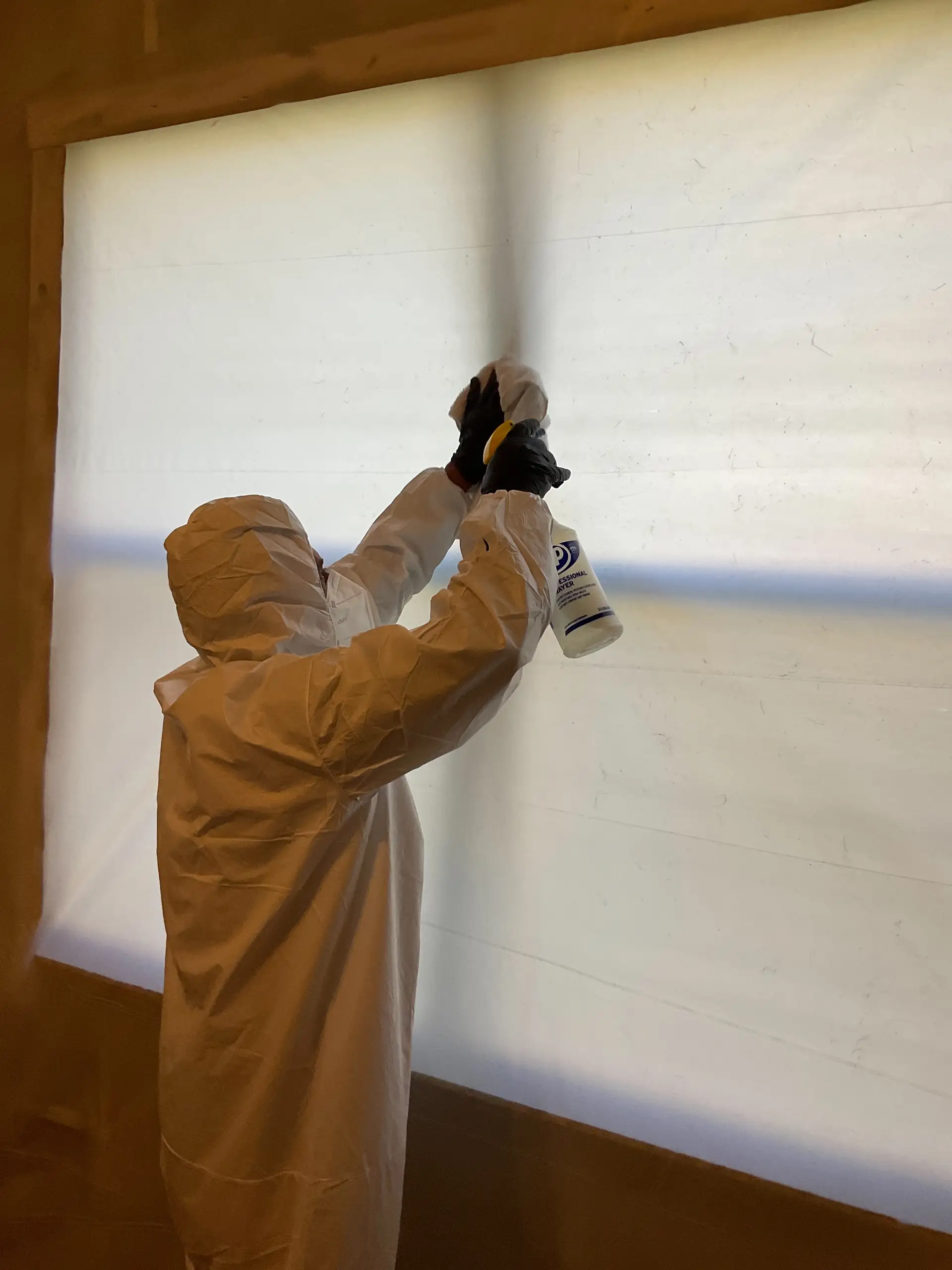
Use plastic sheeting and tape to block off the contaminated area from the rest of your property. This containment barrier helps stop mold spores from spreading to unaffected spaces.
3. Improve Air Circulation
Set up fans to direct air outside and keep interior doors closed. Dehumidifiers can also help by reducing moisture levels, which slows down further mold growth.
4. Remove Affected Items
Carefully take out items damaged by mold. Porous materials that can’t be cleaned should be thrown away, while non-porous items can often be cleaned and reused. Handle everything cautiously to avoid spreading spores.
5. Clean and Dry Thoroughly
Use appropriate cleaning solutions to scrub surfaces, then dry the area completely with dehumidifiers to prevent moisture from returning.
These steps provide a temporary solution until you can arrange for professional mold remediation.
Signs You Need a Professional
Sometimes, dealing with mold on your own just isn’t enough. That’s when it’s time to call in the experts.
Mold Covering More Than 10 Square Feet
If the mold covers an area larger than 10 square feet, it’s time to bring in a professional. Large infestations often point to deeper problems, like structural damage or hidden mold in places you can’t easily check – HVAC systems, behind walls, under flooring, or even in crawl spaces and attics. This is especially common after major water damage.
Health Issues
Persistent health problems can also signal it’s time for professional help. If anyone in your home is dealing with coughing, breathing troubles, worsening allergies, eye irritation, headaches, or more severe asthma symptoms, mold might be the culprit. These symptoms could mean mold is more widespread than what you can see, requiring a thorough inspection and cleanup.
Mold Remediation Services
When DIY efforts fall short, Total Care Restoration steps in with expert mold remediation services.
| Service Component | What They Offer |
|---|---|
| Initial Response | 24/7 emergency service |
| Assessment | Free evaluations with detailed reports |
| Remediation | Certified technicians using advanced tools |
| Insurance Support | Direct billing to your insurance |
| Quality Assurance | Licensed, bonded, and insured services |
Their team handles everything – from containing the problem to fully restoring your space – making sure your property is safe and mold-free. They also provide detailed documentation to help with insurance claims and ensure peace of mind for the future.
Conclusion
Taking quick action when mold appears is crucial. To manage minor mold issues, follow these five steps: document the damage, seal off the area, improve airflow, remove affected items, and clean thoroughly. While these steps can help with small mold problems, some situations require professional assistance.
If you’re dealing with widespread mold growth or ongoing health concerns, it’s time to call in the experts. Total Care Restoration offers 24/7 emergency mold remediation services to get your property back to normal. Their approach is summed up in their mission:
"At Total Care Restoration, our mission is to help homeowners and business owners restore their damaged properties to a pristine condition with the highest level of service, care, and integrity. We will alleviate the stress associated with these types of situations by providing fast, effective, and transparent services from initial consultation through completion."
Use these steps as a guide to decide whether to manage the issue yourself or reach out to Total Care Restoration for professional support. Acting quickly can prevent a small mold problem from turning into a bigger issue.
FAQs
What health risks can mold exposure cause, and how can I stay safe during cleanup?
Exposure to mold can lead to a variety of health issues, especially for individuals with allergies, asthma, or weakened immune systems. Common symptoms include sneezing, coughing, skin irritation, and in more severe cases, respiratory problems. Prolonged exposure can worsen these effects, so addressing mold quickly is essential.
To protect yourself during cleanup, wear protective gear such as gloves, goggles, and an N95 respirator mask to avoid inhaling mold spores. Ensure the area is well-ventilated, and avoid disturbing the mold unnecessarily to prevent it from spreading. If the mold covers a large area or has deeply penetrated surfaces, consider consulting professionals for safe and thorough remediation.
How do I know if I need professional help for a mold problem in my home?
Deciding between a DIY approach and professional mold remediation depends on the size and severity of the issue. If the mold covers more than 10 square feet or you suspect hidden mold behind walls or under floors, it’s best to call in professionals. Additionally, if the mold stems from sewage or contaminated water, or if anyone in your household is experiencing health issues like allergies or respiratory problems, professional remediation is highly recommended.
Experts can ensure thorough removal and prevent future mold growth, giving you peace of mind and a safer home environment. Professional services also handle complex situations like insurance claims, making the process smoother for you.
What should I do if I find mold in my HVAC system or hidden areas of my home?
If you find mold in your HVAC system or other hidden areas, it’s crucial to act quickly to prevent further damage and health risks. Start by turning off your HVAC system to avoid spreading mold spores throughout your home. Avoid disturbing the mold yourself, as improper handling can worsen the problem.
Professional help is often necessary for hidden mold. Certified technicians, like those at Total Care Restoration, specialize in safe and effective mold remediation. They can identify the extent of the issue, contain the affected areas, and restore your home to a healthy condition. Additionally, they work directly with insurance companies to simplify the process for homeowners.
Related posts
Want to Learn More?
Read our comprehensive guide covering everything you need to know about this topic.
The Complete Guide to Mold Remediation in FloridaNeed Professional Help?
Our expert team is ready to assist with your mold remediation needs.
View Mold Remediation Services