Grease Fire Cleanup: What You Can Save After a Cooking Fire
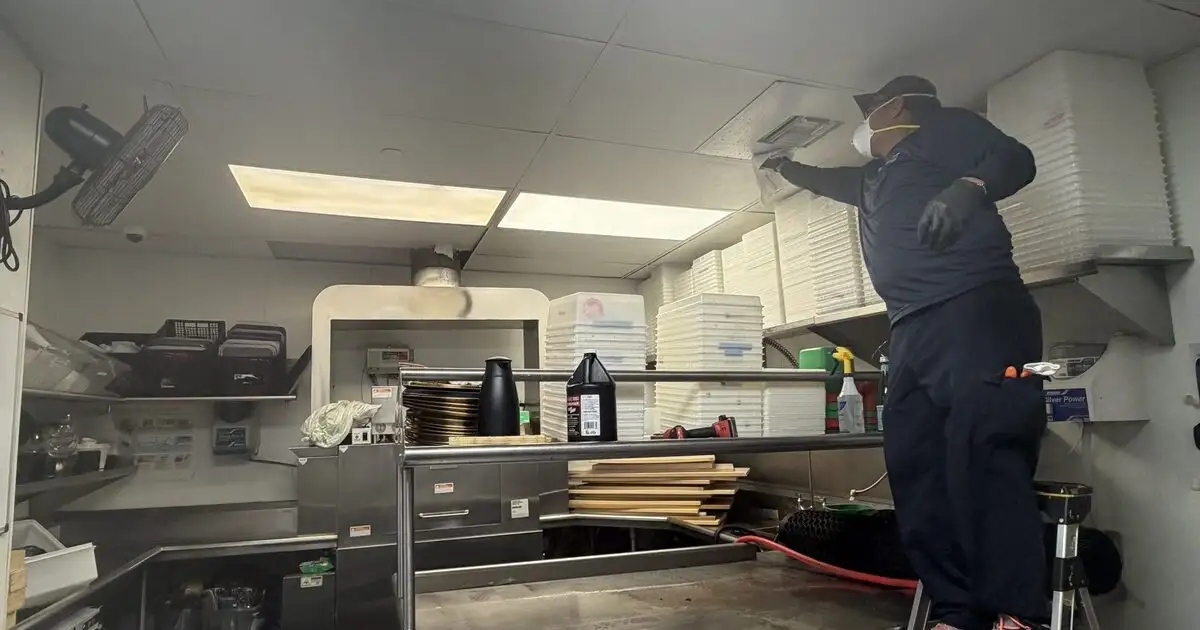
After a grease fire is out, the first hour is about safety, fresh air, photographs, and keeping the residue where it landed. Grease film and protein residue are sticky, and they smell. A dry sponge or a wet rag can smear that film across the cabinet, the hood, and the ceiling. A covered pan that cooled on the burner is a smaller cleanup than yellow film on porous doors, ceiling texture, or a vent.
This page stays with a contained stovetop or grease fire: what the residue is, what is still salvageable, and where a household wipe should stop. A fire that moved through the house is the subject of the first 48 hours after a house fire. Smell that is still in the rooms after the film is cleaned is the subject of smoke odor removal.
Solicite un estimado gratis en el formulario de contacto.
Is the fire out, and is it safe to stay?
NFPA's cooking-safety page gives one instruction for a small grease fire, and then it tells you to leave. Slide a lid over the pan, turn off the stovetop, and leave the pan covered until it is completely cool. Never throw water on the fire. If the fire does not go out, or you do not feel comfortable sliding the lid on, get everyone out and call the fire department from outside. For an oven fire, the same page says to turn off the heat and keep the door closed.
That is the whole suppression step this article will give. The cleanup starts only after the pan is cool and the fire department, if you called, has said you may go back in. FEMA's homeowner guide to residential smoke damage tells people to assess the home once local officials, such as the fire department, allow them to return. If you can see damage to electrical equipment or to the outdoor parts of the heating and cooling system, that guide says to contact an electrician or an HVAC contractor. Leave gas and power alone when you are not sure they are safe.
The first hour, before any cleaner
Once you are allowed back in, do these things before any cloth touches the film.
- Air the kitchen with windows and doors. FEMA's light-smoke steps start by opening windows and doors. Skip that if the air outside is still full of smoke.
- Keep people and pets out of the filmed area. If you handle residue yourself, FEMA lists goggles, an N95 or P100 respirator, gloves, long sleeves, long pants, and closed-toe shoes.
- Photograph the kitchen before you clean. Wide shots, then close-ups of the pan, the hood, the cabinets, the ceiling, and any film outside the kitchen. FEMA says those photographs, plus notes on who did what and when, belong in the file you give the insurer, and they should be taken before remediation starts.
- Leave the air conditioner and the range hood off. FEMA says not to turn on the HVAC air handler until the bulk of the soot or ash has been removed, because the handler spreads particles onto surfaces you already cleaned. Leave the hood off as a precaution until the filter and the duct have been checked. The IICRC S700 consolidated draft (IICRC S700) lists grease hood systems with the other air-conveyance equipment a fire restorer assesses.
- Deal with food before you deal with the cabinets. USDA says to discard all food that has been near a fire. Smoke fumes and firefighting chemicals cannot be washed off. The list includes food left out, food in cardboard or plastic wrap, food in cans, bottles, and jars, and food in the refrigerator or freezer, because refrigerator seals are not airtight and fumes can get inside.
Smoke that has already left the kitchen, and the steps for keeping it from settling through the rest of the house, are covered in how to stop smoke damage after a fire.
Grease film, protein residue, dry soot, and wet smoke
A holiday pan can involve more than one residue. Oil produces a greasy film. Burned meat, fish, or poultry produces the protein residue defined below. The quotations in this section come from the IICRC S700 consolidated draft opened for this article. That file is a draft, and the published standard is a separate document.
| Residue | What it looks like | What a restorer uses |
|---|---|---|
| Grease or protein film | Protein residue is a translucent yellow-to-brown film, greasy and sticky, with a burnt-meat smell. The draft calls a protein fire a nearly invisible greasy residue with a pungent, rancid odor. A dry sponge may smear oily film and protein residue. | Dry rubber sponges are not recommended on oily residues, protein residue, semi-gloss paint, gloss paint, or glass. Fire-residue cleaners and degreasers are typically alkaline. Test the product, and follow the label. |
| Dry soot | Dry, loose, non-smeary particles that settle on horizontal surfaces. The draft ties this to an oxygen-rich fire with cellulosic fuel such as wood or paper. | A cellular rubber sponge, used dry, lifts non-adhered residue on porous and semi-porous surfaces. HEPA vacuuming is one of the gentle dry steps. Dry removal often comes before a wet wash. |
| Wet smoke | Slower, oxygen-starved fires leave residue that condenses into a film or a stain. Synthetic fuel such as plastic is described as black and smeary. The film can sit inside cabinets and soffits. | Wet smoke bonds in different degrees and can need a more aggressive clean. The draft says the extent may require opening wall cavities, cabinets, and soffits. Test cleaning decides the method. |
The draft also says that, often, dry mechanical cleaning followed by a wet process gives the best removal of fire residues and odors, while some hard surfaces, including ceramic tile, porcelain, and glass, may need only a liquid cleaner. Glass and high-gloss paint are in the group where a dry sponge may smear, so the first move on a backsplash is a tested wet clean, after loose debris is lifted.
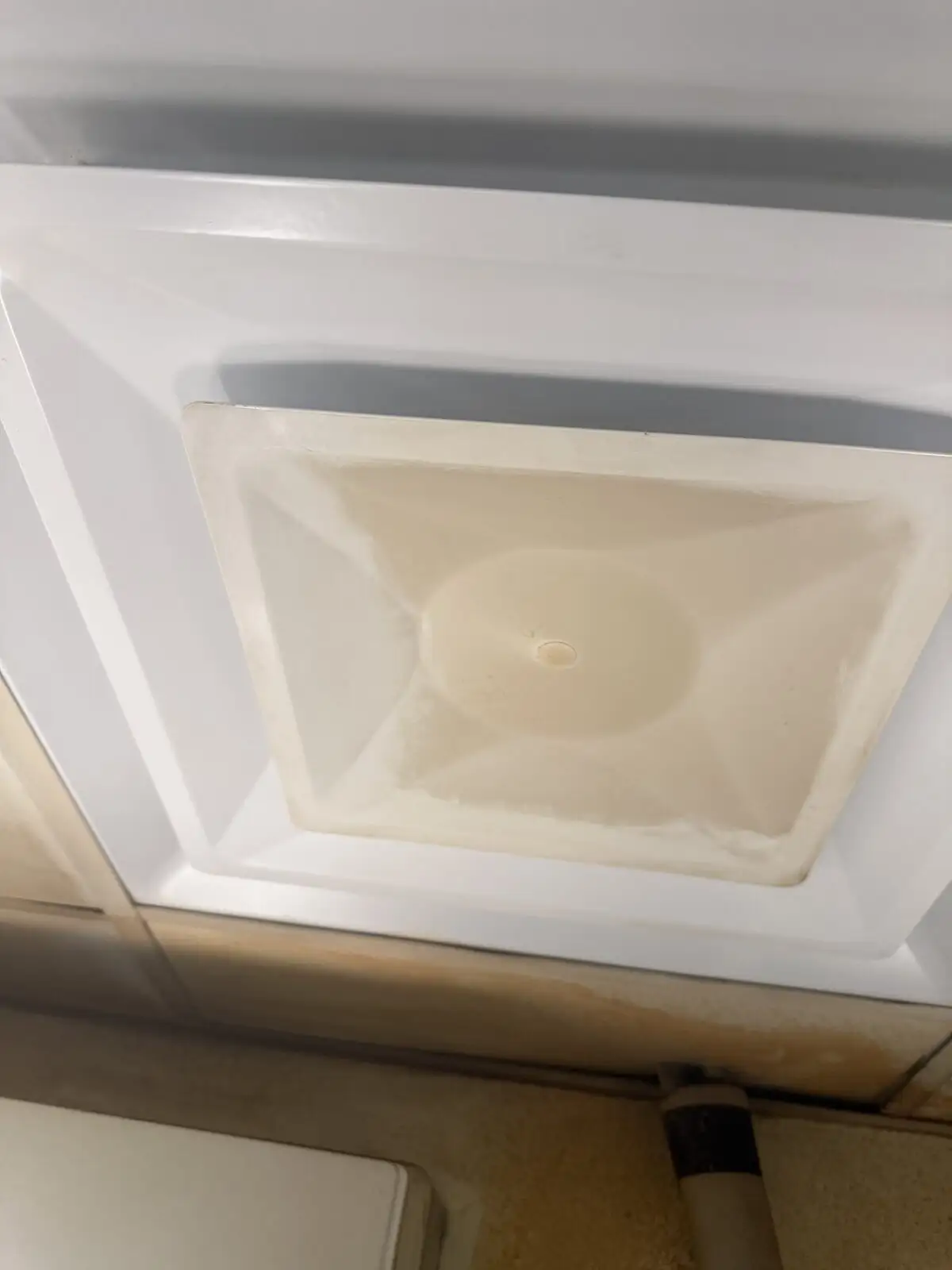
Grease film on a ceiling air diffuser, from a Total Care Restoration job photograph already in the site gallery. A cooking fire can leave a similar yellow film on a ceiling or a vent. This frame shows the film. It does not show flames.
What is salvageable after a contained grease fire
Salvage is a materials question. The S700 draft calls a surface restorable when residue removal, odor removal, refinishing, or repair can return its appearance and use, and when that work is economically feasible. It calls a surface non-restorable when the integrity, appearance, and odor are permanently changed and cannot be returned by any means. Discoloration from a smoldering fire, including a protein fire, can show up quickly and can be permanent. A finished surface that cannot be repainted or refinished, and that stays discolored, is the draft's example of non-restorable. A surface that cleans up with a changed look, and that can take paint or a new finish, can still be salvageable.
Use that split on a contained cooking fire:
- Usually worth a test clean: sealed metal, glass, ceramic tile, and porcelain. The draft lists tile, porcelain, and glass as surfaces that may need only a liquid process. Cookware that was hit by firefighting chemicals follows the USDA wash-and-bleach step in the food section above. A pan that was only covered and cooled is the pan itself, and the food that was in it is discarded.
- Stop and get a test before you scrub: porous cabinet doors, unfinished wood, and ceiling texture. The draft defines a porous material as one with openings that let liquids, vapors, or solids in. A dry sponge is the wrong tool on oily or protein film, and a wet rag can push that film into the pores. Staining on a door that can be repainted is a different decision from a door the film has already soaked.
- Leave these to a crew: the range-hood filter and anything inside the duct, electronics, and anything next to wiring you have not confirmed is off. FEMA says to shut electronics down and HEPA-vacuum them rather than wet-clean them, with the power off, without over-wetting, and by the manufacturer's method. The hood is an air-conveyance path in the S700 draft, and the duct is enclosed.
Belongings that left the kitchen with ordinary smoke film, such as clothes and hard contents, are a different job. The steps for those items are in 7 steps to clean smoke-damaged items. Where a household fire cleanup and a professional job diverge is in DIY and professional fire restoration compared.
Photographs before the first wipe
Take the pictures while the film is still in place. FEMA's guide asks for digital photographs of the rooms, with notes, before remediation, and it says the record of who, what, where, when, and why matters along with the pictures. For a contained cooking fire, that set is:
- the pan, the burner, and the lid, including whether the lid is still on
- the hood, the filter if you can see it without opening the duct, and the ceiling above the stove
- cabinet faces, the backsplash, and any yellow or brown film that is easy to miss on a light surface
- the nearest air supply and return, if the film reached them
- food you are discarding, so the refrigerator and the counter are in the record
- one wide shot that shows how far the film traveled past the stove
Common fire damage reporting mistakes is the page for the reporting pitfalls that show up after those photos exist. This list describes what to capture. It is not legal or insurance advice.
Thanksgiving is the peak day for home cooking fires
NFPA's Thanksgiving fire-safety page says Thanksgiving is the peak day for home cooking fires, with more than three times the daily average. Christmas Day and Christmas Eve rank second and third, each with nearly twice the daily average. On Thanksgiving Day in 2024, fire departments reported an estimated 1,139 home cooking fires, which the page describes as 321 percent of the daily average. For 2020 through 2024, the same page says 80 percent of structure fires on Thanksgiving Day are cooking fires, those cooking fires account for 35 percent of the civilian injuries in structure fires that day, and no civilian deaths occurred in Thanksgiving cooking fires in those years.
The annual picture is on NFPA's cooking page, and the denominators are different, so they should stay separate. From 2020 through 2024, an annual estimated 48 percent of home structure fires, 35 percent of home fire injuries, and 16 percent of home fire deaths involved kitchen and cooking equipment. Two-thirds of home cooking fires, 66 percent, start when food or other cooking materials ignite. Ranges or cooktops account for 51 percent of home cooking fire incidents. Unattended equipment is a factor in 25 percent of reported home cooking fires and in half of the associated deaths.
Those figures are why a holiday pan is a likely source. They are not a prediction about one kitchen.
When a restoration crew should take the kitchen
Call for the cleanup when any of these are true:
- the film is on porous cabinets, ceiling texture, or rooms beyond the stove
- the hood ran during the fire, or you can see film on the filter
- you cannot tell grease film from other smoke, or a wipe already smeared it
- wiring, gas, or the air handler may be involved
- the fire department responded, or the fire left the pan
Kitchen fire damage restoration is the hire page for that scope. Fire damage restoration is the service hub for fire and smoke cleanup beyond one stove. If the odor is what remains after the film is gone, start at smoke odor removal and leave the odor methods on that page. Companies that clean soot as a service are compared in soot removal services compared.
Total Care Restoration is an IICRC-certified firm, firm number 219076, as listed in the site footer. The work on a grease-film kitchen is restoration: remove the residue, clean what can be saved, and repair what cannot.
Solicite un estimado gratis en el formulario de contacto.
Frequently Asked Questions
Want to Learn More?
Read our comprehensive guide covering everything you need to know about this topic.
The Complete Guide to Fire Damage RestorationNeed Professional Help?
Our expert team is ready to assist with your fire damage restoration needs.
View Fire Damage Restoration Services