Ozone Air Treatment for Mold and Pathogens
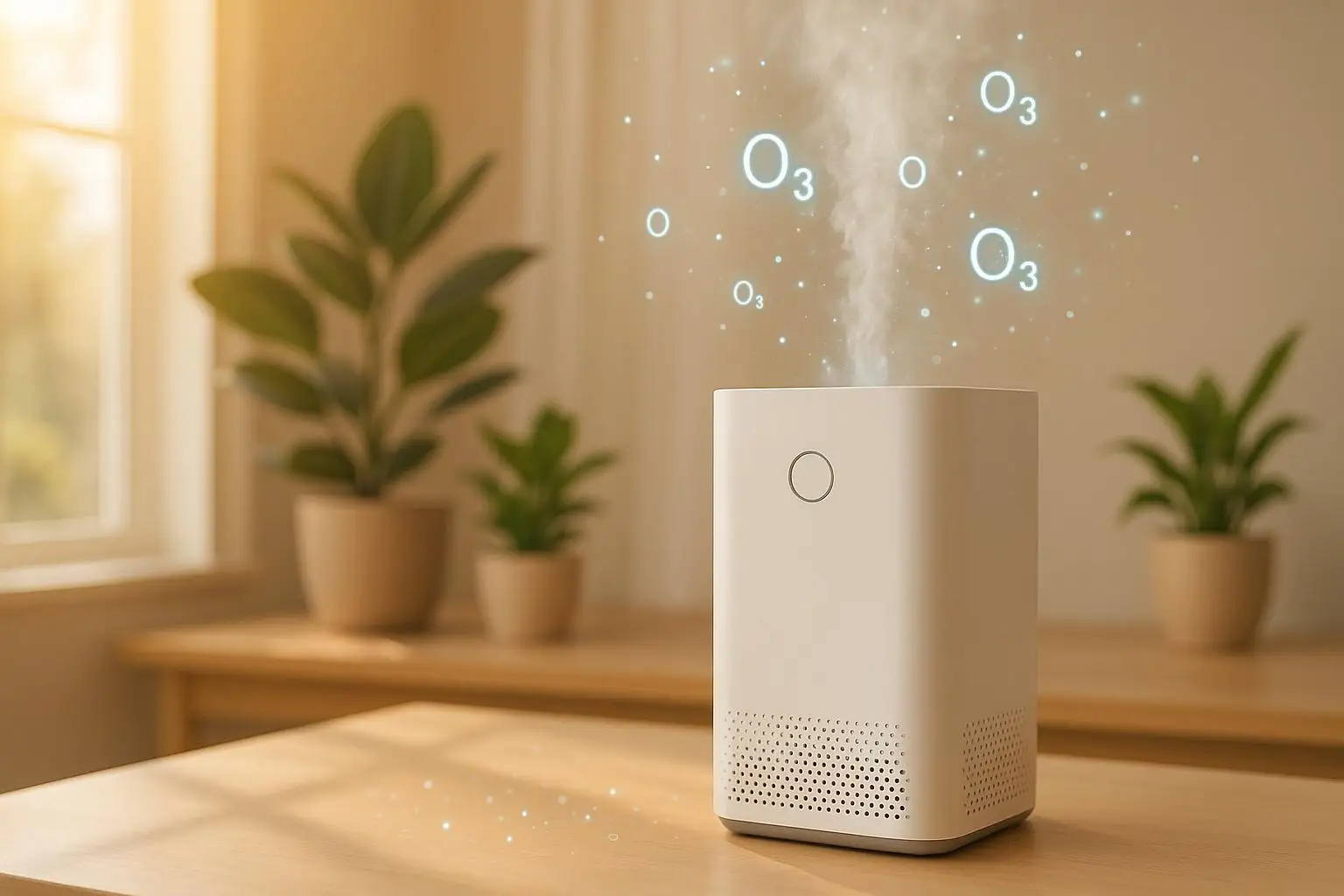
Ozone air treatment is a powerful method to eliminate mold, bacteria, and viruses at a molecular level. By using ozone gas (O₃), this process breaks down harmful microorganisms and odors without leaving behind residues. It’s widely used in homes, commercial spaces, and industries like healthcare and hospitality for deep cleaning and indoor air quality.
Key Takeaways
- How It Works: Ozone oxidizes and destroys cells of mold, bacteria, and viruses, preventing their spread.
- Applications: Effective for post-disaster restoration, odor removal, and disinfecting areas like hospitals, vehicles, and rental properties.
- Safety: Requires strict precautions due to potential health risks at high ozone levels.
- Limitations: Less effective on porous materials and can damage sensitive items like plants or rubber.
While ozone treatment is effective, it’s not suitable for everyday use and should be handled by professionals for safety and efficiency.
What Ozone Can and Cannot Do
How Ozone Eliminates Mold and Pathogens
Ozone works by neutralizing harmful microorganisms through oxidation, directly targeting and breaking down their essential structures. This process makes mold spores, bacteria, and viruses unable to survive or reproduce. Below, we’ll explore how ozone’s oxidative power works and the environmental factors that influence its effectiveness.
The Oxidation Process
Ozone’s oxidation process is highly effective at dismantling microbial structures. It breaks down cell walls, causing leaks within the cells. This happens when ozone oxidizes nucleic acids and disrupts carbon–nitrogen bonds, leading to the breakdown of these critical components. With an oxidation-reduction potential of 2.08 eV, ozone has the chemical strength to attack the very foundation of microorganisms.
Different microbes respond differently to ozone. For viruses, ozone penetrates their protein coat, damaging the RNA or DNA inside. At higher concentrations, ozone can completely destroy the protein shell, leaving the virus unable to function. In bacteria, ozone disrupts key enzymatic processes and breaches the cell membrane, causing the bacteria to die. Once the cell wall is compromised, intracellular contents leak out, effectively neutralizing the bacteria.
Fungi and mold are similarly affected. Ozone infiltrates their cell walls, damaging internal structures like organelles and DNA, which prevents them from growing or spreading. Ozone’s ability to oxidize double bonds in DNA further hinders the survival of these organisms.
"The outermost layer of microorganism cells and their compositions are one of the primary criteria that determine the level of sensitivity to sanitizers including O3" – McDonnell and Russell, Researchers
Factors That Affect Ozone Performance
Several factors influence how well ozone works, including its concentration, exposure time, and environmental conditions. For instance, a concentration of 20 ppm applied for 4 minutes can eliminate surface microorganisms. However, disinfecting tomato and cucumber seeds required much higher concentrations – 150 mg O₃/Nm³ – for 90 to 120 minutes to target bacterial and fungal pathogens.
Humidity plays a crucial role. High humidity levels (around 90–95%) enhance ozone’s ability to penetrate and kill microorganisms. Warmer temperatures also speed up oxidation, but they can cause ozone to break down faster, which may reduce the treatment’s duration.
Organic matter, such as dust or debris, can interfere with ozone’s effectiveness. These materials compete with microorganisms for ozone molecules, so cleaning the area beforehand is often recommended. Additionally, microorganisms vary in their resistance to ozone. For example, molds are generally more resistant than yeasts, and yeasts are more resistant than bacteria. Among bacteria, Gram-negative strains are typically more sensitive to ozone than Gram-positive ones.
The type of ozone generator used also matters. UV ozone generators maintain consistent output even in high humidity, while corona discharge generators may lose efficiency under similar conditions.
Professionals carefully adjust ozone concentration, exposure time, and environmental factors to ensure effective treatment. Safety is paramount, with regulatory limits in place: the OSHA (OSHA) allows a maximum of 0.1 ppm over an 8-hour workday, while the EPA (EPA) caps exposure at 0.05 ppm.
Pros and Cons of Ozone Treatment
Ozone treatment comes with its own set of strengths and weaknesses, offering a mix of benefits and challenges. Understanding these helps determine how it fits into broader strategies for controlling mold and pathogens.
Main Benefits of Ozone Treatment
Ozone works by altering the chemical structure of harmful microorganisms, making it highly effective at neutralizing bacteria, viruses, molds, and airborne pollutants when used within safe limits. One standout feature is its speed – research indicates ozone neutralizes bacteria over 3,000 times faster than chlorine and disrupts bacterial membranes 50% more efficiently.
Another advantage is that ozone doesn’t leave behind harmful residues. Post-treatment, it naturally breaks down into oxygen, ensuring no lingering byproducts. Additionally, ozone is excellent for eliminating odors caused by food, pets, tobacco, mold, and mildew by breaking down organic compounds. Its ability to address multiple air quality issues makes it a versatile tool in restoration strategies.
Drawbacks and Safety Concerns
While effective, ozone treatment comes with health risks that require careful management. Exposure to ozone can lead to chest pain, coughing, shortness of breath, and throat irritation, and it can exacerbate asthma symptoms. Regulatory bodies like OSHA and the EPA have strict exposure limits – 0.1 ppm over an 8-hour period and 0.05 ppm, respectively. However, some ozone generators have been found to produce levels exceeding these safety standards.
Ozone also has its limitations. It struggles to penetrate porous materials, meaning deeply embedded mold may require additional remediation efforts. Its strong oxidizing properties can damage indoor plants, rubber, wiring, fabrics, and artwork. Furthermore, ozone can react with other indoor air quality, creating irritants like formaldehyde and ultrafine particles.
These factors make it essential to weigh ozone treatment against other available methods.
Ozone Treatment vs Other Methods
| Method | Effectiveness | Safety | Residue/Byproducts | Speed | Cost |
|---|---|---|---|---|---|
| Ozone Treatment | Highly effective against bacteria, viruses, molds, and odors | Requires evacuation and strict safety protocols | Breaks down into oxygen; no residue | Rapid disinfection (seconds to minutes) | Moderate |
| HEPA Filtration | Captures up to 99.97% of airborne particles (0.3 microns or larger) | Safe for use in occupied spaces | Requires regular filter changes | Continuous, gradual filtration | Low to moderate |
| UV-C Light | Effective against airborne pathogens with direct exposure | Safe if properly shielded; not for occupied spaces | No residual byproducts | Fast with direct exposure | Moderate |
| Chemical Disinfectants | Varies by product and application | Requires ventilation due to potential toxicity | May leave chemical residues | Moderate | Generally low |
| Hydroxyl Generators | Effective against a wide range of pollutants | Safer for use in occupied spaces | No harmful byproducts | Slower compared to ozone treatment | Typically higher |
This table shows that while ozone treatment offers quick and powerful disinfection, it requires strict safety measures during use. Choosing the right method depends on factors like whether the space can be evacuated and the type of contamination being addressed.
When and How to Use Ozone Treatment
Ozone treatment is best used as a targeted solution for specific remediation needs, not as an everyday air purifier. Knowing when and how to apply this method ensures both effectiveness and safety.
Best Times to Use Ozone Treatment
Ozone treatment shines in situations that demand thorough remediation:
Post-Disaster Restoration: After events like floods, burst pipes, or storm damage, mold can start growing within just 24–48 hours. During the drying and restoration process, ozone treatment can help eliminate mold spores and bacteria that regular cleaning might miss. It’s also effective after fire damage, neutralizing lingering smoke odors and reducing harmful particles.
Property Management: For landlords or property managers, ozone treatment is an excellent way to reset spaces between tenants. It effectively neutralizes odors from previous occupants, pets, or other sources, leaving the property fresh for new residents.
Commercial and Healthcare Facilities: These environments often use ozone treatment as part of deep-cleaning protocols or after contamination events. According to the World Health Organization, ozone is one of the most effective disinfectants for microorganisms. This makes it valuable in medical facilities, restaurants, and other commercial spaces where thorough disinfection is critical.
Vehicle Detailing and Hospitality: Ozone treatment is a go-to method for Top 7 Fire Odor Neutralization Techniques in cars, boats, RVs, and hotel rooms. Unlike air fresheners that only mask smells, ozone works at the molecular level to remove pollutants. Research shows that ozone can kill mold, bacteria, and viruses at concentrations as low as 3–4 ppm.
These scenarios highlight the versatility of ozone treatment and set the stage for a structured application process.
Ozone Treatment Process Steps
To maximize the benefits of ozone treatment, following a clear process is key.
Pre-Treatment Preparation: Start by addressing the root cause of contamination. Remove the source of odors or pollutants and clean the affected area thoroughly. Ozone works by oxidizing organic compounds, but it won’t resolve the underlying issue if the source remains. Seal the treatment area to prevent ozone from spreading to occupied spaces, and remove or protect sensitive items like plants, rubber, artwork, and electronics. Since ozone can be harmful, ensure that all people and pets leave the area before starting the treatment.
Treatment Execution: Use an ozone generator appropriate for the size of the space and the level of contamination. Studies suggest that a concentration of 20 ppm with a 4-minute exposure can effectively eliminate bacteria like Escherichia coli and Staphylococcus aureus, as well as fungi such as Aspergillus fumigatus and Candida albicans. Monitor ozone levels closely. If levels exceed 0.1 ppm, the area should remain unoccupied, and for readings above 0.3 ppm, entry should only be allowed with proper respiratory protection. This careful approach ensures both safety and efficiency.
Post-Treatment Protocols: After the treatment, allow time for the ozone to naturally break down into oxygen, which can take anywhere from 30 minutes to several hours depending on the concentration and ventilation . To speed up the process, use fans or HVAC systems to ventilate the space. Always test the air quality to confirm ozone levels have returned to safe limits before reoccupying the area.
Moderation is key when using ozone treatment. Overuse or excessively high concentrations aren’t necessary for effective results. Instead, ozone treatment should be part of a broader cleaning and remediation strategy, complementing other methods to ensure a safe and clean environment.
Why Hire Professional Ozone Treatment Services
Ozone treatment is not something to take lightly. Achieving the right ozone concentration levels requires precision, and attempting it on your own can be risky. While it’s tempting to buy or rent an ozone generator, DIY efforts often fall short and can even pose serious health risks. Professional ozone treatment services bring the expertise, equipment, and safety measures needed to ensure the process is done effectively and securely.
Advantages of Professional Services
Safety First: Ozone treatment involves concentrations of 10–20 ppm, which are unsafe for humans and pets to be around. Professionals are trained to handle these levels, preventing respiratory harm and avoiding damage to materials in the treated space.
Specialized Equipment: Professionals use high-grade, industrial equipment tailored to the size of the area and the level of contamination. They also account for environmental factors like humidity, which can significantly affect ozone production (e.g., 40%–70% humidity can lower corona discharge output by up to 70%).
Thorough Process: Experts follow a detailed protocol, including removing pollutant sources, sealing the area, and conducting post-treatment air quality tests. Many services also incorporate HEPA filtration, an internationally recognized method for removing mold and other contaminants, and often partner with third-party hygienists to ensure the environment is safe.
Compliance with Regulations: Professionals adhere to EPA recommendations, which emphasize eliminating pollutant sources, improving ventilation, and using proven air cleaning methods. This ensures ozone treatment is part of a broader, effective remediation plan.
With these advantages, it’s clear why professional services are the safer and more reliable choice. Total Care Restoration is a great example of how expert services can deliver these benefits.
Total Care Restoration: Mold and Air Quality Experts
Total Care Restoration specializes in addressing Common Misconceptions About Mold in Homes for both homes and businesses. Their team of certified technicians knows how to safely and effectively use ozone treatment as part of a comprehensive restoration strategy.
Always Available: Emergencies don’t wait for business hours. Total Care Restoration offers 24/7 emergency services at (786) 610-6317, providing a quick response when mold or air quality issues arise – especially after water damage, when mold can spread rapidly.
Certified Professionals: Their technicians are highly trained and certified in the latest remediation techniques. They understand that ozone acts as a germicide over 3,000 times faster than chlorine and know how to use it safely. Beyond ozone treatment, they also handle Emergency Water Damage Checklist: First 24 Hours, fire restoration, and full-scale Mold Remediation.
Insurance Assistance: Dealing with property damage is stressful enough without worrying about insurance claims. Total Care Restoration simplifies the process by handling claims directly with insurance companies, saving property owners time and effort.
Cutting-Edge Tools and Techniques: Total Care Restoration uses advanced equipment and follows strict industry protocols. They ensure proper ventilation and air recycling after ozone treatment to protect occupant health. Their approach not only tackles immediate contamination but also addresses moisture and structural issues to prevent future problems.
Conclusion
Ozone air treatment provides an effective way to eliminate mold and pathogens in both homes and commercial spaces. Unlike traditional air purifiers that often trap contaminants, ozone works at a molecular level, breaking them down completely through its strong oxidizing properties.
One standout feature of ozone is its speed – it works up to 3,000 times faster than chlorine. Additionally, it can penetrate areas that are typically hard to reach, such as air ducts, behind walls, and even porous materials like insulation and fabrics. This makes it a powerful option for addressing contamination in places where conventional methods fall short. However, its effectiveness comes with the need for careful, controlled use.
Safety is a key concern. The ozone levels required for proper treatment often exceed the safety limits of 90 ppb (1-hour) and 70 ppb (8-hour) exposure standards. This highlights why ozone treatment should always be handled by professionals rather than attempted as a DIY project.
Professional services ensure that ozone treatment is carried out safely and effectively. Experts use specialized equipment, follow strict safety protocols, and take steps like source removal, sealing, and thorough ventilation. Companies such as Total Care Restoration offer a combination of ozone treatment expertise and broader restoration services. They’re available 24/7 for emergencies and can be reached at (786) 610-6317.
FAQs
How does ozone treatment compare to methods like UV-C light and HEPA filtration for removing mold and pathogens?
Ozone treatment works wonders at eliminating mold and airborne pathogens, especially in those tricky, hard-to-reach spots. It does this by breaking down the cell membranes of these microorganisms. But there’s a catch: ozone gas can be harmful if inhaled, so this method is off-limits for spaces where people are present.
UV-C light is another option for neutralizing microorganisms. While it’s effective, it can also produce ozone and isn’t the most practical choice for residential settings. In contrast, HEPA filtration stands out as a safer and more dependable solution. These filters capture 99.97% of particles and don’t generate ozone, making them perfect for ongoing use in homes or businesses. While ozone treatment offers powerful results, it demands careful handling, whereas HEPA filters are a safer bet for everyday air purification.
What safety measures should be followed during ozone treatment in homes or businesses?
To stay safe during ozone treatment, ensure the area is completely empty – this includes removing pets and plants. Once the treatment is finished, air out the space thoroughly before stepping back in. If you’re working with ozone equipment, always wear proper protective gear like gloves, goggles, and ozone-rated respirators. Follow the manufacturer’s instructions carefully and adhere to local safety regulations to minimize any health risks.
Are there any surfaces or materials where ozone treatment might not be safe or effective?
Ozone treatment isn’t suitable for every surface or material. Prolonged exposure or high concentrations of ozone can harm items like rubber, plastics, fabrics, paint, and some metals. For example, copper piping might corrode or show surface changes, such as yellowing or softening.
To avoid damage and ensure effective results, it’s crucial to evaluate the materials in the area being treated. Consulting with professionals who specialize in ozone applications is a smart move. If you’re uncertain, experts like Total Care Restoration can assess your space and suggest the most effective way to handle mold and airborne pathogens.
Related posts
Want to Learn More?
Read our comprehensive guide covering everything you need to know about this topic.
The Complete Guide to Mold Remediation in FloridaNeed Professional Help?
Our expert team is ready to assist with your indoor air quality needs.
View Indoor Air Quality Services