How Negative Pressure Prevents Mold Spread
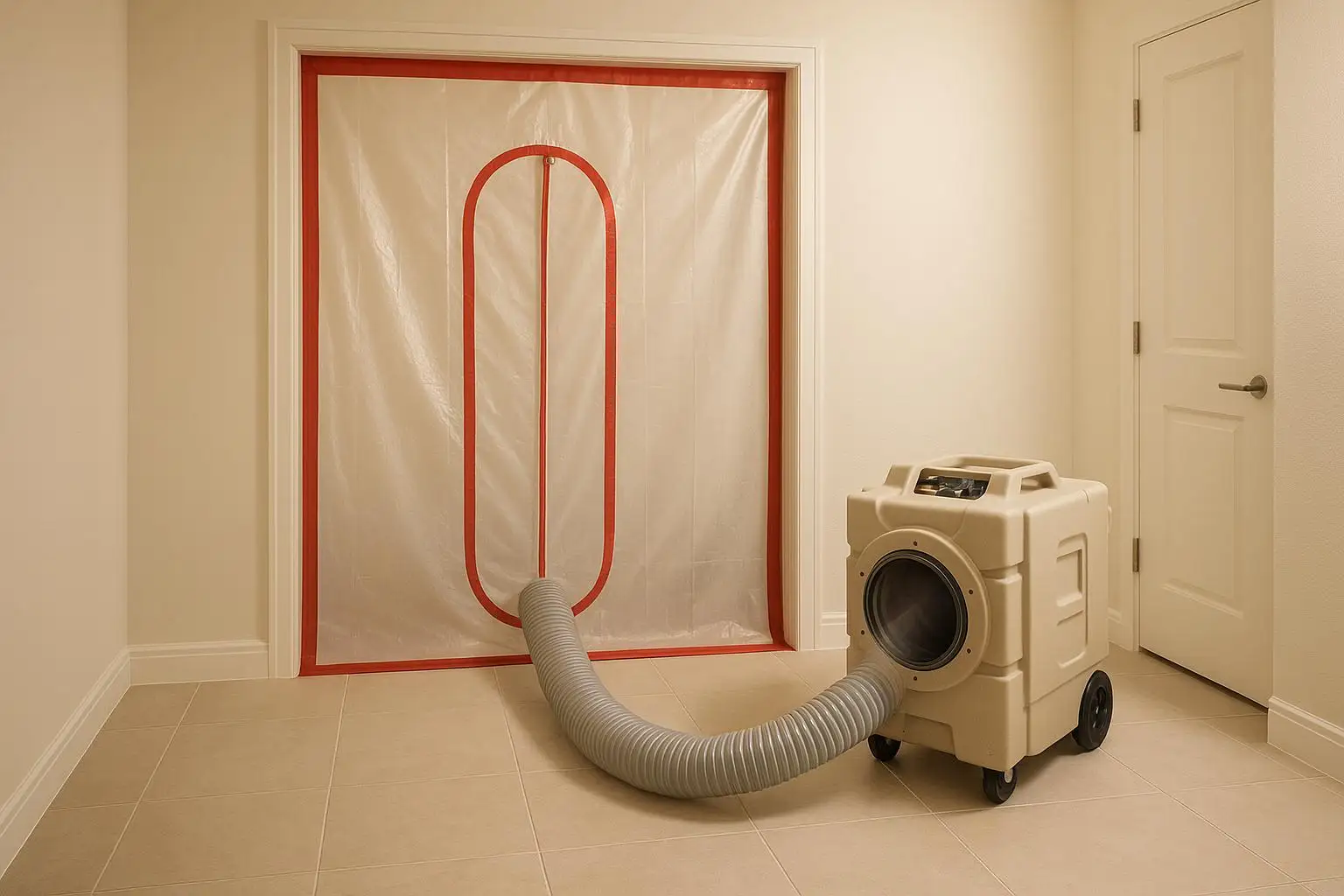
Negative pressure is a powerful method to stop mold from spreading during remediation. Here’s how it works and why it’s effective:
- What is Negative Pressure?
It’s when the air pressure inside a space is kept lower than the surrounding areas, pulling air inward. This prevents mold spores from escaping the affected zone. - How It Works:
- HEPA Filters: Remove 99.97% of particles, including mold spores (4–20 micrometers in size).
- Air Changes: The system cycles air 4–6 times per hour to maintain clean airflow.
- Barriers: Plastic sheeting seals off the area, with visible inward billowing showing proper containment.
- Why It’s Important:
Mold spores can spread quickly, causing health issues and property damage. Negative pressure traps these spores, keeping other areas safe. - Key Tools Needed:
- Negative air machines with HEPA filters
- Polyethylene sheeting for barriers
- Differential pressure monitors for accuracy
Professional Mold Remediation teams use these methods to ensure safe, effective containment. Acting fast is crucial, as mold can grow within 48 hours.
How to Create Negative Pressure
Equipment Needed for Negative Pressure
Creating effective negative pressure requires the right tools to safely contain mold and other contaminants. At the heart of this setup are negative air machines, also known as HEPA air scrubbers. These machines should have a 2-stage or 3-stage filtration system, including a pre-filter and a HEPA filter, which is essential for capturing fine particulates like mold spores, bacteria, and allergens.
Another key element is physical barriers. Polyethylene sheeting is commonly used to build containment walls, but reusable containment barrier systems can be a more efficient alternative to traditional methods involving poly sheeting and drywall. To seal these barriers, you’ll need materials like tape, caulk, and expanding foam to close off any air leaks around the edges.
Additionally, differential pressure monitors are crucial for accurately measuring and maintaining negative pressure. You’ll also need ductwork to channel contaminated air outside the building and materials to seal off HVAC vents within the containment zone.
Setting Up Negative Pressure
Once you have the necessary equipment, the next step is to set everything up properly. This requires careful planning and attention to detail. Start by constructing containment walls using durable plastic sheeting, ensuring all structural gaps are sealed with tape or fasteners. Seal off HVAC vents within the containment zone using preservation tape to prevent air exchange with the rest of the building. Remember, negative pressure works by pulling air inward through any openings, so even small gaps can compromise the system.
Next, position the HEPA-equipped air filtration device inside the containment area to ensure optimal air circulation. Set up the system to expel contaminated air to a safe location outside, making sure all outgoing air passes through the HEPA filter.
To meet industry standards, aim for 4–6 air changes per hour, but always check local guidelines to ensure compliance. Maintaining proper negative pressure means the amount of air being pulled out must exceed the amount coming in.
Once the system is running, continuous monitoring is essential to keep everything functioning as it should.
Monitoring and Maintaining Negative Pressure
After the system is installed, it’s crucial to ensure it continues to operate effectively throughout the remediation process. Regular monitoring is key. Use pressure gauges to frequently check the system, especially during times when the containment area is accessed.
Inspect filters regularly and replace them when they start to show wear. Ductwork should also be checked for any signs of damage and replaced as needed to maintain proper airflow. If pressure readings fall outside the target range, adjust the machine’s settings or reseal any leaks immediately. For precise, ongoing evaluation, a portable differential pressure monitor is your best tool.
How Negative Pressure Stops Mold Spread
Containing Airborne Mold Spores
Negative pressure works by pulling air inward, effectively trapping mold spores within the remediation zone. This is achieved using an exhaust fan that removes contaminated air from the area. The EPA explains it best: "Maintaining the containment area under negative pressure will keep contaminated air from flowing into adjacent, uncontaminated areas and possibly spreading mold".
A simple way to confirm that negative pressure is working is by observing the polyethylene sheets used in the containment setup. If they billow inward, it’s a clear sign that the system is functioning as intended. This setup not only contains the mold spores but also prepares the space for effective filtration, which is explained in the next section.
How HEPA Filters Work
Once the contaminated air is contained, HEPA filters take over as the next line of defense. These filters are highly efficient, capturing at least 99.97% of particles as small as 0.3 micrometers. Since mold spores typically measure between 4 and 20 micrometers, HEPA filters are more than capable of removing them.
"Since HEPA filters are designed to remove at least 99.7% of particles 0.3 micrometers or larger, and mold spores range in size from about 4 to 20 micrometers, the negative air machine will remove mold spores before exhausting it from the room."
Air from the work zone passes through multiple filtration stages, including the HEPA filter, ensuring mold spores and other particulates are removed. Some systems even include a pre-filter treated with an antimicrobial additive, adding another layer of protection before the air reaches the HEPA filter.
It’s worth noting the difference between true HEPA filters and "HEPA-like" alternatives. True HEPA filters meet strict standards, trapping at least 99.97% of particles, while lower-grade versions may not perform as effectively. When selecting equipment, look for certification and a serial number to confirm true HEPA performance.
Air Exchange and Indoor Air Quality
Beyond containment and filtration, maintaining steady air exchange is key to preserving indoor air quality. A standard practice is achieving four air changes per hour – essentially replacing the entire volume of air in the contained space every 15 minutes. This constant exchange helps clear airborne contaminants, particularly during activities that can stir up spores.
HEPA-equipped air filtration systems work hand-in-hand with negative pressure, continuously filtering airborne mold during remediation. For added protection, additional HEPA filtration units can be placed outside the containment zone to capture any spores that might escape, safeguarding the rest of the building. To ensure effectiveness, it’s critical that the HEPA devices inside the work area have enough cubic feet per minute (CFM) capacity to maintain the recommended air exchange rate.
Benefits and Challenges of Negative Pressure
Benefits of Negative Pressure
Negative pressure systems play a crucial role in containing contaminated air by exhausting more air than they supply. This creates a controlled environment where airborne particles, like mold spores, are effectively trapped. As experts explain, "airborne mold spores cannot escape the contained environment because the higher pressure air outside is constantly forcing itself in".
These systems are especially valuable in protecting workers. By reducing exposure to hazardous materials like mold spores, negative pressure provides a safer workspace. Additionally, it minimizes the risk of surface contamination outside the remediation zone, ensuring that airborne spores remain confined to the designated area.
Challenges and Limitations
While effective, negative pressure systems come with their own set of challenges. Setting up such systems requires skilled technicians who are well-versed in sealing techniques and equipment operation. This can be particularly tricky in confined spaces like attics, crawl spaces, or poorly ventilated basements, where achieving and maintaining proper negative pressure can be difficult.
Consistent performance also demands close monitoring. Pressure gauges and system functionality need regular checks to ensure the system is working as intended. Worker safety is another critical concern, especially in tight spaces, where additional protective measures and strict safety protocols are essential. On top of these logistical hurdles, the cost of professional-grade equipment, installation, and maintenance can be a significant investment. However, the long-term benefits often outweigh these expenses.
Comparing Different Pressure Methods
To understand why negative pressure is often preferred, it helps to compare it with other pressure management methods.
| Pressure Method | How It Works | Optimal Use Cases | Key Benefits | Limitations |
|---|---|---|---|---|
| Negative Pressure | Exhausts more air than is supplied, creating inward airflow | Mold remediation; hospital quarantine areas | Prevents spore migration; protects workers | Difficult to maintain in low-ventilation spaces; requires skilled setup |
| Positive Pressure | Pushes air into a space to create outward airflow | Poorly ventilated areas like attics where negative pressure isn’t feasible | Protects clean areas when negative pressure isn’t an option | Less effective at containing spores; requires precise planning |
| Neutral Pressure | Uses tight barriers to contain airflow within a space | Scenarios where outdoor venting isn’t possible | Operates without outdoor ventilation | Highly dependent on airtight containment; requires excellent sealing |
Negative pressure remains the go-to method for most mold remediation projects because of its ability to prevent contamination from spreading. However, in situations where negative pressure isn’t feasible, positive pressure offers a viable alternative for protecting clean areas. Neutral pressure systems, while less common, can be a fallback option when neither negative nor positive pressure is practical.
Ultimately, the success of any pressure management system hinges on proper implementation, regular monitoring, and strict adherence to safety protocols. Professional remediation teams assess each project individually, tailoring their approach to the specific environment, ventilation conditions, and project needs.
"Containment is the cornerstone of a safe and effective restoration process, especially when dealing with water, mold, or hazardous materials."
- The KnowHow Team
Professional Mold Remediation Services
Why Hire Certified Professionals?
When dealing with mold, certified professionals are a must. Mold exposure can lead to serious health issues, and studies show that nearly half of residential buildings, as well as many schools and hospitals, have professional mold inspection. Certified experts bring advanced tools and specialized training to the table, ensuring effective negative pressure containment and HEPA filtration to completely remove mold. Their expertise allows them to accurately identify mold types, assess potential health risks, and follow strict safety protocols to protect both residents and the remediation team. Before hiring a contractor, always check their certifications to ensure they are qualified for the job.
Total Care Restoration‘s Mold Services
Total Care Restoration stands out with its certified team and advanced techniques for mold remediation. They follow strict standards for negative pressure containment and HEPA filtration, as outlined in this article. Offering 24/7 emergency services, their licensed and insured technicians are equipped to handle even the most stressful situations. They also simplify the financial side of things by working directly with insurance companies, easing the burden on property owners. Serving residential and commercial properties across Miami, Broward, and Palm Beach counties, they ensure effective containment and thorough remediation.
"We will reduce the stress of mold emergencies by providing fast, effective, and transparent services from initial consultation through completion."
- Total Care Restoration
Customer satisfaction is at the heart of their services, reflected in a 4.8-star rating on Yelp from 21 reviews. Total Care Restoration doesn’t just remove mold; they aim to restore your property to its original condition, delivering top-notch service with care and integrity. Their approach makes the process of mold remediation straightforward and stress-free.
How to Get Started
Kick off the process with a free evaluation to assess your mold situation. During this evaluation, their team will explain how negative pressure containment works and outline steps to protect unaffected areas of your property. Certified professionals will identify the specific mold species and determine the best strategy for removal. For urgent issues, their 24/7 emergency service is just a call away at (786) 610-6317. To make things even easier, Total Care Restoration handles direct insurance billing and manages the entire process from the initial assessment to the final cleanup.
Conclusion: Safe and Effective Mold Remediation
Key Points About Negative Pressure
Negative pressure plays a crucial role in mold remediation, acting as a barrier to prevent contaminated air from escaping into clean areas of your property. By ensuring more air is exhausted from the contained area than enters it, any gaps in the containment cause air to flow inward, not outward. The U.S. EPA highlights this:
"Maintaining the containment area under negative pressure will keep contaminated air from flowing into adjacent, uncontaminated areas and possibly spreading mold".
When paired with HEPA filtration, negative pressure systems become even more effective. HEPA filters are designed to capture at least 99.7% of particles as small as 0.3 micrometers. Since mold spores usually range between 4 and 20 micrometers, nearly all airborne spores can be trapped during the process. To ensure efficiency, the system should achieve four to six air changes per hour, with polyethylene sheeting visibly pulling inward as a sign of proper pressure . Together, these practices underscore why negative pressure is indispensable for safe mold containment.
Getting Professional Help
Addressing mold issues effectively often requires professional assistance. Certified remediation experts use advanced tools and techniques, including barriers and negative air pressure systems, to contain and eliminate mold spores . Attempting a DIY approach can lead to incomplete removal and may even spread spores further.
Since mold can begin to spread within 24–48 hours, acting quickly is key. Total Care Restoration’s certified team applies these proven methods to protect your property and ensure thorough remediation. For 24/7 professional assistance, call Total Care Restoration at (786) 610-6317 and resolve your Common Misconceptions About Mold in Homes without risking contamination of clean areas.
What negative air pressure looks like
FAQs
How do I make sure my negative pressure system is working correctly during mold remediation?
To keep your negative pressure system working effectively during mold remediation, it’s important to monitor air pressure with a pressure gauge. This helps confirm that the contained area maintains lower air pressure compared to surrounding spaces, which stops mold spores from spreading.
Also, ensure a negative-pressure fan is running non-stop. The fan should exhaust more air than it brings in, creating a steady inward airflow. This setup is key to keeping mold spores contained and preventing cross-contamination. Regular checks and monitoring will help maintain the system’s efficiency throughout the remediation process.
What challenges can arise when maintaining negative pressure in poorly ventilated areas, and how can they be addressed?
Maintaining negative pressure in spaces with poor ventilation can be a real challenge. Common hurdles include inadequate airflow, poor air sealing, and faulty HVAC systems. These issues can result in overly strong negative pressure, diminished air quality issues, and ineffective containment of mold spores.
To tackle these problems, focus on thoughtful ventilation planning, routine HVAC maintenance, and improving air sealing. By ensuring balanced airflow and fixing inefficiencies in your systems, you can establish a steady negative pressure environment that helps prevent mold spread and cross-contamination.
Why should certified professionals handle mold remediation with negative pressure systems?
When dealing with mold remediation, certified professionals play a critical role, especially when using negative pressure systems. Their specialized training equips them to properly contain mold spores, ensuring they don’t spread to other areas. This safeguards both the health of the building’s occupants and the workers carrying out the remediation.
These experts adhere to established industry guidelines like IICRC, which outline best practices for using containment measures and negative pressure systems. Following these standards ensures the remediation process is thorough, safe, and reduces the chances of mold returning. Relying on certified technicians means the job will be handled correctly from the start, giving you confidence in the results.
Related posts
Want to Learn More?
Read our comprehensive guide covering everything you need to know about this topic.
The Complete Guide to Mold Remediation in FloridaNeed Professional Help?
Our expert team is ready to assist with your mold remediation needs.
View Mold Remediation Services