How Water Damage Affects Electrical Systems
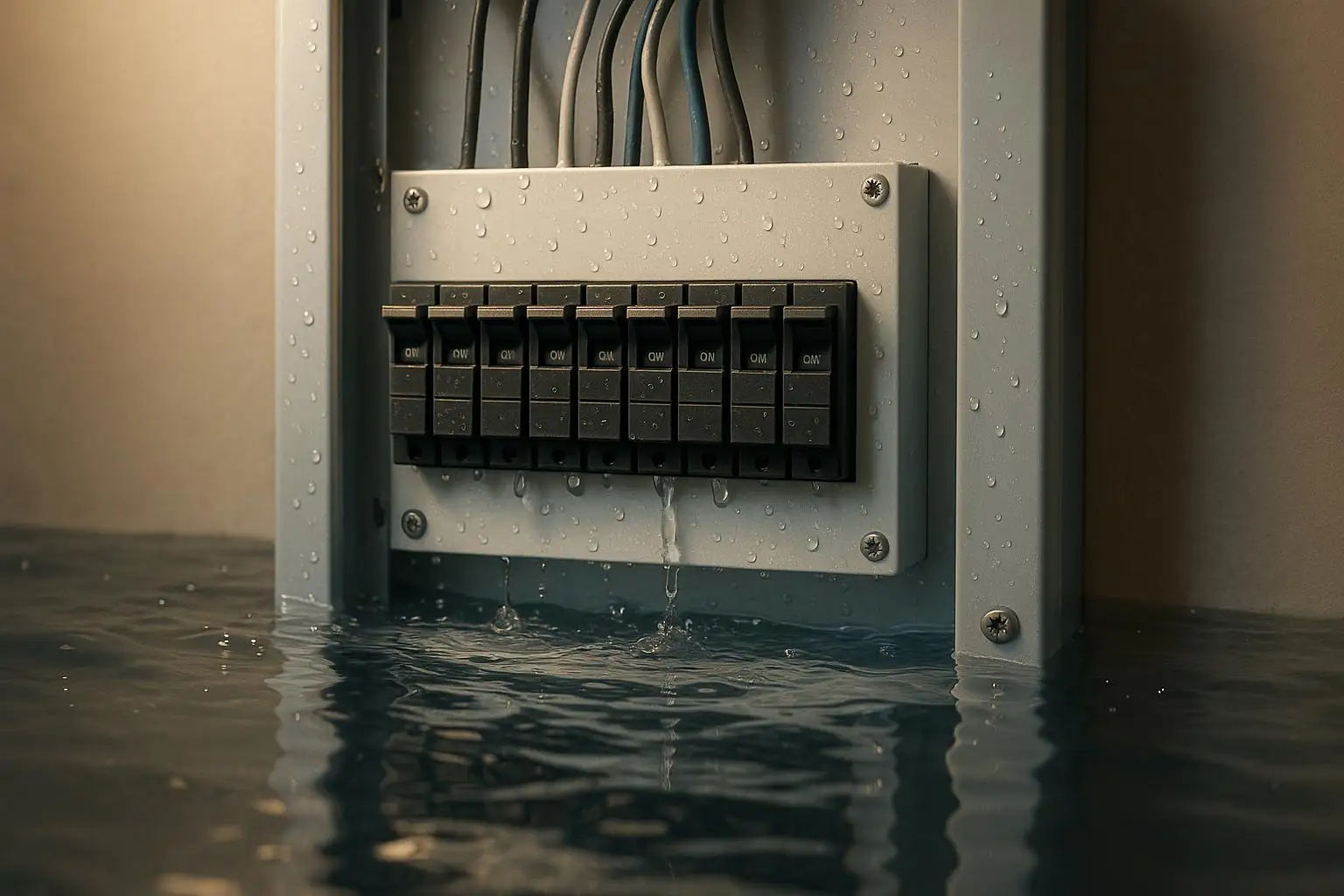
Water and electricity don’t mix – literally. Even small amounts of water can turn your electrical system into a safety hazard, leading to fires, electrocution, or system failures. Here’s what you need to know:
- Immediate Risks: Water can cause short circuits, power surges, and even fires. Contaminated water, like floodwater, leaves residues that increase long-term risks.
- Hidden Damage: Moisture can linger in walls or electrical panels, corroding components and degrading insulation over time.
- Health Hazards: Mold growth near electrical systems can harm both your home and your health.
- Prevention Tips: Install GFCIs, use waterproof components, and schedule regular inspections to reduce risks.
- Action Steps: Turn off power immediately, avoid DIY fixes, and contact a professional for a thorough assessment.
Quick action is critical – delays can worsen damage and increase repair costs. If water has affected your electrical system, prioritize safety and seek professional help.
NEMA Evaluating Water-Damaged Electrical Equipment | Hurricane Helene
Immediate Dangers of Water-Damaged Electrical Systems
When water and electricity mix, the results can be deadly. Water-damaged electrical systems pose immediate risks to both lives and property, creating hazardous conditions that demand urgent attention.
Short Circuits and Electrical Fires
Water can cause short circuits as soon as it comes into contact with live wiring. This happens because water acts as a conductor, providing an unintended path for electricity to flow. When water seeps into electrical boxes or touches live wires, it can trigger power surges, sparks, or arcing, all of which can ignite nearby materials like wood, insulation, or drywall. Over time, damaged wiring can also lead to ground faults, overheating, and fires.
Floodwater makes this situation even worse. Unlike clean water, floodwater often carries contaminants like chemicals, sewage, oil, and minerals. When these substances settle on electrical components, they leave behind conductive residues that can create dangerous electrical connections. These residues may cause circuits to overload, fail, or even spark fires long after the floodwaters have receded. Beyond the risk of fire, water-damaged systems also significantly increase the threat of electrocution.
Risk of Electrocution
While fire hazards are alarming, the risk of electric shock is just as dangerous. In the United States, electric shock is responsible for about 1,000 deaths and 30,000 nonfatal injuries annually, with the risks escalating in the presence of moisture. As Thompson Power Systems points out:
Electric shock accounts for around 1,000 fatalities and 30,000 nonfatal injuries every year in the United States – and its risks increase when exposed to moisture.
Standing water that becomes electrified is particularly hazardous. If someone steps into water that has an electrical current running through it, they can be electrocuted. This danger is heightened in freshwater, where the water’s lower conductivity makes the human body a more attractive path for the current.
Another deadly risk is Electric Shock Drowning (ESD). ESD occurs when electrical systems leak current into water, allowing the electricity to pass through a person’s body. This can lead to paralysis, increasing the likelihood of drowning. While ESD is most commonly associated with marinas and docks, it can also happen at private waterfront properties with electrical installations near the water.
Water damage also compromises the insulation that typically shields users from live electrical components. Wet outlets, switches, and appliances become dangerous to touch, and if safety devices like circuit breakers or fuses fail due to water exposure, the risks multiply.
Problems with Contaminated Water
Floodwater leaves more than just moisture behind – it deposits contaminants that can create ongoing electrical hazards. These residues increase conductivity, forming unintended electrical pathways that may cause circuit failures or other safety problems weeks or even months after the initial exposure. This hidden damage makes professional evaluation critical. The Electrical Safety Foundation International (ESFI) warns:
Returning power to water-damaged electrical devices or equipment without a proper evaluation could result in an electrical fire, shock, electrocution, or further damage to your device.
The dangers posed by water-damaged electrical systems highlight the urgent need for thorough inspections and repairs. Ignoring these risks could lead to devastating consequences.
Long-Term Damage to Electrical Systems
When water exposure occurs, the immediate risks often grab the spotlight. However, the hidden, long-term effects on electrical systems can quietly erode both safety and performance over time. Prolonged water exposure not only compromises the safety of these systems but also sets the stage for gradual deterioration, making them less reliable.
Mold Growth Near Electrical Systems
One of the most concerning consequences of water damage is the growth of mold and mildew, particularly in hidden or hard-to-reach areas near electrical components. Mold doesn’t just degrade the performance of electrical systems – it actively damages components, leading to reduced efficiency and reliability.
The risks extend beyond the electrical systems themselves. Mold exposure can cause serious health issues, including respiratory problems, allergic reactions, and even neurological conditions. For individuals with asthma or other respiratory sensitivities, prolonged exposure to mold can lead to chronic health complications.
How to Prevent Water Damage to Electrical Systems
Protecting your electrical systems from water damage isn’t just about avoiding expensive repairs – it’s about ensuring safety and peace of mind. Instead of dealing with the fallout of water damage, taking preventive measures now can safeguard your home and loved ones. Here’s how you can reinforce your electrical systems against water-related risks:
Installing GFCIs
Ground Fault Circuit Interrupters (GFCIs) are essential safety devices that can save lives. They work by monitoring the flow of electricity and shutting off power immediately when they detect irregularities caused by ground faults. If water comes into contact with electrical parts, GFCIs act almost instantly to cut the power, reducing the risk of electrocution and Home Safety Tips Preventing Electrical Fires.
These devices are especially critical in areas where water and electricity are likely to meet. Install GFCIs in bathrooms, kitchens, basements, garages, and outdoor spaces. For newer homes, the National Electrical Code mandates GFCI protection in these zones, but older homes should also be upgraded to meet these safety standards. By stopping current flow during a fault, GFCIs provide a crucial layer of protection.
Using Waterproof Electrical Parts
Waterproof components are another effective way to shield your electrical system. Items like weatherproof outlet covers, sealed electrical boxes, and moisture-resistant wiring are built to handle exposure to water and humidity better than standard parts.
In flood-prone or high-humidity areas, consider raising electrical panels and outlets to higher positions to reduce water exposure. Waterproof junction boxes and conduits are also valuable for protecting connections in outdoor setups, crawl spaces, or areas near plumbing. These upgrades can make a big difference in preventing water intrusion.
Regular Inspections and Maintenance
Even with durable components, regular maintenance is key to long-term protection. Routine inspections by a qualified electrician can help catch early warning signs of water damage, such as corrosion, moisture buildup, or damaged insulation.
Pay attention to indicators like flickering lights or frequent breaker trips, as these could signal underlying issues. Addressing these problems promptly can prevent small issues from escalating into major hazards. A little oversight now can go a long way in keeping your electrical system safe and reliable.
Professional Help for Water-Damaged Electrical Systems
When electrical systems are exposed to water, the risks can be severe – and potentially life-threatening. That’s why professional help is essential in these situations, as attempting DIY fixes can lead to dangerous outcomes.
First Steps After Finding Water Damage
Your actions immediately after discovering water damage can significantly impact the safety and outcome of the situation. The first priority is to turn off the main power supply at the circuit breaker before going near any water-damaged electrical equipment. Once the power is off, avoid unplugging any devices until you’re absolutely sure the system is de-energized. If there’s significant water or you’re unsure about accessing the area safely, evacuate right away and call emergency services.
To aid in the restoration process, document the damage by taking photos and detailed notes from a safe distance. These records will not only help professionals assess the situation but also support your insurance claims. Importantly, do not re-enter your property until a licensed electrician has inspected and declared it safe. After securing the area, a certified professional can assess and begin restoring your electrical systems.
How Total Care Restoration Can Help
Addressing water-damaged electrical systems requires a combination of electrical expertise and restoration services. Total Care Restoration provides this integrated solution by collaborating with licensed electricians to ensure safety and efficiency throughout the recovery process. Their team uses advanced tools like What Is a Moisture Meter the Best Measurement and thermal cameras to detect hidden moisture in walls, floors, and ceilings – exposing issues that might otherwise be missed.
With 24/7 emergency services, Total Care Restoration is ready to assist the moment water damage occurs. Their licensed electricians conduct detailed inspections of wiring, outlets, circuit breakers, and other components to identify problems such as short circuits, corrosion, or damaged insulation. Beyond restoring electrical safety, they deploy industrial-grade dehumidifiers to prevent mold growth, which can further harm wiring and pose health hazards.
Another critical aspect of their service is ensuring that all repairs comply with local electrical codes and safety regulations. This not only protects your property but also helps maintain the validity of your insurance claims. To make the process less stressful, Total Care Restoration offers direct insurance billing and assigns a personalized account representative to guide you through the claims process.
What sets them apart is their coordinated approach. Instead of managing multiple contractors, you’ll have a single point of contact overseeing the entire restoration process. This ensures your electrical systems are safely de-energized, repaired, and restored to professional standards.
If you’re dealing with water-damaged electrical systems, reach out to Total Care Restoration at (786) 610-6317. Their emergency response team is available 24/7 to assess your situation and begin restoring your property safely and efficiently.
Conclusion
Water and electricity together create a hazardous mix that requires immediate action and professional expertise. The dangers range from immediate risks like electrocution and electrical fires to long-term issues such as corrosion, insulation breakdown, and mold growth – all of which can jeopardize your entire electrical system.
Acting quickly is essential. The longer water remains in contact with electrical components, the greater the potential for damage. Shutting off power at the main breaker, evacuating the area if needed, and avoiding any DIY attempts are critical steps to prevent serious accidents.
Taking preventative measures, such as installing GFCI outlets, using waterproof components, and scheduling regular inspections, can save you money on repairs and protect your safety. If water damage occurs, a thorough inspection, proper decontamination, repairs that meet safety codes, and working with your insurance provider are key. With 24/7 Miramar water damage restoration, you can address the damage early and avoid more extensive repairs or system replacements. This proactive approach ensures the safety of your home and family.
Even what seems like minor surface damage can hide serious problems within walls or electrical panels. A professional assessment is essential to uncover hidden issues that quick surface fixes might overlook, ensuring your electrical system remains safe and functional after water exposure.
For immediate help, call Total Care Restoration at (786) 610-6317. Their emergency team is available around the clock to restore your property quickly and efficiently.
FAQs
What should I do if water damage affects my electrical system?
If you’re dealing with water damage that affects your electrical system, safety must come first. Turn off the main power supply immediately to eliminate the risk of electrocution or fire. Avoid stepping into any standing water, particularly if it’s near outlets, switches, or electrical appliances.
After cutting the power, take a careful look at the area, but don’t touch any electrical components. It’s essential to call a licensed electrician to evaluate the situation and handle any necessary repairs or replacements. Don’t turn the power back on until a professional assures you it’s safe to do so. For complete water damage restoration services, you might want to contact a reliable service like Total Care Restoration. They provide 24/7 emergency support to help safeguard your home or business.
How can I detect hidden water damage in my home’s electrical system?
Hidden water damage in your electrical system can be a sneaky problem, often staying out of sight until it leads to bigger, more dangerous issues. Keep an eye out for key warning signs like discoloration or warping around outlets and switches, a lingering musty odor, or visible corrosion on electrical components. Other red flags include flickering lights or circuit breakers that trip more often than usual – both could point to water intrusion.
To dig deeper, you can use tools like a moisture meter or an infrared camera to spot moisture hiding behind walls or near electrical panels. If you suspect water damage, don’t wait – acting quickly is essential to avoid potential safety risks. For expert help, Total Care Restoration provides professional water damage restoration services to safeguard your home and electrical systems.
How can I prevent water damage from affecting my electrical system in the future?
To protect your electrical system from water damage, here are some key precautions you can take:
- Install Ground Fault Circuit Interrupters (GFCIs): These devices are a must for areas prone to moisture, like kitchens, bathrooms, and basements. They cut off power automatically when water is detected, helping to prevent electrical hazards.
- Raise electrical components: Position outlets, wiring, and other equipment above potential flood levels. This simple step can significantly reduce the risk of water exposure during floods or leaks.
- Conduct regular inspections: Look for any signs of leaks, water intrusion, or moisture buildup around your home. Tackling these issues early can prevent bigger problems down the line.
Taking these precautions can go a long way in safeguarding your electrical system and keeping your property safe. If you ever face water damage, Total Care Restoration is available 24/7 to help restore your home or business. For immediate support, call (786) 610-6317.
Related posts
Want to Learn More?
Read our comprehensive guide covering everything you need to know about this topic.
The Complete Guide to Water Damage Restoration in South FloridaNeed Professional Help?
Our expert team is ready to assist with your water damage restoration needs.
View Water Damage Restoration Services