HEPA Filters vs. UV Systems for Pathogen Control
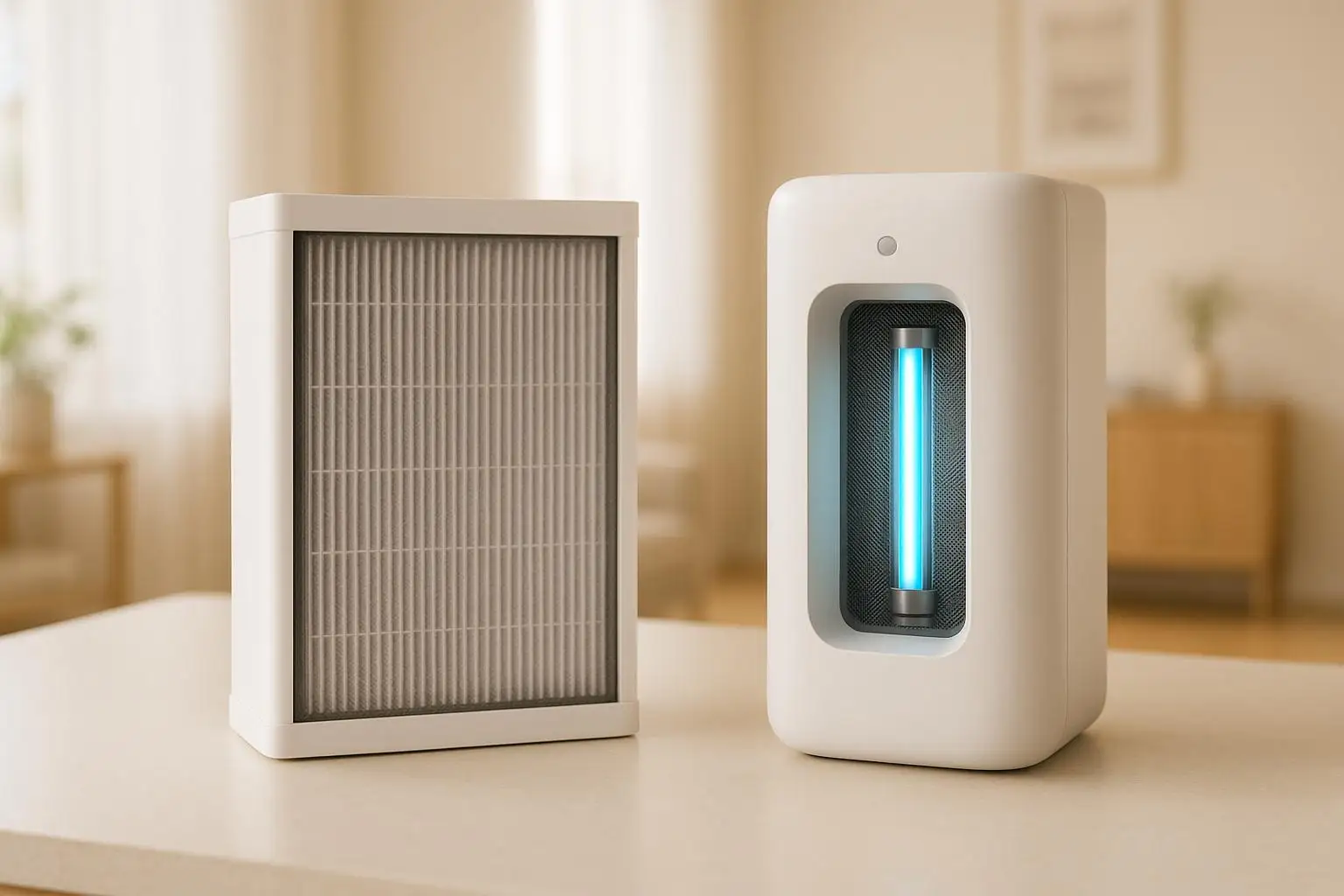
Struggling to decide between HEPA filters and UV systems for cleaner indoor air? Here’s what you need to know:
- HEPA Filters: These physically trap airborne particles like dust, pollen, and pathogens. They’re highly effective for allergens and virus-carrying aerosols but don’t kill microorganisms. Regular filter replacement (every 6–12 months) is needed.
- UV Systems: These destroy pathogens like bacteria and viruses by disrupting their DNA with UV-C light. They’re ideal for neutralizing microorganisms but don’t remove particles or gases. UV bulbs require replacement every 12–15 months.
Both options improve air quality issues but serve different purposes. HEPA filters excel at particle removal, while UV systems focus on pathogen inactivation. Combining the two provides a stronger defense against airborne contaminants.
Quick Comparison
| Feature | HEPA Filters | UV Systems |
|---|---|---|
| Mechanism | Physical particle trapping | DNA/RNA damage to pathogens |
| Effectiveness | Removes 99.97% of 0.3-micron particles | Neutralizes up to 99.99% of pathogens |
| Maintenance | Replace filters every 6–12 months | Replace UV bulbs every 12–15 months |
| Best Use | Homes (allergen & particle removal) | Hospitals, commercial spaces (pathogen control) |
| Cost | $1,000–$4,000 installed | $400–$800 installed |
Each system has its strengths – choose based on your specific air quality needs or combine both for optimal results.
Q&A: Why is UV not recommended inside a HEPA air cleaner?
HEPA Filters: Function and Benefits
HEPA (High-Efficiency Particulate Air) filters are widely regarded as the gold standard in air filtration. These filters use a physical mechanism to trap harmful particles, making them an essential component in controlling airborne pathogens.
How HEPA Filters Work
HEPA filters rely on a combination of physical processes to capture particles in the air. According to the EPA:
"HEPA is a type of pleated mechanical air filter… This type of air filter can theoretically remove at least 99.97% of dust, pollen, mold, bacteria, and any airborne particles with a size of 0.3 microns (µm)."
The filter itself is made of a mat of randomly arranged fibers, typically 0.5–2.0 micrometers thick. These fibers trap particles through different methods:
- Collision: Larger particles collide with the fibers because they can’t follow the air currents.
- Interception: Medium-sized particles stick to the fibers when they pass close by.
- Diffusion: Smaller particles, moving unpredictably due to Brownian motion, eventually hit and stick to the fibers.
The 0.3-micron particle size used in HEPA testing is considered the most challenging to filter, known as the most penetrating particle size (MPPS). If a HEPA filter can capture 99.97% of these particles, it performs even better with both larger and smaller particles. This precise trapping mechanism is what makes HEPA filters so effective against a wide range of airborne pathogens.
Performance and Limitations
HEPA filters are highly effective in removing airborne contaminants. Medical-grade HEPA filters can capture 99.9% of particles as small as 0.3 micrometers, while HEPA 13 filters achieve 99.95% efficiency. Since viruses generally range from 0.03 to 0.450 micrometers and bacteria from 0.3 micrometers to 0.7 millimeters, HEPA filters are well-suited for capturing these pathogens.
The CDC highlights that HEPA filters outperform filters with MERV 16 ratings in capturing smaller infectious particles. This is particularly useful for respiratory pathogens. For instance, a study by Rodriguez et al. demonstrated that air purifiers equipped with HEPA filters achieved an 80% efficiency in removing SARS-CoV-2 from households. Even though individual SARS-CoV-2 virions measure 60 to 140 nanometers (0.06–0.14 microns), HEPA filters can capture them when they are part of larger airborne clusters.
However, HEPA filters do have some limitations. They cannot remove gaseous pollutants, such as odors or volatile organic compounds, without the addition of an activated carbon filter. Additionally, while they trap microorganisms, they don’t kill them, so proper disposal of used filters is crucial to prevent contamination during maintenance.
| MERV Rating | % Removal 0.3-1 Microns | % Removal 1-3 Microns | % Removal 3-10 Microns |
|---|---|---|---|
| 13 | < 75% | > 90% | > 90% |
| 16 | > 95% | > 95% | > 95% |
| 17 (HEPA/ULPA filters) | ≥ 99.97% | ≥ 99.97% | ≥ 99.97% |
Maintenance Requirements
To ensure HEPA filters perform as intended, regular maintenance is critical. The EPA emphasizes:
"All air cleaners require periodic cleaning and filter replacement to function properly. Follow manufacturer’s recommendations on maintenance and replacement."
True HEPA filters typically need replacement every 6 to 12 months, depending on factors like indoor air quality, filter size, and usage patterns. Monthly inspections are recommended – check for dust and debris buildup during periods of heavy use.
Failing to replace filters on time can reduce their efficiency, allowing particles to bypass the filter. Clogged filters also restrict airflow, forcing systems to work harder and consume more energy.
To extend filter life and improve efficiency, consider using a low-efficiency pre-filter to capture larger particles before they reach the HEPA filter. This reduces the workload on the main filter and helps maintain system performance.
When selecting air purification systems, look for models with energy-efficient settings or adjustable fan speeds to balance cleaning performance with energy costs. Additionally, it’s essential to distinguish between true HEPA filters and "HEPA-like" filters. True HEPA filters meet strict regulatory standards, while "HEPA-like" filters may not deliver the same level of performance. Investing in certified true HEPA filters ensures reliable results and predictable maintenance schedules.
UV Systems: How They Work
Unlike HEPA filters, which physically trap particles, UV systems neutralize pathogens at the molecular level. Instead of capturing contaminants, UV systems use high-energy ultraviolet light to inactivate them. This method is particularly effective for dealing with pathogens that are too small or difficult for traditional filters to catch.
UV-C Light Pathogen Destruction
UV-C light works by targeting the DNA and RNA of pathogens. According to UV Smart:
"UV-C light kills germs by damaging the nucleic acids in their DNA. This process, known as dimerization, prevents microorganisms from multiplying and causing infections."
UV-C light, operating at wavelengths between 200 and 280 nanometers, disrupts DNA replication by causing molecular bonds (dimers) to form in the genetic material of bacteria, viruses, and mold spores. This damage scrambles the pathogen’s code, rendering it unable to reproduce.
The effectiveness of this approach is striking. When used correctly, UV-C light can neutralize up to 99.99% of harmful pathogens. For instance, studies show it achieves a 99.7% disinfection rate for SARS-CoV-2 in a matter of minutes. Specific applications reveal that doses of 34.9–52.5 mJ/cm² can inactivate SARS-CoV-2 on surfaces, while 21.4 mJ/cm² is sufficient for airborne virus inactivation. This precise targeting makes UV-C systems a versatile option for combating a wide array of pathogens.
Wide-Range Pathogen Control
One of the standout benefits of UV systems is their ability to neutralize a wide range of microorganisms. UV-C light is effective against bacteria, viruses, and mold spores due to its ability to disrupt the shared genetic mechanisms of these organisms. Unlike HEPA filters, which depend on capturing particles of a specific size, UV systems directly neutralize pathogens, including viruses smaller than 0.3 microns – where physical filters often lose efficiency.
Recent developments in Far-UVC technology have broadened these capabilities even further. Far-UVC systems, which operate between 200 and 230 nm, commonly use Krypton Chloride (KrCl) excimer lamps emitting at 222 nm. Research shows that these systems can reduce viable pathogens by about 92% at ICNIRP guideline exposure limits and up to 98% at ACGIH threshold values. However, sensitivity to Far-UVC light varies among microorganisms; for example, S. aureus is less susceptible than airborne influenza viruses and human coronaviruses.
Safety and Installation Requirements
While UV systems are highly effective, their safe operation requires proper installation and regular maintenance. UV-C light can cause skin burns and eye damage, so professional installation and strict adherence to safety protocols are essential.
A licensed electrician should handle the installation, as UV-C fixtures often require a dedicated circuit. Typically, these systems are installed in the return air duct near the HVAC unit or near the evaporator coil and drain pan. Proper mounting and sealing are critical to prevent air leaks.
Safety measures are crucial. These include warning signs and indicator lights to ensure no one is exposed to harmful UV-C light. Rooms should remain unoccupied while the UV-C system is running.
Maintenance procedures must also be followed diligently. Technicians should disconnect power and wear full UV-protective gear before performing any work. UV bulbs need replacement every 12–15 months and require regular cleaning and inspection. Since these bulbs contain small amounts of mercury, they must be disposed of responsibly. Additionally, nearby UV-sensitive materials should be shielded using foil tape, sheet metal, or conduit.
Proper installation and upkeep not only ensure safety but also optimize performance. For example, Far-UVC systems can deliver higher equivalent air changes per hour (eACH) than HEPA filters while operating silently. This provides continuous pathogen control without the airflow restrictions associated with mechanical filtration systems.
HEPA Filters vs. UV Systems Comparison
HEPA filters and UV systems tackle indoor air quality in distinct ways. HEPA filters work by physically capturing particles, while UV systems neutralize pathogens by damaging their DNA. Each method has its own strengths and limitations, making the choice dependent on specific needs.
Side-by-Side Comparison
When deciding between these technologies, performance, cost, and the environment in which they’ll be used play a key role. As Far Lite Solutions explains:
"HEPA filters trap particles like dust and virus-carrying aerosols, whereas UV light – and particularly UVC – actually destroys bacteria, viruses, and fungi directly."
| Feature | HEPA Filters | UV Systems |
|---|---|---|
| Mechanism | Physical trapping | DNA/RNA damage |
| Particle Size | Size-dependent efficiency | Size-independent inactivation |
| Pathogen Control | Traps microorganisms | Prevents replication |
| Initial Cost | $1,000 to $4,000 installed | $400 to $800 for basic systems |
| Maintenance | Filter replacement every 6–12 months | Bulb replacement every 12–15 months |
| Energy Efficiency | Generally more energy-efficient | Typically higher energy consumption |
| Safety Concerns | Minimal safety risks | Requires professional installation due to UV exposure |
Performance Characteristics:
HEPA filters are highly effective at removing particles such as dust, pollen, and virus-carrying aerosols. They can clear 90% of 0.3-micron particles within 5–8 minutes. However, while they capture these particles, they don’t neutralize them.
UV systems, on the other hand, actively destroy pathogens by disrupting their genetic material. According to Farlite Solutions:
"UV light hospital disinfection is the most effective method of destroying pathogens in the air."
Cost Considerations:
HEPA filters often involve a higher upfront cost but have predictable maintenance expenses. UV systems are more affordable initially but require regular bulb replacements. Additionally, HEPA systems can lower energy consumption by 20–30% if maintained properly.
This comparison highlights how each system addresses different aspects of air quality improvement.
Best Applications for Each System
HEPA Filters:
HEPA filters are ideal for residential use, especially in homes where allergen removal is a priority. They are particularly beneficial for households with asthma or allergy sufferers, as they efficiently capture pollen, pet dander, and dust mites. Their energy efficiency makes them a cost-effective choice for continuous operation in living spaces.
UV Systems:
UV systems shine in commercial and healthcare settings where pathogen destruction is critical. They are well-suited for high-traffic areas or environments with strict infection control requirements. However, since UV systems don’t remove volatile organic compounds (VOCs), they are less effective against chemical pollutants.
In hospitals, a combination of both technologies is commonly used. HEPA filters handle particulate matter and allergens, while UV systems inactivate pathogens, ensuring both physical and microbial air quality needs are addressed.
Factors like space, ventilation, and the need for professional installation – particularly for UV systems – should also be considered. HEPA filters depend on proper airflow for optimal performance, while UV systems can be seamlessly integrated into existing HVAC systems with the right safety measures.
Ultimately, the choice comes down to your main air quality goals. For particle removal, HEPA filters are the better option. If pathogen destruction is the priority, UV systems are more effective. Using both together provides comprehensive protection against airborne contaminants.
Airflow Design and System Setup
To get the best performance from HEPA filters and UV systems, proper airflow and strategic placement are essential. If these systems aren’t positioned correctly, their ability to remove airborne pathogens significantly diminishes.
Proper System Placement
Where you place air cleaning equipment directly impacts how well it controls airborne contaminants. Poor positioning can disrupt airflow and lead to the buildup of harmful particles.
HEPA Filter Placement Tips:
For portable HEPA units, place them where they can ensure full air circulation. Ideally, position them near supply or exhaust registers while avoiding any obstructions. This setup helps achieve at least 12 air changes per hour (ACH). Fixed units, such as those mounted on ceilings or walls, tend to provide more consistent airflow and better air mixing throughout a room.
UV System Installation Guidelines:
Install UV systems in areas where air can flow efficiently past the UV light source. Good spots include near return ducts or evaporator coils. To maintain continuous pathogen control, keep UV lights running at all times – don’t cycle them on and off with the fan or HVAC system.
Professional Installation Notes:
When designing and installing upper-room UV systems, work with qualified HVAC professionals. They can ensure proper shielding of non-UV-resistant materials using foil tape or sheet metal to prevent damage.
Properly placing each system lays the groundwork for combining them, which can significantly improve overall air quality and pathogen control.
Using HEPA and UV Systems Together
Pairing HEPA filtration with UV treatment creates a more thorough defense against airborne contaminants by both capturing and neutralizing them.
How They Work Together:
HEPA filters are excellent at trapping particles, while UV systems inactivate microorganisms that might still be viable, even when caught in the filter. Since UV systems don’t physically remove pathogens from the air, combining them with HEPA filtration ensures both inactivation and removal of harmful particles.
"UVGI is a supplemental form of ventilation intervention and does not replace code requirements for outdoor air delivery or filtration." – CDC
Example of Combined Systems in Action:
In early 2020, ISO-Aire collaborated with a Minnesota healthcare facility to develop a system that integrated HEPA filtration, UVC sterilization, and ozone-free bipolar ionization. This solution was tailored to meet strict hospital isolation room standards, protecting both patients and staff.
Airflow Design for Combined Systems:
When using HEPA and UV systems together, optimizing airflow becomes even more critical. Testing by the EPA and the U.S. Department of Homeland Security showed that the Sterile Air UVC Emitter destroyed 99.96% of airborne bacteria, eliminated 99% of viruses, and neutralized 96% of spores in a single pass. Proper installation ensures that airflow directs contaminants out efficiently.
Boosting Air Movement:
Using fans or HVAC systems to increase air circulation can enhance UV system performance by ensuring airborne microorganisms get adequate exposure to UV light. When adding fans, keep speeds low and direct airflow above occupied areas to avoid disturbing occupants.
Integrating these systems not only improves air quality but also requires a well-coordinated maintenance plan.
Maintenance Essentials:
Schedule regular maintenance: replace UV bulbs every year and HEPA filters every 6–12 months. Conduct routine inspections to ensure both systems operate at peak efficiency.
Combined HEPA and UV systems are particularly effective in high-risk indoor spaces – especially areas prone to crowding or where mechanical HVAC systems or natural ventilation fall short.
Professional Air Quality Restoration Services
Building on the benefits of HEPA filtration and UV systems discussed earlier, professional restoration takes air quality management to the next level. These services are especially critical for addressing issues like mold, water damage, and other air quality challenges. Such situations demand a thorough approach that combines advanced tools, certified expertise, and strict safety measures.
Total Care Restoration‘s Air Quality Services
Since 2015, Total Care Restoration has been helping clients improve indoor air quality through specialized restoration services. Their certified technicians are well-versed in how airborne pathogens spread, particularly in spaces impacted by water damage or mold.
Cutting-Edge Air Purification Technology
Total Care Restoration uses HEPA filtration and UV systems to tackle air quality issues, with certified HVAC technicians handling the installations. UV lights are strategically installed to neutralize bacteria, viruses, and mold, effectively restoring cleaner air. Combining these technologies ensures maximum control over harmful pathogens.
Around-the-Clock Emergency Services
Emergencies don’t wait, and neither does Total Care Restoration. Their 24/7 emergency hotline – (786) 610-6317 – connects property owners to certified local technicians who respond quickly. Whether it’s a burst pipe fostering mold or fire damage requiring specialized air scrubbing, their team is always ready to help.
"At Total Care Restoration, our mission is to help homeowners and business owners restore their damaged properties to a pristine condition with the highest level of service, care, and integrity."
Safe and Professional Installation
Installing UV systems isn’t a DIY job – improper setup can lead to safety risks like faulty wiring or poor performance. Total Care Restoration’s certified technicians ensure UV lights are installed correctly, minimizing hazards and ensuring long-term efficiency. This professional approach lays the groundwork for complete restoration solutions.
Comprehensive Restoration Services
Beyond air purification, Total Care Restoration addresses the root causes of air quality issues. Their services include Emergency Water Damage Checklist: First 24 Hours, Mold Remediation, and fire restoration, ensuring a holistic approach to improving indoor environments.
Mold Remediation for Cleaner Air
Mold is a major contributor to poor air quality. Total Care Restoration’s mold remediation process removes the source of airborne spores while improving overall air cleanliness. Using air scrubbers installed in HVAC systems, they can eliminate up to 99% of pollutants, including COVID-19 surrogates.
Integrated System Solutions
Instead of relying on standalone devices, Total Care Restoration integrates air quality solutions directly into existing HVAC systems. This approach improves airflow across the entire property while combining the strengths of HEPA filtration and UV technology.
Insurance and Financial Convenience
To ease the financial burden during what can be a stressful time, Total Care Restoration offers direct insurance billing. This allows property owners to focus on restoring their indoor environment without worrying about upfront costs.
Maintenance for Long-Term Performance
Keeping air quality systems running smoothly requires regular upkeep. Total Care Restoration provides ongoing support through routine filter changes and system inspections. Their local team ensures that all systems are operating at peak performance, giving property owners peace of mind.
Choosing the Right Air Quality Solution
Selecting between HEPA filters, UV systems, or a combination of both depends on your specific indoor air quality needs. Each technology brings distinct benefits, and understanding their capabilities and limitations is essential for making the best choice to safeguard your indoor environment.
Key Takeaways
Here are some crucial points to guide your decision-making process. These complement earlier discussions on airflow design and professional installation, as well as the performance and cost comparisons outlined above.
- HEPA filters capture particles but don’t neutralize them. HEPA filters are highly effective at trapping airborne particles, including allergens and dust. However, they don’t kill microorganisms, which means proper disposal of used filters is critical to prevent recontamination.
- UV-C systems neutralize pathogens. UV-C light works by disrupting the genetic material of microorganisms, rendering them inactive. While effective, it’s important to ensure that UV systems are certified as ozone-free for safe operation.
- Safety is a priority. HEPA filters and upper-air UV-C systems are generally safe for use in occupied spaces. However, surface UV disinfection systems typically require the area to be unoccupied during use to avoid exposure risks.
- Expert assessments are vital. Factors like room size, layout, ventilation, and specific pollution sources play a significant role in determining the right solution. Indoor air can be two to five times more polluted than outdoor air, making professional evaluations crucial for identifying hidden issues that could impact both health and HVAC system efficiency.
- A combined approach offers comprehensive protection. Using HEPA filtration alongside UV-C systems can enhance air quality by capturing particles and neutralizing remaining microorganisms.
- Integration with a broader air quality strategy is essential. Air cleaning technologies should work in tandem with proper ventilation, source control, and routine maintenance. Choose systems with a high CADR rating and effectiveness for particles in the 0.1–1 micron range. Ensure airflow is directed to avoid blowing air directly from one person to another, and keep systems running continuously in occupied spaces.
FAQs
Can HEPA filters and UV systems work together to improve indoor air quality, and how do they complement each other?
Yes, HEPA filters and UV systems can work in tandem to dramatically improve the quality of indoor air. HEPA filters are excellent at trapping tiny airborne particles like dust, pollen, and even microorganisms, while UV systems focus on neutralizing bacteria, viruses, and other harmful pathogens by breaking them down at the molecular level.
Together, these systems create a powerful one-two punch: the HEPA filter physically captures harmful particles, and the UV system works to sanitize the air by destroying biological contaminants. This combination results in cleaner, safer air for homes or businesses, offering added protection against allergens and airborne germs.
How do you maintain HEPA filters and UV systems to keep them working effectively?
To maintain the efficiency of HEPA filters, check them once a month for any buildup of dirt or debris. Plan to replace the filter every 3 to 4 months, or earlier if you notice a drop in airflow. For UV systems, replace the UV lamp once a year and clean the quartz sleeve every six months. These regular upkeep steps help both systems work effectively, keeping air quality high and managing airborne pathogens.
What are the safety considerations and installation requirements for HEPA filters and UV systems?
HEPA filters are considered safe as long as they are installed and maintained correctly. A secure seal is crucial to prevent air from sneaking around the filter, which could compromise its performance. Regular upkeep, such as replacing the filters according to the manufacturer’s recommendations, is key to keeping them working effectively.
UV systems, on the other hand, demand a bit more caution due to the risks associated with UV-C light exposure. When performing maintenance, protective gear like gloves and goggles is a must, and the UV lights should always be turned off when people are nearby. To ensure both safety and efficiency, make sure the system is properly shielded and installed following the manufacturer’s instructions.
Related posts
Want to Learn More?
Read our comprehensive guide covering everything you need to know about this topic.
The Complete Guide to Mold Remediation in FloridaNeed Professional Help?
Our expert team is ready to assist with your indoor air quality needs.
View Indoor Air Quality Services