Mold Remediation Cost Calculator: How to Read the Estimate
Mold Remediation Cost Calculator: How to Read the Estimate
The fastest way to misuse a mold remediation cost calculator is to treat it like a quote generator. It is not. A good calculator helps you think through the likely remediation footprint, the level of demolition or containment the job may require, and whether add-ons like HVAC cleaning or clearance testing belong in the plan before you start comparing contractors.
That is exactly how Total Care Restoration frames its own mold remediation cost calculator: as a budgeting and planning tool, not a binding bid. If you understand what the estimate is actually measuring, you can use it to ask better questions, compare written scopes more intelligently, and avoid the common mistake of entering your whole house size when the real job is one wet wall cavity and a closet.
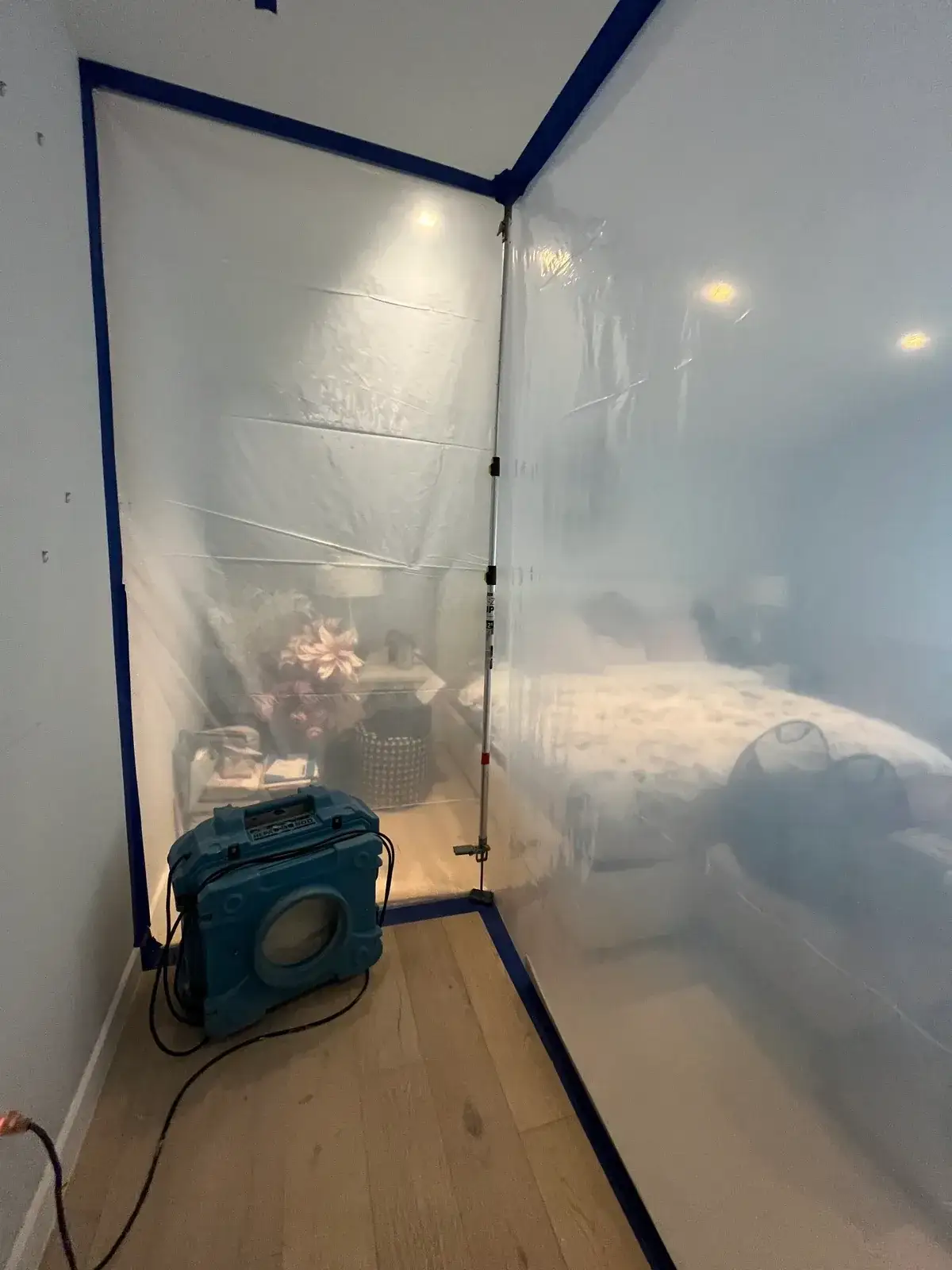
Containment is one reason mold-remediation pricing jumps quickly. Once a job needs sealed work zones, negative air, and controlled demolition, the estimate stops behaving like a simple cleaning price.
What this mold remediation cost calculator is actually estimating
Most readers arrive expecting one number: "How much does mold remediation cost?" The tool is more useful when you read it as a scope translator instead.
On the live TCR page, the calculator is described as a way to turn square footage, scope, and common add-ons into a planning range you can use for budgeting or conversations with adjusters. That means the result is built from three layers:
| Input | What it really means | Why it matters |
|---|---|---|
| Square footage | The remediation footprint, not necessarily the whole home | Affected rooms, cavities, closets, and adjacent assemblies all change the labor and containment plan |
| Scope | Surface-level cleanup versus hidden or invasive work | Opening walls, removing porous materials, and detailed HEPA work add labor fast |
| Add-ons | HVAC cleaning, verification, or contents handling | These can change the estimate even when the visible mold area stays the same |
This is why the calculator works best before you collect estimates, not after. It gives you a way to sanity-check whether a written scope feels closer to a small contained cleanup, a one-room demolition job, or a larger multi-room remediation.
If you need a broad pricing backdrop first, TCR's Florida mold cost guide lists planning ranges from $500 to $3,000 for small accessible areas under 10 square feet, $3,000 to $10,000 for moderate one-room jobs, $10,000 to $25,000 for larger multi-room work, and $25,000+ for extensive contamination. Those ranges are only useful, though, if you understand which scope bucket your project actually belongs in.
How to count square footage without overstating or understating the job
The single most helpful sentence on the calculator page is the one many people skim: the square footage should reflect the remediation footprint rather than the home's total size.
That distinction matters because mold jobs rarely map neatly to real-estate square footage. A 2,000-square-foot home can have a small remediation if the affected area is one bathroom vanity wall. A much smaller condo can have a larger scope if mold has spread into multiple closets, an HVAC closet, and two connected wall cavities.
Use this quick method before you enter a number:
- Start with the rooms or assemblies that are actually affected.
- Add adjacent cavities or concealed areas that would need to be opened if moisture or growth is suspected behind finishes.
- Include closets, built-ins, or stored items only if they are part of the work area or need to be moved so crews can remediate safely.
- Do not default to the entire home's floor area unless the contamination is genuinely widespread.
For many homeowners, that means thinking like a written scope, not like a Zillow listing. You are estimating the portion of the property that needs containment, removal, cleaning, drying, and verification.
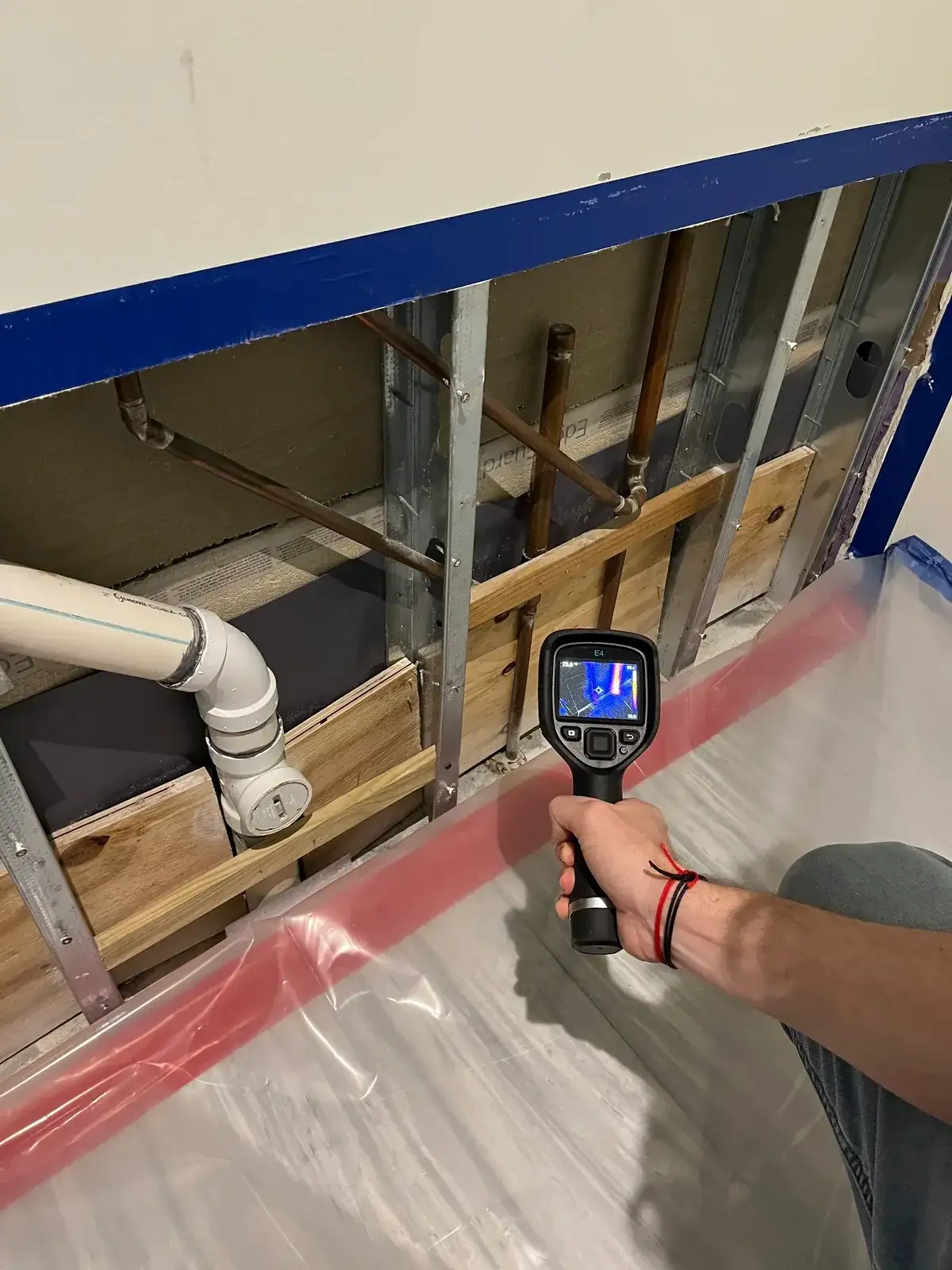
Moisture verification is what keeps a mold estimate honest. The visible stain is only part of the footprint; meters and inspection determine whether the job extends into cavities, framing, or adjacent rooms.
This is also where timing matters. The U.S. EPA says wet or damp materials should generally be dried within 24 to 48 hours after a leak or spill to reduce the chance of mold growth, and that the key to mold control is moisture control itself. In other words, if the affected footprint stayed wet longer than it should have, the scope may be larger than the first visible patch suggests. TCR's companion mold growth risk calculator is useful at this stage because it highlights the same risk multipliers: time, humidity, temperature, and ventilation.
Why hidden mold, demolition, and HVAC work change the range so quickly
The price jump between "surface mold" and "mold behind walls" is not arbitrary. It reflects how different the work becomes once crews have to move from visible cleanup into containment, demolition, and verification.
TCR's pricing guide lists these broad per-square-foot planning ranges:
- Surface mold only: $10-$25 per square foot
- Mold behind walls: $25-$40 per square foot
- HVAC mold: $30-$50 per square foot
- Crawl-space mold: $15-$35 per square foot
- Attic mold: $20-$40 per square foot
Those numbers are helpful because they match the logic on the calculator page. Surface-visible work on non-porous materials tends to stay on the lower end. Hidden or cavity mold usually means crews have to open finishes, set tighter containment, remove more debris, and spend more time in detail cleaning and verification. Multi-room projects add still more coordination, setup time, and disposal.
The live mold remediation service page shows how involved a true remediation can be. TCR describes a six-step process that moves from inspection and testing to containment, air filtration, mold removal, cleaning, and restoration. Once a project needs that full sequence, it is no longer comparable to wiping a visible patch with store-bought cleaner.
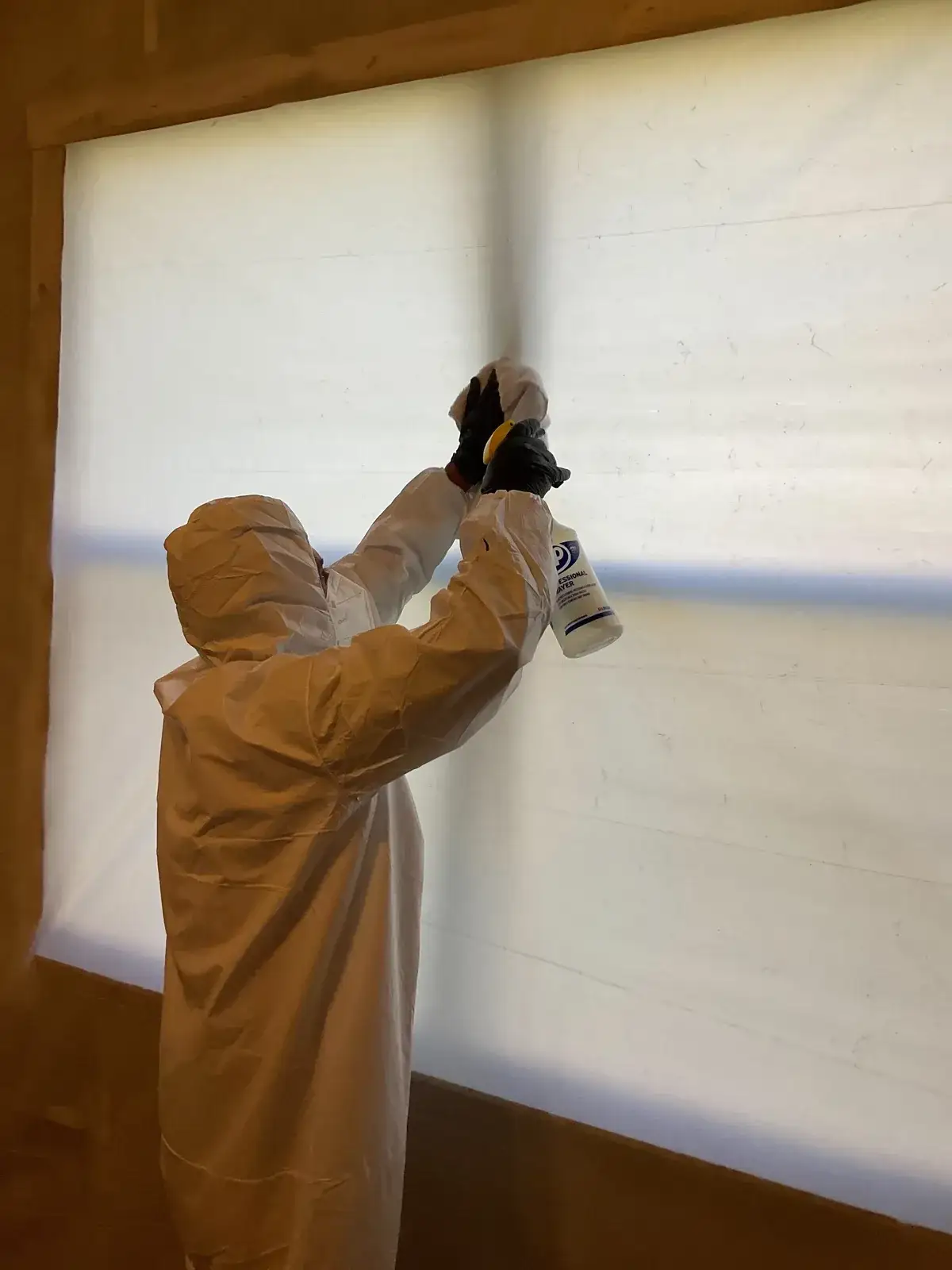
Contained work areas are where hidden-mold estimates get more expensive. Opening finishes, keeping spores from spreading, and documenting completion all add labor that a surface-only number will miss.
HVAC is another major cost changer because the mold area and the treatment area are not always the same thing. If spores may have entered ducts, the mold area on paper can stay flat while the remediation plan gets much more involved. That is why the calculator specifically calls out duct cleaning and why the Florida cost guide breaks HVAC-related work into its own higher planning range.
When add-ons like clearance testing and pack-out belong in the estimate
Homeowners sometimes treat add-ons as upsells by default. Some are optional. Some are there because the job would be incomplete or poorly documented without them.
The TCR calculator page specifically highlights:
- duct or HVAC cleaning
- post-remediation verification or clearance testing
- moving personal property or contents pack-out
Those items belong in the estimate when the conditions call for them.
HVAC cleaning matters when the system served contaminated areas or was running during the active problem.
Clearance testing or verification matters more on larger jobs, sensitive occupancy situations, or projects where documentation is part of the goal.
Pack-out or contents handling matters when closets, furniture, storage, or built-ins are part of the affected work area and need to be moved for safe access.
TCR's Florida cost guide also gives readers a useful reality check on line items that can show up around the main remediation number:
- initial inspection: $200-$600
- air quality testing: $300-$800
- post-remediation testing: $200-$500
- HVAC cleaning: $400-$2,000
- antimicrobial treatment: $300-$1,500
The point is not to memorize each number. It is to recognize that two estimates with the same square footage can still differ because one includes verification, ductwork concerns, or contents handling and the other does not.
What the calculator does not know about your property
This is where people either over-trust the result or throw it away entirely. The better approach is to use the number as a planning range while respecting what the tool cannot see.
The live calculator page is direct about those limits. It says the result depends in real life on access, how much drywall or flooring must come out, whether asbestos or lead rules apply, insurance requirements, and local labor. A calculator also cannot tell whether the moisture source is truly fixed.
That last point matters most. The EPA's brief guide to mold, moisture, and your home says cleanup is not finished until the water or moisture problem is completely fixed. If you price the mold work but ignore the active leak, failed drain line, roof intrusion, or humidity problem behind it, the estimate can be directionally right and still financially misleading.
The same caution applies to DIY assumptions. EPA's flood and mold cleanup guidance says visible mold should be cleaned at least once before fans or dehumidifiers are started, because otherwise fans can spread contamination. That does not mean every mold project needs a large contractor response. It does mean the cleanup method affects the scope, and the scope affects the estimate.
How to compare a calculator result with a written mold-remediation scope
Once you have a planning range from the calculator, the next job is not to chase the lowest number. It is to compare how each contractor defines the work.
TCR's own pricing guide recommends looking for these items in a quality estimate:
- detailed scope of work
- square-footage calculations
- material specifications
- timeline for completion
- testing protocols
- warranties provided
- what is not included
That is an excellent checklist because it forces an apples-to-apples comparison. If one estimate includes containment, post-remediation verification, and drywall removal while another gives you a one-line lump sum, those two numbers are not really competing with each other yet.
Use the calculator result as a framing tool:
- If your number lands in a "moderate one-room" range but the written scope shows multi-room containment and HVAC work, the estimate may still be reasonable.
- If the calculator stays lean because you left HVAC, verification, and contents unchecked, do not be surprised when a detailed field scope comes in higher.
- If a written estimate looks dramatically cheaper than the planning range, check whether it is missing containment, testing, or demolition detail rather than assuming you found a bargain.
For readers who want the full background on the remediation workflow, TCR's complete mold remediation guide is the better next read. The calculator is the fast budgeting tool; the guide is the deeper process explainer.
When to stop estimating and call a professional
Some projects are still simple enough that a planning tool helps you decide what questions to ask. Others have already crossed into "skip the spreadsheet and get the site inspected" territory.
TCR's own cost guide points readers toward professional remediation when the situation involves:
- more than 10 square feet of affected area
- mold behind walls or in ceilings
- HVAC contamination
- recurring mold problems
- health-sensitive occupants
- insurance-claim situations
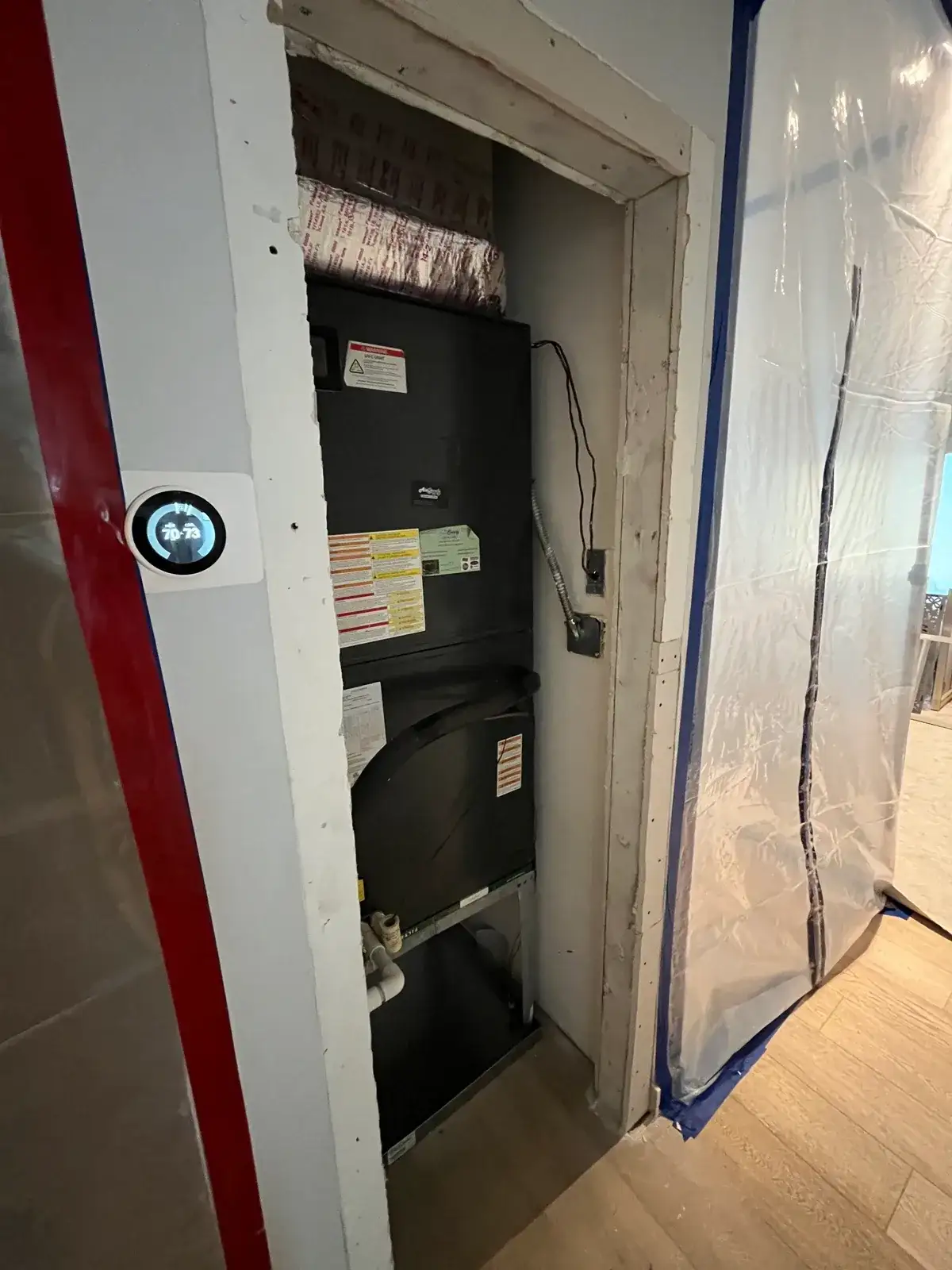
AC-related mold problems often look smaller than they are. Once condensate leaks, duct concerns, or repeated humidity issues enter the picture, the estimate needs real field inspection behind it.
EPA guidance reinforces the moisture side of that decision. If materials stayed wet longer than they should have, if humidity remains high, or if the source problem is not fully resolved, the right next step is usually better inspection and scope definition, not more guessing.
If you want a practical next move, use the mold remediation cost calculator to build a planning range, then compare that number against a written scope from a qualified remediation team. If the project involves hidden growth, HVAC, repeat moisture, or documentation needs, move quickly to a professional assessment. Total Care Restoration's mold remediation team and contact page are the right next stops when you need a field-tested scope instead of a rough budget.
This article is for general information only, not medical, legal, or insurance advice. Actual remediation scope, pricing, and coverage vary by property conditions, the moisture source, and the written scope prepared for the job.
Want to Learn More?
Read our comprehensive guide covering everything you need to know about this topic.
Mold Mitigation vs Mold Remediation: What Each Step Does in a Florida HomeNeed Professional Help?
Our expert team is ready to assist with your mold remediation needs.
View Mold Remediation Services