Drying Logs Explained: What Moisture Readings Show Homeowners
Drying Logs Explained: What Moisture Readings Show Homeowners
A drying log matters most when the room already looks better and you still do not know whether the job is actually close to done. The carpet may feel less damp. The musty smell may be fading. The fans may have been running for two or three days. But the decision to remove equipment, close a wall, reinstall flooring, or sign off for reconstruction should be based on measurements, not guesswork.
That is where drying logs help. They turn a noisy, stressful water-damage job into a trackable record of what changed each day: which materials were still wet, how room conditions were moving, what equipment stayed in place, and whether the structure was getting closer to dry enough for repairs. If you understand what those notes mean, you can ask better questions and avoid the expensive mistake of treating "dry to the touch" like the same thing as "dry enough to rebuild."
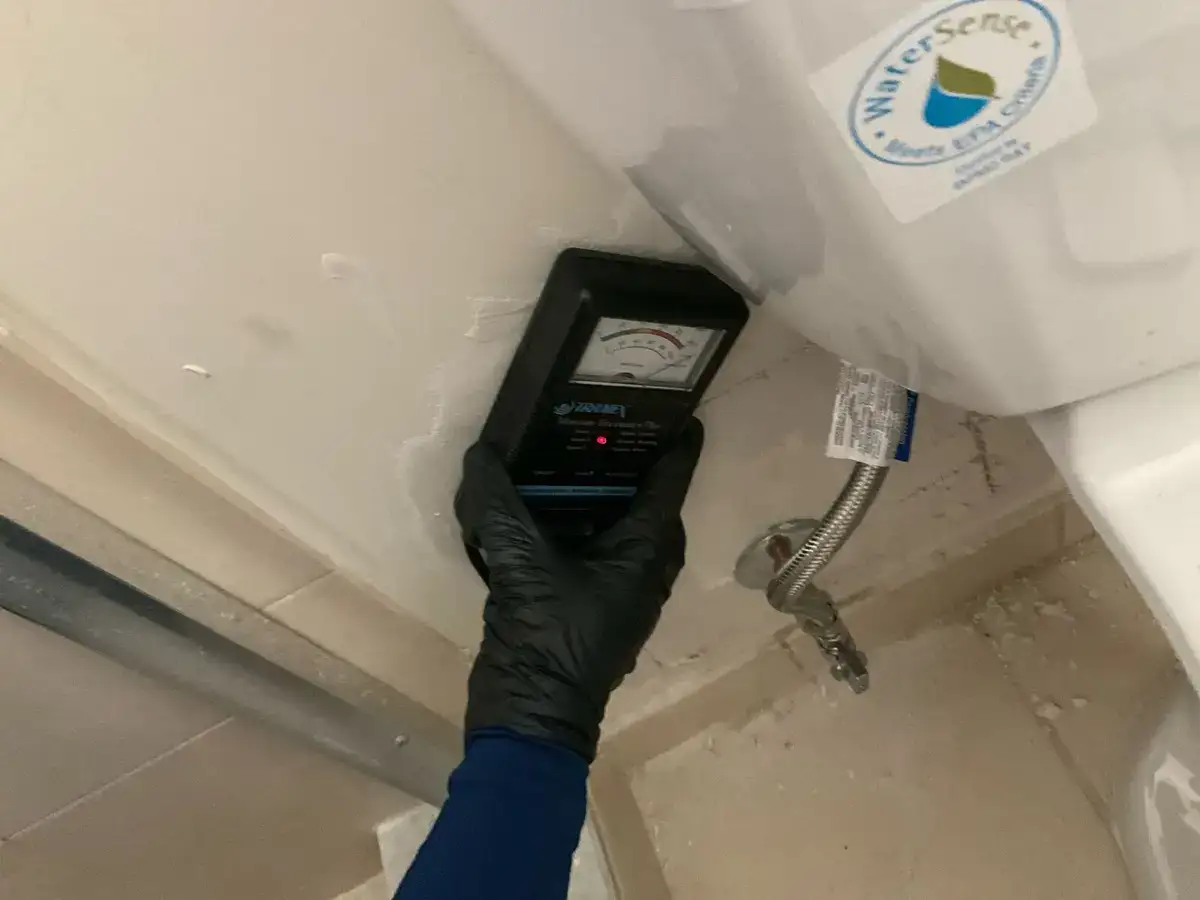
Drying logs start with field measurements, not intuition. A moisture meter reading tells the crew whether materials are still holding water below the surface, even when the room already looks calmer.
What a drying log is actually tracking
At a basic level, a drying log is the daily record of how a loss is progressing. In Total Care Restoration's complete water damage guide, the company explains that technicians use thermal imaging cameras, penetrating meters, non-penetrating meters, and hygrometers to find hidden moisture and check conditions every day until drying is complete. That means the log is not just a list of machine serial numbers. It is the measurement trail behind the decisions being made in the property.
A readable drying log usually tracks three kinds of information:
| Log item | What it tells you | Why it matters |
|---|---|---|
| Material readings | How wet drywall, wood, flooring, or other building materials still are | This is the clearest sign of whether the structure is actually approaching dry standard |
| Room conditions | Humidity, temperature, and sometimes grains-per-pound or dew point | Drying speed depends on the air, not only the wet material |
| Equipment and field notes | What air movers, dehumidifiers, or specialty systems were running and what changed that day | These notes explain why equipment stayed, moved, or increased |
That last point gets overlooked. A homeowner may see "same equipment remains" and assume nothing happened. In reality, the measurements may show steady progress that simply is not visible yet. TCR's water guide also notes that documentation for claim files often includes daily moisture readings, drying logs, and industry-standard reports, which tells you these logs are meant to support decisions for both the job itself and the paper trail around it.
How moisture readings change during a normal dry-out
One reason drying paperwork feels confusing is that people expect a perfect straight line: wet on day one, drier on day two, dry on day three. Real jobs almost never look that neat.
TCR's timeline article on how long water damage restoration takes says the drying and dehumidification phase typically runs 3 to 5 days minimum for standard losses, with daily moisture monitoring, equipment repositioning, and progress documentation along the way. Its broader water extraction and drying guide makes the same distinction: extraction removes the bulk liquid water quickly, while drying deals with the residual moisture left inside materials and in the air.
That is why a normal log often looks more like this:
- Day 1: high readings, equipment setup, and the first baseline measurements.
- Day 2: some materials drop quickly while hidden or dense materials stay elevated.
- Day 3: readings continue trending down, but not every room or material improves at the same pace.
- Day 4 or 5: the easier materials may already be within target while subfloors, wall cavities, cabinets, or hardwood still need more time.
The trend is what matters. Progress does not need to be dramatic every single day. It does need to make sense.
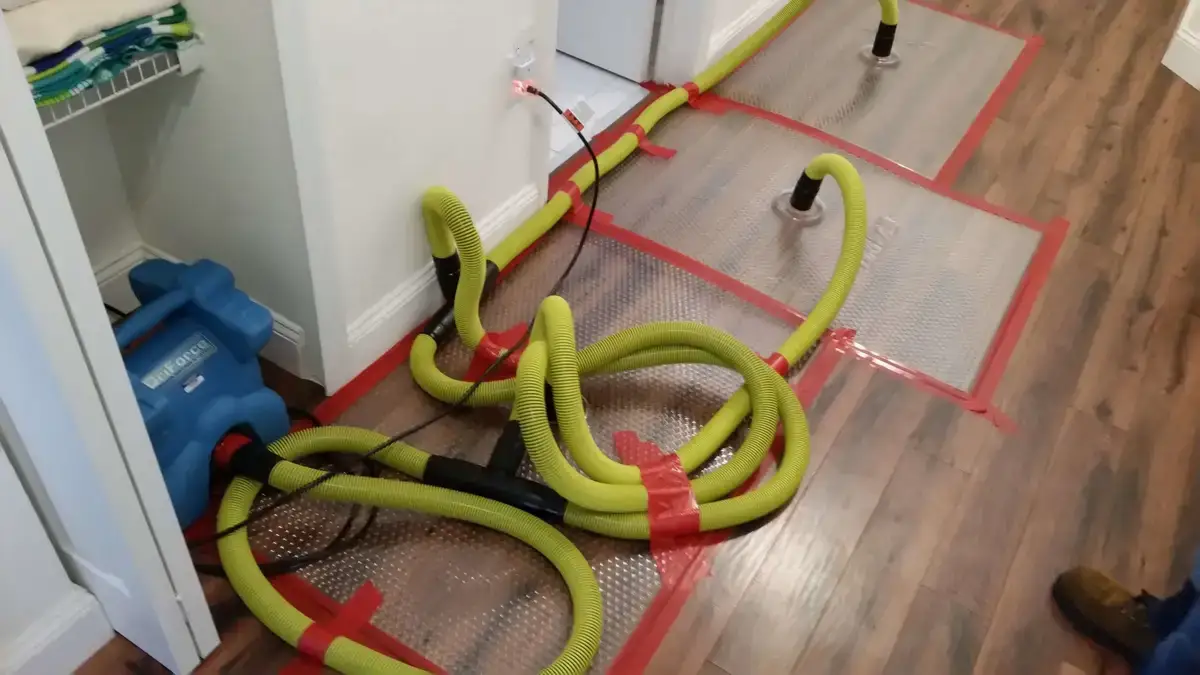
On a normal dry-out, the log should show measurable progress even when the room still has equipment in place. Floors and lower wall areas often improve at different speeds depending on what is underneath them.
Several conditions can slow the curve down without meaning the crew is doing something wrong. TCR's timeline page points to building type, number of compartments, response time, humidity, and material type as major factors. Concrete, hardwood, plaster, and built-in cabinets often keep a job open longer than a simple open room with mostly non-porous surfaces.
So when you read a drying log, think less about "Is every number low yet?" and more about "Does the pattern make sense for what got wet?"
Why a room can look dry while the log still stays open
This is the part homeowners usually find most frustrating. A room can look dry long before it is safe to close up.
TCR's extraction-and-drying guide explains why: physical extraction removes standing water, but drying is the follow-up phase that deals with moisture left inside porous materials like drywall, wood, insulation, and subfloor assemblies. The surface may stop looking glossy or soaked while the interior still holds enough moisture to create secondary damage later.
The EPA says the same thing more bluntly in its flood cleanup guidance: drying can take several days to weeks, wet areas should not be sealed back up until the inside is dry, and a moisture meter is useful for checking whether walls, cabinets, and flooring are ready for refinishing. EPA's practical benchmark is that materials should read 15% moisture or less before refinishing.
That does not mean every number on every restoration log should be forced into a one-size-fits-all threshold. Different materials read differently, and pros often compare wet materials against unaffected control areas in the same property. It does mean that "looks good now" is not enough by itself.
If a log remains open after the room seems visually dry, common reasons include:
- moisture still trapped below flooring or behind baseboards
- a wall cavity or cabinet toe-kick drying more slowly than the room air
- dense materials like hardwood, concrete, or plaster holding water longer
- humidity staying elevated enough that evaporation is still incomplete
- reconstruction being paused until safe verification is documented
EPA also adds one caution worth remembering if visible mold is already present: gently clean visible mold at least once before blasting fans or dehumidifiers, so the airflow does not spread contamination through the room.
What air movers, dehumidifiers, and humidity readings are telling the crew
If the moisture numbers tell you what is wet, the equipment notes tell you how the crew is trying to change that.
TCR's air movers vs. dehumidifiers guide breaks the roles apart clearly. Air movers speed up surface evaporation by pushing airflow across wet materials. Dehumidifiers remove airborne moisture so that vapor does not stay trapped in the room or settle back into absorbent materials. Their jobs are different, which is why TCR's drying articles consistently describe them as a paired system rather than interchangeable machines.
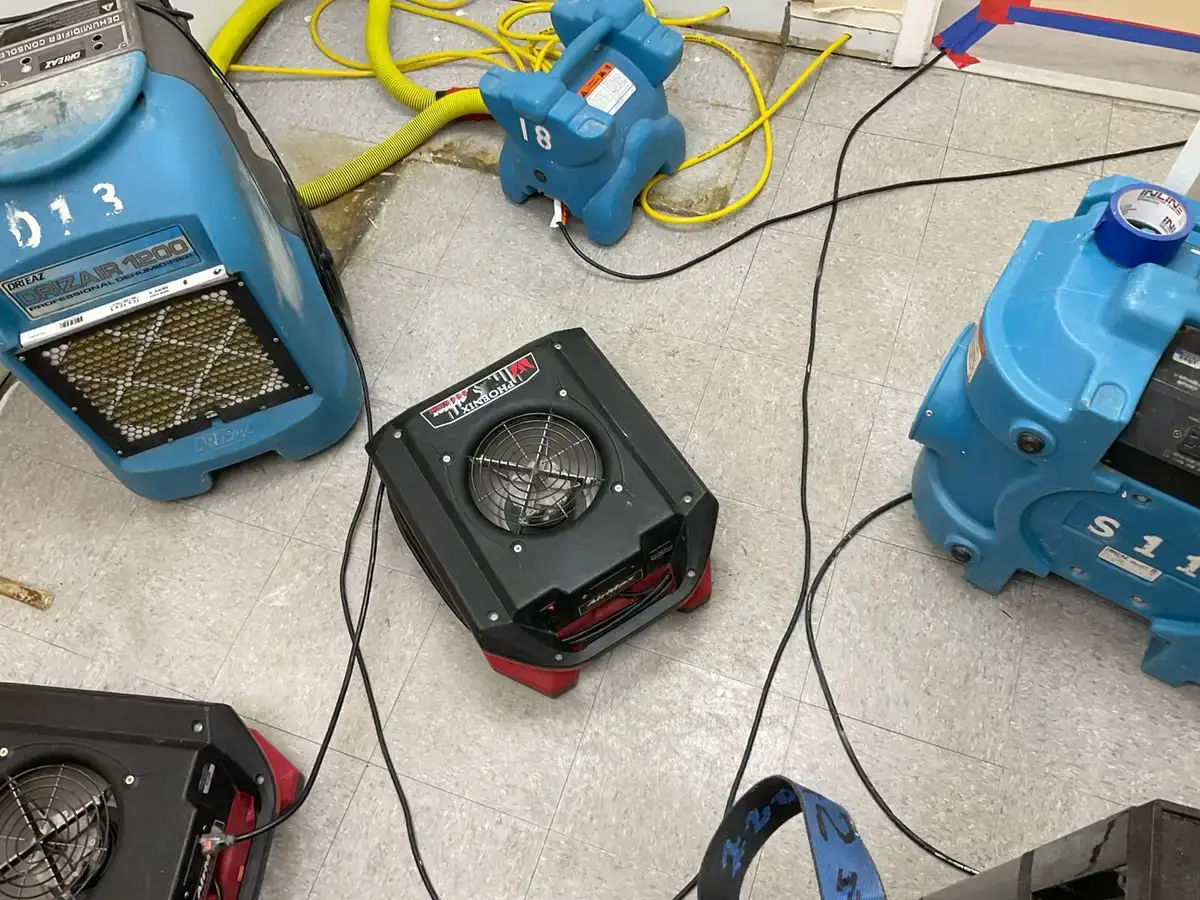
Professional drying setups pair multiple air movers with commercial dehumidifiers because evaporation and moisture removal have to happen at the same time for the structure to keep moving toward dry standard.
This is also where humidity notes become more useful than many homeowners realize. In TCR's moisture meter types article, hygrometers and thermo-hygrometers are described as tools for tracking daily humidity and temperature so crews can monitor drying progress and verify conditions after remediation. In other words, ambient readings are not filler. They help explain whether the room is drying efficiently or whether the environment is slowing everything down.
If a drying log notes that equipment was moved, added, or left in place, the reason is often one of these:
- one room or material dried faster than another
- humidity stayed too high and more dehumidification was needed
- airflow needed to be redirected toward a stubborn area
- thermal imaging or meter checks found hidden moisture that the first setup did not fully address
- dense materials needed specialty drying instead of a basic open-room setup
When you read those notes in context, the job stops looking random. It starts looking like controlled adjustment.
Which numbers or notes should prompt follow-up questions
A drying log should not force you to become a restorer. It should help you know when to ask the right question.
The strongest follow-up questions usually come from patterns, not from one isolated reading. Consider asking for clarification when you see any of the following:
- Readings are flat for multiple visits. Ask what material is still elevated, what the dry standard is, and whether hidden moisture is keeping the job open.
- Equipment remains but the notes stay vague. Ask whether the issue is material moisture, humidity, or an inaccessible cavity.
- Only one reading type appears. If the log shows surface checks but no ambient humidity or temperature notes, ask how the environment is being monitored.
- Dense materials are involved. If hardwood, plaster, concrete, cabinets, or subfloors were affected, ask whether specialty drying or slower verification is expected.
- Rebuild work is scheduled before the log is clearly closed. Ask what documentation confirms the materials are dry enough for refinishing or closure.
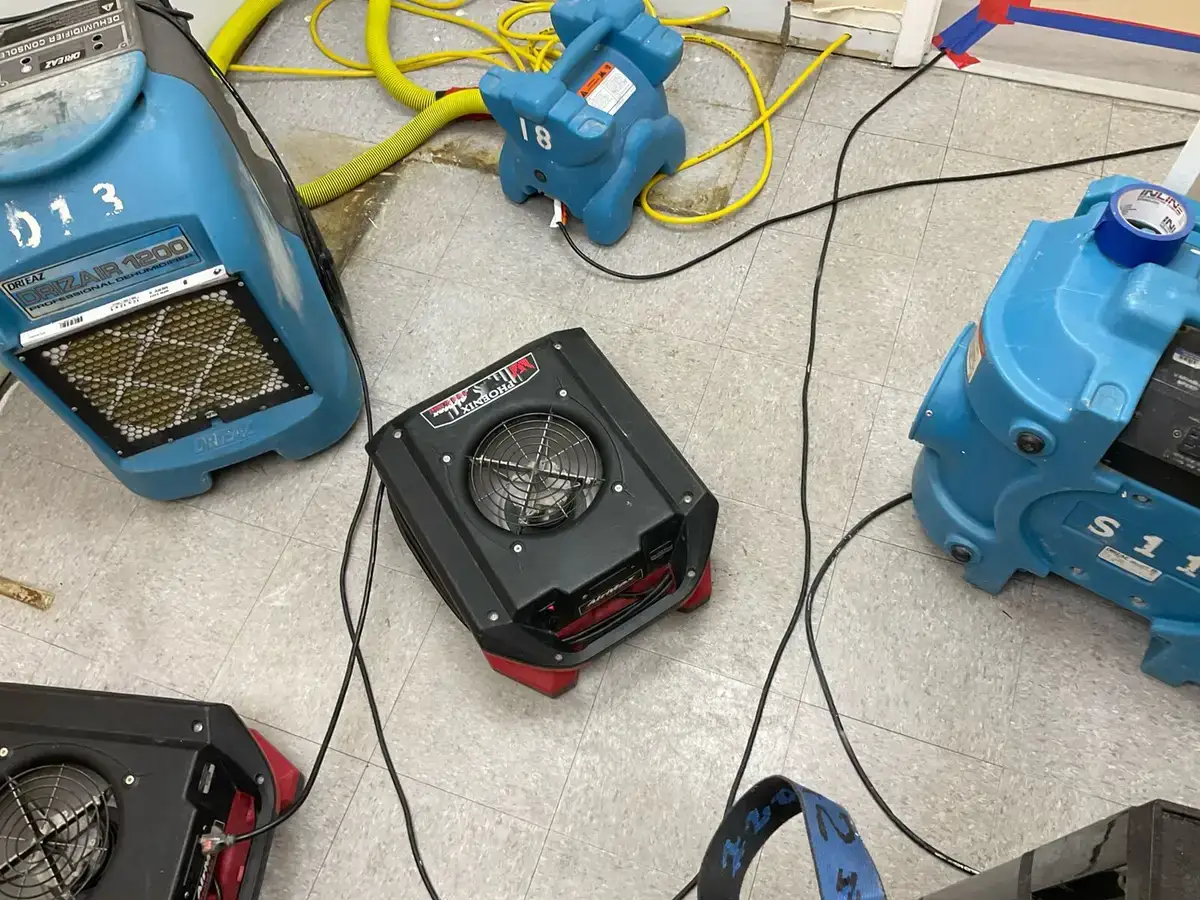
When a log stalls or changes direction, the next step is usually a different drying setup or deeper diagnostics. Larger jobs often need more equipment or a different placement pattern before the numbers start moving again.
A few practical questions work well in almost every loss:
- What dry standard are you comparing today's readings against?
- Which exact materials are still wet?
- Are the readings trending down day to day, and if not, why?
- Is the issue in the material itself, or in the room conditions around it?
- What will tell us the equipment can come out safely?
Those questions are especially useful when the job is moving from emergency mitigation into repair planning.
How drying logs help with insurance and reconstruction timing
Drying logs matter because they explain why the job took the time and equipment it took.
TCR's water guide says professional claim documentation often includes detailed photos, daily moisture readings, and drying logs. Its extraction guide adds that restoration records commonly include photos at multiple stages, moisture readings, and itemized material notes to support the scope of work. That does not guarantee a carrier will pay every line item. It does mean the log can help show that the drying plan was measured, documented, and tied to real site conditions.
For homeowners, the bigger practical value is often reconstruction timing. The log helps answer questions like:
- Is the structure dry enough to reinstall flooring?
- Can the wall be closed now, or is moisture still trapped behind it?
- Was equipment removed because the job was actually complete, or just because the room looked better?
TCR's emergency water damage checklist reinforces the front end of that process by recommending room-by-room wide shots and close-ups before cleanup begins. Those early photos, combined with the later drying logs, create the before-and-after record that supports both scope decisions and claim conversations.
The reader-safe way to think about this is simple: documentation may help support a claim, but carrier requirements and coverage decisions vary. What the drying log does best is prove what changed, what was still wet, and why the crew kept going or stopped.
When to stop watching the chart and call for more help
Sometimes a drying log is doing exactly what it should. Sometimes it is warning you that the problem is bigger than a few fans and another night's patience.
Bring in more help, or ask for a tighter explanation, when:
- readings stop improving and no one can explain why
- sewage, floodwater, or other contaminated water was involved
- visible mold or strong odor is increasing instead of stabilizing
- the affected area includes hardwood, plaster, concrete, cabinets, or hidden cavities that may need specialty drying
- occupants have health sensitivities and the cleanup plan needs tighter controls
- reconstruction is about to start without clear dryness verification
If the measurements are confusing, the safest move is not to guess. Ask for the material-specific explanation, the dry standard being used, and the reason the crew believes the job is or is not ready for the next phase. If you need a second look at a South Florida loss, Total Care Restoration's water damage restoration team can inspect the affected areas, document hidden moisture, and explain what the drying record is showing before the job moves into rebuild.
Drying logs are not glamorous, but they are often the clearest proof that a water-damage job is being managed with measurements instead of wishful thinking.
This article is for general education, not legal or medical advice. Claim handling, cleanup scope, and rebuilding decisions vary by property and loss conditions, so confirm next steps with qualified restoration and insurance professionals.
Want to Learn More?
Read our comprehensive guide covering everything you need to know about this topic.
The Complete Guide to Water Damage Restoration in South FloridaNeed Professional Help?
Our expert team is ready to assist with your water damage restoration needs.
View Water Damage Restoration Services