Dehumidifiers vs. Air Movers: What to Use After Floods

When dealing with water damage, quick action is essential to prevent mold growth and minimize structural damage. The best tools for the job? Air movers and dehumidifiers. Here’s how they work and when to use them:
- Air Movers: These create high-speed airflow to dry wet surfaces like carpets, walls, and floors quickly. They’re best used immediately after water removal to prevent moisture from seeping deeper into materials.
- Dehumidifiers: These pull moisture from the air, reducing indoor humidity and preventing mold. They’re most effective after air movers have dried surfaces, tackling hidden moisture in the air and within materials.
Quick Comparison
| Feature | Air Movers | Dehumidifiers |
|---|---|---|
| Primary Function | Surface drying (evaporation) | Airborne moisture removal |
| Best Use | Immediate drying after floods | Long-term humidity control |
| Operation | Blows air over wet areas | Draws in air, removes water |
| Effect on air quality issues | Moves air without dehumidifying | Improves air quality |
| Timing | Initial drying (first 24–48 hrs) | Continuous moisture control |
Pro Tip: Use both together for the best results. Air movers speed up surface drying, while dehumidifiers prevent airborne moisture from causing further damage. For severe water damage restoration, professional-grade equipment and expertise are often necessary.
Desiccant Dehumidifier Drying a Flooded Condo, Water Damage, Rent
What Dehumidifiers Do and Why They Help
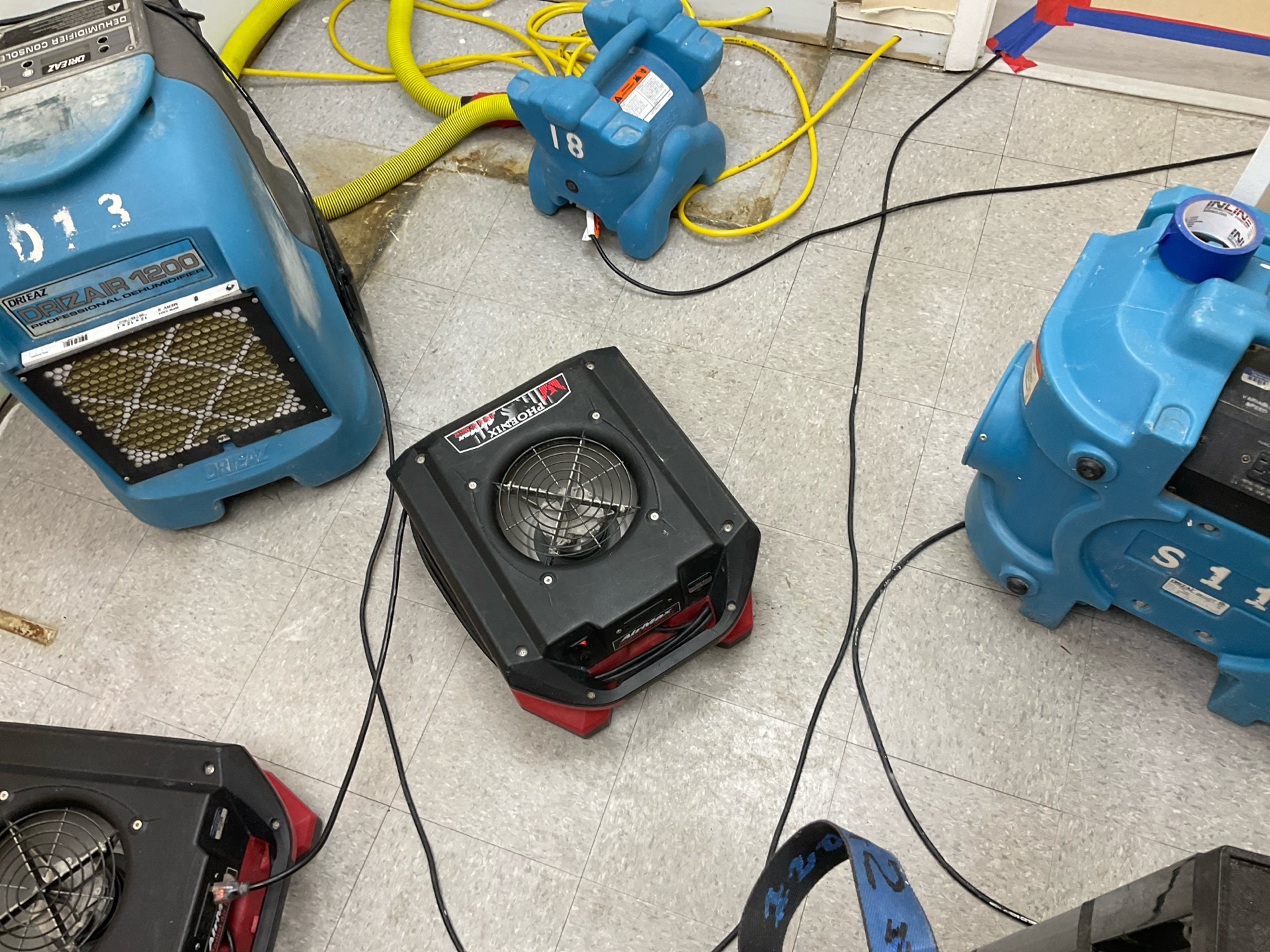
Dehumidifiers play a crucial role in drying out spaces after floods by removing excess moisture from the air. This helps prevent mold growth and protects the structural integrity of a building. While air movers target surface drying, dehumidifiers tackle the hidden moisture that lingers in the air and within materials, which could lead to long-term damage. Here’s a closer look at how they work and why they’re so effective.
How Dehumidifiers Work
Dehumidifiers operate by pulling in damp air and passing it over cold coils. This causes the water vapor in the air to condense into droplets, which are collected in a reservoir. The now-dry air is then released back into the room, creating a continuous cycle that gradually lowers humidity levels. This process not only dries the air but also encourages moisture to evaporate from wet surfaces, speeding up the overall drying process.
The mechanism is straightforward: a fan draws in humid air, which passes over the cold coils. As the water vapor condenses, it’s collected, and the dehumidifier recirculates the dry air. This cycle is key to removing moisture from saturated materials and surfaces, making dehumidifiers indispensable for effective restoration efforts.
Main Benefits of Dehumidifiers
Dehumidifiers help maintain indoor humidity levels between 30% and 50%, a range that discourages mold growth and prevents damage to building materials like warping or corrosion. This is particularly important in areas like Tampa Bay, where 60% of homes reportedly have detectable mold levels. Additionally, the Florida Department of Health notes that over 2,000 hospitalizations occur annually due to mold-related respiratory issues.
High-capacity, commercial-grade dehumidifiers can remove up to 400 gallons of water per day, making them highly effective at reducing moisture-related risks. Beyond protecting health, they speed up water damage cleanup by accelerating the drying process. They also improve indoor air quality by minimizing musty odors and reducing allergens. Critically, dehumidifiers address moisture trapped in hard-to-reach areas, like behind walls or under flooring, which could otherwise lead to problems weeks or months later.
"Dehumidifiers are an essential tool in the fight against water damage. By efficiently removing excess moisture from the air and preventing secondary issues like mold growth, they help ensure a safe and successful restoration process."
To maximize their effectiveness, it’s important to keep windows and doors closed while using dehumidifiers to prevent additional humid air from entering. Remove water-damaged items that could continue to release moisture and place the units in the most affected areas, such as basements or crawl spaces. Regular maintenance, like cleaning air filters and emptying the water reservoir, is vital throughout the restoration process.
What Air Movers Do and Why They Help
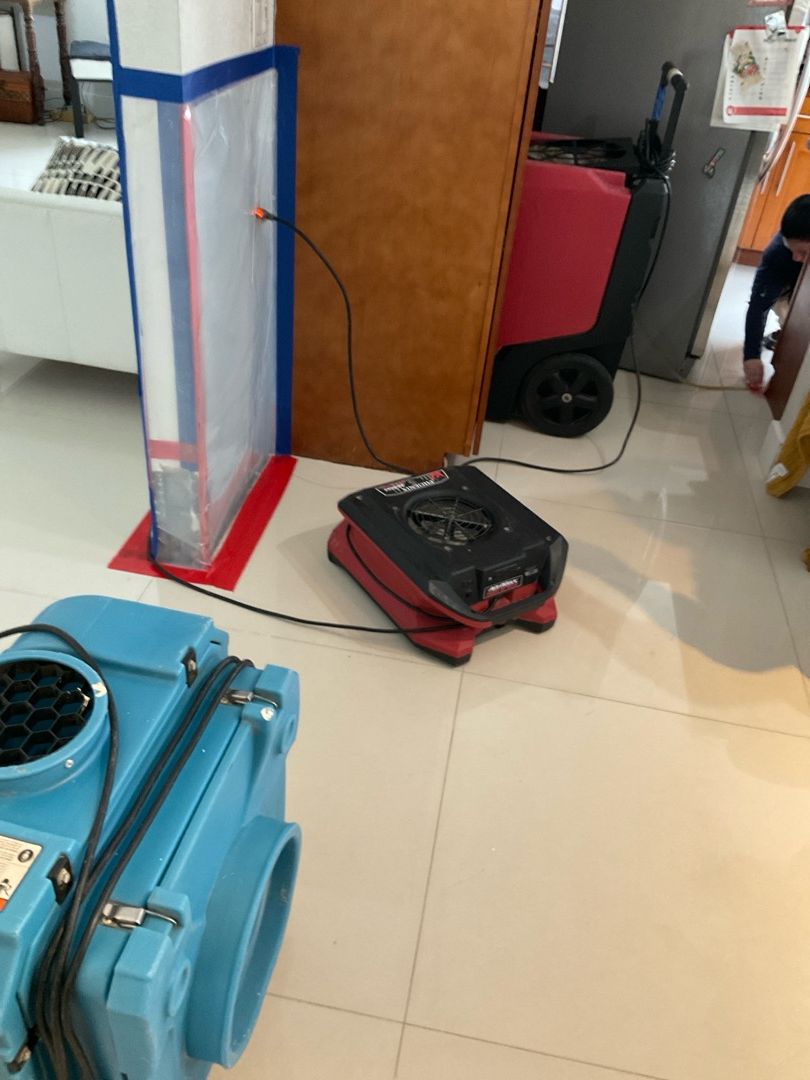
Air movers are a cornerstone of The Fastest Way to Handle Emergency Water Removal in Your Home efforts, designed to tackle surface drying with high-speed air circulation. Unlike dehumidifiers, which focus on reducing moisture in the air, air movers target wet surfaces directly. This makes them especially useful in the critical first stages after flooding, where quick action is needed to prevent further damage. By understanding how they work, it’s easier to see why air movers are such a vital tool in flood response.
How Air Movers Work
Air movers work by generating a constant stream of high-speed airflow across wet surfaces, speeding up evaporation. They pull in surrounding air and push it out forcefully, drying areas like carpets, walls, floors, and furniture efficiently.
"An air mover works by increasing the rate at which moisture evaporation takes place. By moving the moisture back into the air off of your floors and carpets, air movers can quickly dry an area." – Bissell BigGreen Commercial
What sets air movers apart from regular fans is their power and precision. While household fans distribute air over a broad area at slower speeds, industrial air movers deliver concentrated, high-velocity airflow to specific spots. This targeted approach pulls moisture trapped deep within materials to the surface, allowing it to evaporate faster.
Main Benefits of Air Movers
The way air movers operate provides a range of benefits that make them indispensable in flood recovery. While dehumidifiers handle moisture in the air, air movers focus on drying soaked surfaces, offering a complementary solution.
One major advantage is their ability to significantly cut down drying times. By maintaining constant airflow, air movers accelerate evaporation, helping carpets, floors, and walls dry faster. This speed is crucial, as mold and mildew can start forming within 24 to 48 hours in damp conditions.
Air movers also help prevent secondary damage by removing moisture before it has a chance to cause structural problems or mold growth. Considering that The True Costs of Water Damage Financial And Health Impacts in the U.S. can reach $7.2 billion annually – with the average claim at $10,965 – effective drying can lead to substantial savings.
Additionally, air movers improve air circulation in confined spaces and help protect building materials by promoting faster drying . They also enhance safety by reducing the risk of slips and falls on wet surfaces, benefiting both residents and restoration crews.
For the best results, position air movers at a 45-degree angle toward the affected area to maximize airflow. When drying carpets or floors, distribute the units evenly around the room to ensure consistent coverage. In larger spaces, deploying multiple air movers ensures thorough drying. Thanks to their lightweight and compact design, air movers are easy to transport and strategically place wherever needed. For specialized flooring drying, Drying Mats Essential Restoration techniques can also be highly effective.
Dehumidifiers vs Air Movers: Main Differences and How They Work Together
Previously, we discussed how dehumidifiers and air movers handle moisture in distinct ways. Now, let’s dive into their differences and see how they complement each other to tackle moisture effectively.
Both tools are essential for addressing moisture issues after floods or spills, but they operate differently. Knowing these differences can help you choose the right tools for your needs and achieve better results during restoration.
The key distinction lies in their approach to moisture. Air movers focus on surface drying by generating high-speed airflow that speeds up evaporation from materials like carpets, walls, and floors. On the other hand, dehumidifiers target airborne moisture, pulling humidity out of the air to create a drier environment throughout the area.
Air movers are ideal for quick surface drying, while dehumidifiers are better suited for controlling humidity over time and preventing mold.
Comparison Table: Dehumidifiers vs Air Movers
Here’s a side-by-side look at how these tools differ:
| Feature | Air Movers | Dehumidifiers |
|---|---|---|
| Primary Function | Boost air circulation, speed up surface drying | Remove airborne moisture, lower humidity |
| Best Use | Drying wet surfaces like carpets and walls | Controlling long-term humidity, preventing mold |
| Operation | Blows air over wet areas | Draws in air, removes water, releases dry air |
| Effect on Air Quality | Moves air without reducing moisture | Improves air quality by extracting moisture |
| Cost Effectiveness | Lower initial cost | Better for ongoing moisture management |
| Timing | Best for immediate use after spills or floods | Ideal for continuous moisture control |
In practical terms, air movers create noticeable airflow and are capable of drying soaked carpets within hours. Dehumidifiers, on the other hand, work more quietly and effectively extract airborne moisture. Some models can remove up to 50 liters of water per day.
How Dehumidifiers and Air Movers Work Together
When used together, dehumidifiers and air movers form a powerful moisture removal system. Air movers accelerate evaporation by lifting moisture off surfaces, while dehumidifiers capture the airborne moisture before it can settle or raise humidity levels. Without dehumidifiers, air movers could simply circulate humid air, leading to condensation in cooler areas. Similarly, without air movers, dehumidifiers would struggle to perform efficiently, as moisture would remain trapped in materials instead of being released into the air.
Commercial often combine these tools, typically using one dehumidifier for every 3–4 air movers. This setup ensures effective air circulation to release surface moisture and provides enough dehumidification to handle the resulting airborne humidity.
"The dehumidifier can be used when at the same time, with Airmovers to completely remove all of the moisture from the drywall, flooring, behind baseboards, and walls." – 5 Star Cleaning Team
This combined strategy is also crucial for 5 Steps for Emergency Mold Mitigation, which can begin within 48 to 72 hours in damp conditions. By keeping air moving and maintaining low humidity levels, dehumidifiers and air movers work hand in hand to lower the risk of mold development – an essential step in avoiding long-term restoration challenges.
When to Use Each Tool After Floods
Timing is everything when dealing with flood damage. Acting quickly can prevent significant property damage, as water can wreak havoc within just 24 to 48 hours if left unchecked. Knowing when and how to use air movers and dehumidifiers can make all the difference in effective flood recovery.
Using Air Movers Right After Floods
Air movers should be deployed immediately after water has been extracted. These machines are designed to tackle surface moisture right away, preventing water from seeping deeper into materials. The first few hours after water removal are critical, and air movers excel at speeding up this initial drying process.
Placement matters. Position air movers at a 45-degree angle to maximize airflow . Space them about 10–15 feet apart, ensuring they work in harmony rather than counteracting each other’s airflow.
Different types of air movers are suited for specific tasks:
- Centrifugal air movers: Best for targeted drying, especially when placed close to the ground.
- Downdraft units: Ideal for large carpeted areas, as they pull dry air from above and push it downward.
- Axial air movers: Perfect for open spaces, providing high-volume airflow for general circulation.
Choose the right type based on the area and materials you’re working with to maximize drying efficiency.
"Efficient drying requires a strategic approach to air mover placement, considering factors like the type and severity of the water damage, the layout of the home, and the materials affected." – The KnowHow Team
Monitor progress by checking surface moisture levels regularly. Air movers often yield noticeable results within 6–12 hours, and most surface moisture can be eliminated within 24–48 hours of continuous use. Once surfaces are dry, it’s time to bring in dehumidifiers for the next phase.
Using Dehumidifiers for Long-Term Moisture Control
After air movers have done their job, dehumidifiers take over to manage lingering airborne moisture. This step is crucial for reducing humidity and preventing secondary issues like mold growth. Dehumidifiers should be started once surface water is gone and should run continuously for the first 24–48 hours. After that, monitor humidity levels to determine if further use is necessary.
Aim to maintain relative humidity between 30% and 50%. This range is recommended by the EPA to prevent problems caused by air that’s too humid or too dry. ASHRAE, on the other hand, considers indoor humidity levels above 60% to be excessive.
For best results, use a proper ratio of air movers to dehumidifiers to ensure moisture drawn from surfaces is effectively captured. Consumer-grade dehumidifiers may not be enough for major water damage, so professional-grade equipment is often recommended in severe cases.
If dampness, musty odors, or Tell Mold Behind Walls persist, continue using dehumidifiers. Place them centrally in rooms and position air movers to direct airflow toward the dehumidifiers. Use a hygrometer to monitor moisture levels and adjust settings as needed. This phase of dehumidification is just as important as the initial drying process to ensure the property is fully protected from long-term damage.
Picking the Right Equipment for Your Property
When it comes to addressing water damage, selecting the right tools is crucial. Dehumidifiers and air movers work hand-in-hand, but the key is choosing equipment that matches your property’s specific needs to tackle hidden moisture, prevent mold, and avoid structural damage.
What to Consider When Choosing Equipment
Several factors come into play when deciding on the right equipment for water damage restoration:
Room Size
The size of the space directly influences the type and number of units you’ll need. Larger rooms require more powerful equipment or additional units. For example, hard flooring typically needs one air mover per 400–500 square feet, while carpeted areas may require one per 300 square feet.
Extent of Water Damage
The severity of the damage dictates how much drying power is needed. Clean water from a burst pipe is easier to handle than floodwater, which often seeps into porous materials. A What Is a Moisture Meter the Best Measurement can help measure the water content in drywall, wood, and carpet, giving you a clearer picture of the damage. For comprehensive moisture detection, learn about the 5 Types of Moisture Meters for Water Damage that professionals rely on.
Humidity Levels
High humidity makes drying more challenging. Dehumidifiers should aim to maintain indoor humidity between 30–50%. The table below provides guidelines for selecting the right dehumidifier based on room size and humidity levels:
| Room Size/Humidity Level | 400 Sq. Ft. | 600 Sq. Ft. | 800 Sq. Ft. | 1,200 Sq. Ft. |
|---|---|---|---|---|
| 50% to 60% | 20-pint | 25-pint | 35-pint | 50-pint |
| 60% to 70% | 20-pint | 30-pint | 40-pint | 50-pint |
| 70% to 80% | 25-pint | 35-pint | 45-pint | 55-pint |
| 80% to 90% | 30-pint | 40-pint | 50-pint | 60-pint |
Building Materials
Different materials absorb and release water at varying rates. For example, concrete tends to retain moisture longer than hardwood, while carpet padding absorbs water like a sponge, making it harder to dry.
Equipment Ratios
Balancing air movers and dehumidifiers is essential for effective drying. A common setup includes 4–5 air movers per dehumidifier. For larger jobs, air movers with at least 2,800 CFM are recommended. Dehumidifiers should have a capacity to remove at least 10 pints of moisture per day for every 500 square feet.
Types of Equipment
Each type of equipment serves a specific purpose:
- Axial air movers are great for open spaces.
- Centrifugal units focus airflow on specific areas.
- Low-profile models are ideal for tight spots.
When it comes to dehumidifiers, Low-Grain Refrigerant (LGR) models are particularly effective for severe water damage.
Placement Strategy
Proper placement can significantly enhance efficiency. Position air movers at a 15–45 degree angle to walls to dry both floors and walls simultaneously. Dehumidifiers should be placed centrally, with airflow directed toward them for optimal moisture removal.
How Total Care Restoration Can Help
Restoring water damage isn’t just about renting some equipment and hoping for the best. Total Care Restoration offers certified professionals who understand the H.A.T. principle – managing Humidity, Airflow, and Temperature – to create effective drying strategies.
Their advanced tools include commercial-grade LGR dehumidifiers and The Role of Air Movers in Drying Out a Flooded Space, which outperform standard consumer equipment. This makes them well-equipped to handle even the most severe cases of water damage.
What sets Total Care Restoration apart is their ability to detect hidden moisture. Using professional-grade moisture meters, their technicians can identify water trapped in wall cavities, beneath flooring, or within structural elements – areas that homeowners often miss. This ensures equipment is placed where it’s needed most.
With a 24/7 emergency response team, they can act quickly to prevent minor water damage from escalating into major structural problems or mold growth. For immediate help, call (786) 610-6317.
They also simplify the insurance process by offering direct billing and providing detailed documentation of moisture readings and equipment usage. This not only supports your claim but also ensures proper coverage.
For homeowners unsure about the extent of their water damage, Total Care Restoration offers free evaluations. Their team will assess the situation, recommend the right tools, and explain the restoration process clearly – giving you peace of mind that your property is in expert hands.
Conclusion: Getting Better Flood Recovery Results
Effective flood recovery hinges on combining dehumidifiers and air movers. Together, these tools create a powerful system – air movers speed up surface drying, while dehumidifiers reduce excess moisture in the air, keeping humidity levels in the ideal range of 30% to 50%. This partnership is vital for managing moisture effectively.
Timing plays a huge role, too. Acting fast – ideally within 24 to 48 hours – can stop mold from growing and prevent structural damage. But achieving the best results often requires professional expertise. Professionals bring more than just equipment; they know how to position it for maximum efficiency, detect hidden moisture, assess structural issues, and provide detailed documentation for insurance claims.
As Good Life USVI puts it:
"Knowing that your property is in the hands of experts can provide significant peace of mind during what is often a stressful time. Professionals not only restore your home but also ensure the safety and health of your living environment." – Good Life Restorations
If you’re facing flood damage, Total Care Restoration offers 24/7 emergency services. Call them anytime at (786) 610-6317. Their certified technicians use commercial-grade equipment to dry and restore your property thoroughly.
FAQs
How can I decide whether to use air movers, dehumidifiers, or both after a flood?
When deciding between air movers, dehumidifiers, or a combination of both after a flood, it all comes down to the extent of the water damage and the size of the area affected.
Air movers are perfect for speeding up the drying of surfaces, especially in large or heavily soaked spaces. They work by increasing evaporation, which can be a game-changer in tackling wet floors and walls. Meanwhile, dehumidifiers focus on pulling excess moisture out of the air. This helps control humidity levels and reduces the risk of mold growth – a serious concern after water damage.
For the most effective drying process, using both tools together is often the way to go. Air movers handle surface drying, while dehumidifiers take care of moisture in the air, creating a balanced and efficient system. The right mix depends on the size of the space and the amount of water involved. A common strategy is to start with more air movers and add dehumidifiers as needed. If you’re not sure how to set it up, reaching out to restoration professionals can help you get it right.
How do I choose between a dehumidifier and an air mover after a flood?
When choosing between a dehumidifier and an air mover for flood restoration, it’s essential to consider factors like the size of the affected area, the amount of water involved, and the humidity levels in your home.
A dehumidifier is your go-to device for pulling excess moisture from the air and keeping humidity levels in the safe range of 30-50%, which helps prevent mold growth. The type of dehumidifier you need will depend on the size of the space and how severe the water damage is.
An air mover, on the other hand, is all about improving airflow to speed up the drying process. For the best results, air movers should be strategically positioned throughout the room. A common setup involves using 4-5 air movers for every dehumidifier, creating a balanced and effective drying system. Combining both tools allows for quicker moisture elimination and helps restore your home more efficiently.
How can I control humidity during flood cleanup to prevent mold?
When tackling Emergency Water Damage Repair Services in Miami, keeping an eye on indoor humidity is key to stopping mold from taking hold. Use a dependable humidity meter to track levels, aiming for a relative humidity between 30% and 50%. Once levels creep above 60%, the chances of mold growth spike significantly. To prevent this, make use of dehumidifiers and ensure the space is well-ventilated. Keep checking and adjusting conditions as needed to maintain a safe and mold-free environment.
Related posts
Want to Learn More?
Read our comprehensive guide covering everything you need to know about this topic.
The Complete Guide to Water Damage Restoration in South FloridaNeed Professional Help?
Our expert team is ready to assist with your water damage restoration needs.
View Water Damage Restoration Services