Water Leak Volume Calculator
Why Leak Volume Matters
Water losses are often described in gallons per minute (GPM) and how long the flow continued. Multiplying the two gives a rough total volume, which helps you grasp severity, explain the event to an adjuster, and understand why professionals scale equipment the way they do.
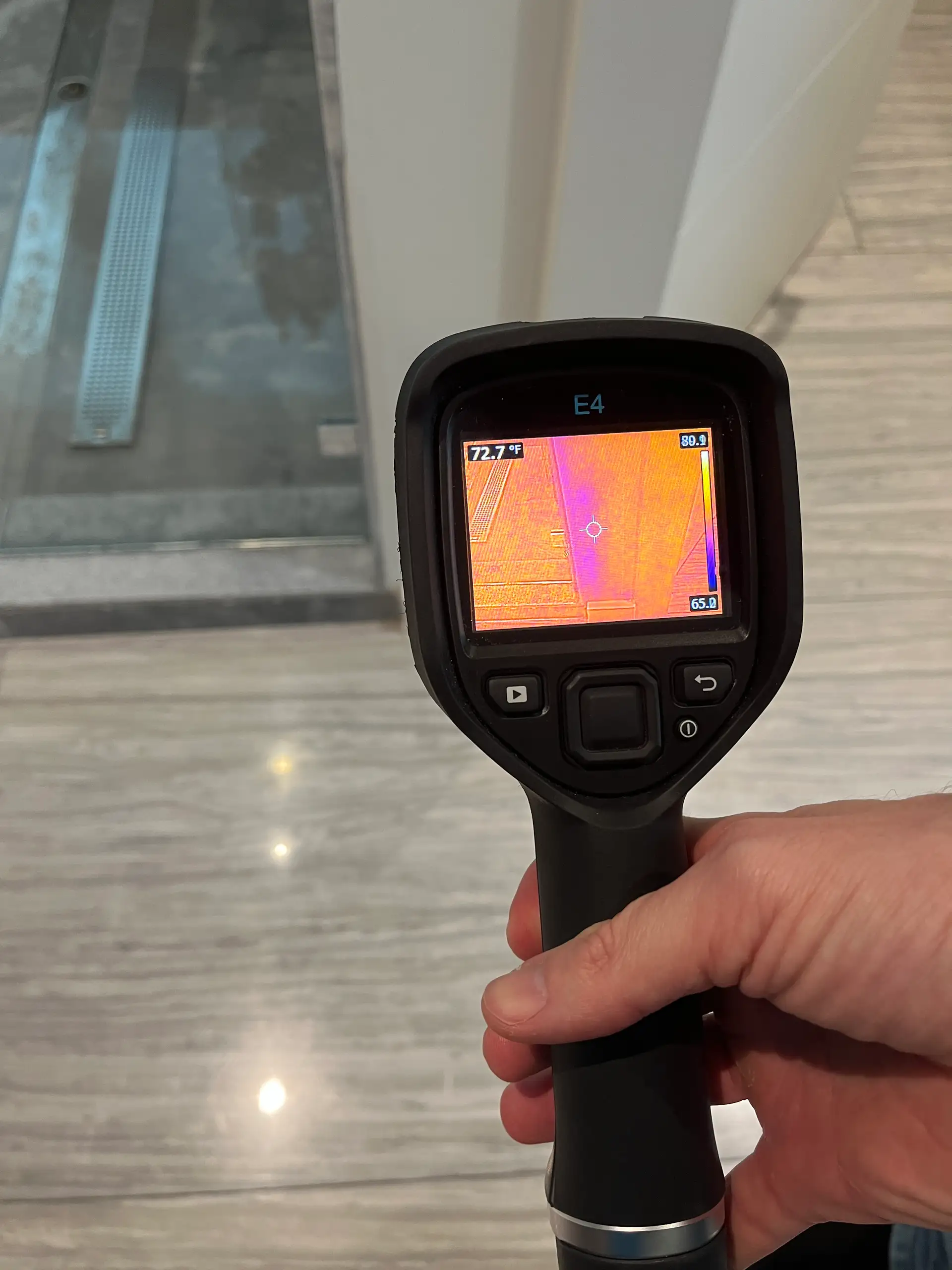
This tool is not a moisture investigation. It does not replace meters, thermal imaging, or cavity inspections—those steps show where water actually ended up after it left the pipe.
From GPM and Minutes to Gallons
The math is simple: GPM × minutes ≈ gallons. We also show liters for anyone comparing to bucket or tank sizes. If you pick a preset, we apply a typical flow for that fixture or line; if you choose custom, you supply the GPM yourself (from a bucket test or plumber).
Preset flows are mid-range estimates. Real pressure, partially open valves, and restriction from kinks or failed fittings all change the number. For high-pressure burst supply lines, actual GPM can be higher than a kitchen faucet preset—use the high-flow preset or measure.
Category of Water and Health
Clean water can degrade to Category 2 (gray) or Category 3 (black) if it picks up contaminants or sits long enough. Sewage backups and groundwater intrusion are Category 3 situations: treat them as hazardous and involve professionals with PPE and proper disposal. If you are dealing with sewage, use our sewage cleanup cost estimator and read about sewage cleanup services.
Linking Volume to Restoration
Large volumes often mean multi-layer drying (pad, subfloor, wall base) and longer monitoring. Smaller volumes can still be serious if they pool inside a wall or soak cabinetry. That is why water damage restoration focuses on drying goals and documentation, not just the pipe fix.
For a broader overview of the process, insurance context, and prevention, see The Complete Guide to Water Damage Restoration in South Florida.
Total Care Restoration responds 24/7 across South Florida. After you estimate volume, call (305) 428-2192 or contact us online for extraction, structural drying, and mold prevention.
Frequently Asked Questions
Want to Learn More?
Read our comprehensive guide covering everything you need to know about this topic.
The Complete Guide to Water Damage Restoration in South FloridaNeed Professional Help?
Our expert team is ready to assist with your water damage restoration needs.
View Water Damage Restoration Services