Water Damage Categories Explained: Class 1-4 and Category 1-3
Understanding Water Damage Classification
Not all water damage is the same. The Institute of Inspection, Cleaning and Restoration Certification (IICRC) developed a classification system that helps restoration professionals—and property owners—understand the severity and appropriate response for any water damage situation.
According to the IICRC's ANSI/IICRC S500 standard, this framework "describes the procedures to be followed and the precautions to be taken when performing water damage restoration in residential, commercial, and institutional buildings." Understanding these classifications helps you know what to expect during restoration and why certain procedures are necessary.
Categories of Water Damage (Contamination Level)
Categories describe the contamination level of the water source:
Category 1: Clean Water
Definition: Water from a sanitary source that poses no substantial health risk. The IICRC standard states that Category 1 water "originates from a sanitary water source and does not pose substantial risk from dermal, ingestion, or inhalation exposure."
Common Sources:
- Broken water supply lines
- Tub or sink overflows (no contaminants)
- Falling rainwater (before contact with surfaces)
- Melting ice or snow
- Toilet tank overflow (no urine or feces)
- Appliance supply line failures
Restoration Approach:
- Standard extraction and drying
- Most materials can be dried and saved
- Least complex remediation
- Lowest cost typically
Important Warning: Category 1 water degrades to Category 2 within 48-72 hours if not properly dried. Bacteria begin growing, and the water becomes contaminated.
Category 2: Gray Water
Definition: Water with significant contamination that could cause discomfort or illness if ingested or exposed. The IICRC defines this as water that "contains significant contamination and has the potential to cause discomfort or sickness if contacted or consumed by humans."
Common Sources:
- Dishwasher or washing machine overflow
- Toilet bowl overflow with urine (no feces)
- Sump pump failures
- Aquarium water
- Waterbed leaks
- Water with fire suppression chemicals
- Category 1 water left untreated 48-72 hours
Restoration Approach:
- More aggressive extraction and drying
- Some porous materials may need removal
- Antimicrobial treatments required
- PPE (personal protective equipment) needed
- More extensive cleaning protocols
Health Considerations:
- Can cause irritation if contacted
- Potential for infection through cuts/wounds
- May trigger allergic reactions
- Should not be ingested
Category 3: Black Water
Definition: Grossly contaminated water that can cause severe illness or death. Contains pathogenic agents, toxins, or other harmful substances. The S500 standard notes that Category 3 water "can contain pathogenic, toxigenic, or other harmful agents."
Common Sources:
- Sewage backups
- Toilet overflow with feces
- Flooding from rivers, lakes, streams
- Sea water intrusion (storm surge)
- Ground surface water entering structure
- Stagnant standing water (supporting microbial growth)
- Category 2 water left untreated beyond 48-72 hours
Restoration Approach:
- Maximum safety precautions required
- Full PPE including respirators
- Extensive material removal (porous materials cannot be saved)
- Thorough sanitization and antimicrobial treatment
- May require professional HAZMAT protocols
- Most expensive and complex restoration
Health Considerations:
- Contains human or animal waste
- Bacteria, viruses, parasites present
- Can cause severe gastrointestinal illness
- May contain chemicals, pesticides, other toxins
- Wound infections can become serious
Classes of Water Damage (Evaporation Rate)
Classes describe how much water was absorbed and the anticipated evaporation requirements:
Class 1: Least Amount of Water
Characteristics:
- Affects only part of a room
- Materials absorbed minimal moisture
- Little or no wet carpet/cushion
- Low evaporation rate required
Typical Scenarios:
- Small leak caught quickly
- Overflow that was stopped early
- Limited to one room corner
Restoration Needs:
- Standard equipment usually sufficient
- Shorter drying time (typically 3-4 days)
- Lower equipment requirements
- Least expensive restoration
Class 2: Significant Amount of Water
Characteristics:
- Affects entire room(s)
- Carpet and cushion are wet
- Water has wicked up walls 12-24 inches
- Structural materials have absorbed moisture
Typical Scenarios:
- Appliance failure discovered after several hours
- Bathroom overflow affecting adjacent room
- Significant supply line break
Restoration Needs:
- More drying equipment required
- Typically 4-5 days of drying
- May require wall cavity drying
- Moderate equipment deployment
Class 3: Greatest Amount of Water
Characteristics:
- Water may have come from overhead
- Ceilings, walls, insulation saturated
- Carpet, cushion, sub-floor fully wet
- Entire affected area is saturated
Typical Scenarios:
- Roof leak during heavy rain
- Second-floor water heater failure
- Sprinkler system activation
Restoration Needs:
- Maximum equipment deployment
- 5-7 days typical drying time
- May require specialty drying techniques
- Wall and ceiling cavity drying
- Significant reconstruction possible
Class 4: Specialty Drying Situations
Characteristics:
- Deep moisture saturation in low-porosity materials
- Hardwood floors
- Plaster walls
- Brick or stone
- Concrete
- Crawl spaces with saturation
Typical Scenarios:
- Flooded basement with concrete and brick
- Hardwood floors that absorbed water
- Historic buildings with plaster
- Saturated crawl spaces
Restoration Needs:
- Specialty drying methods required
- Dehumidification may take weeks
- Injectidry systems for walls
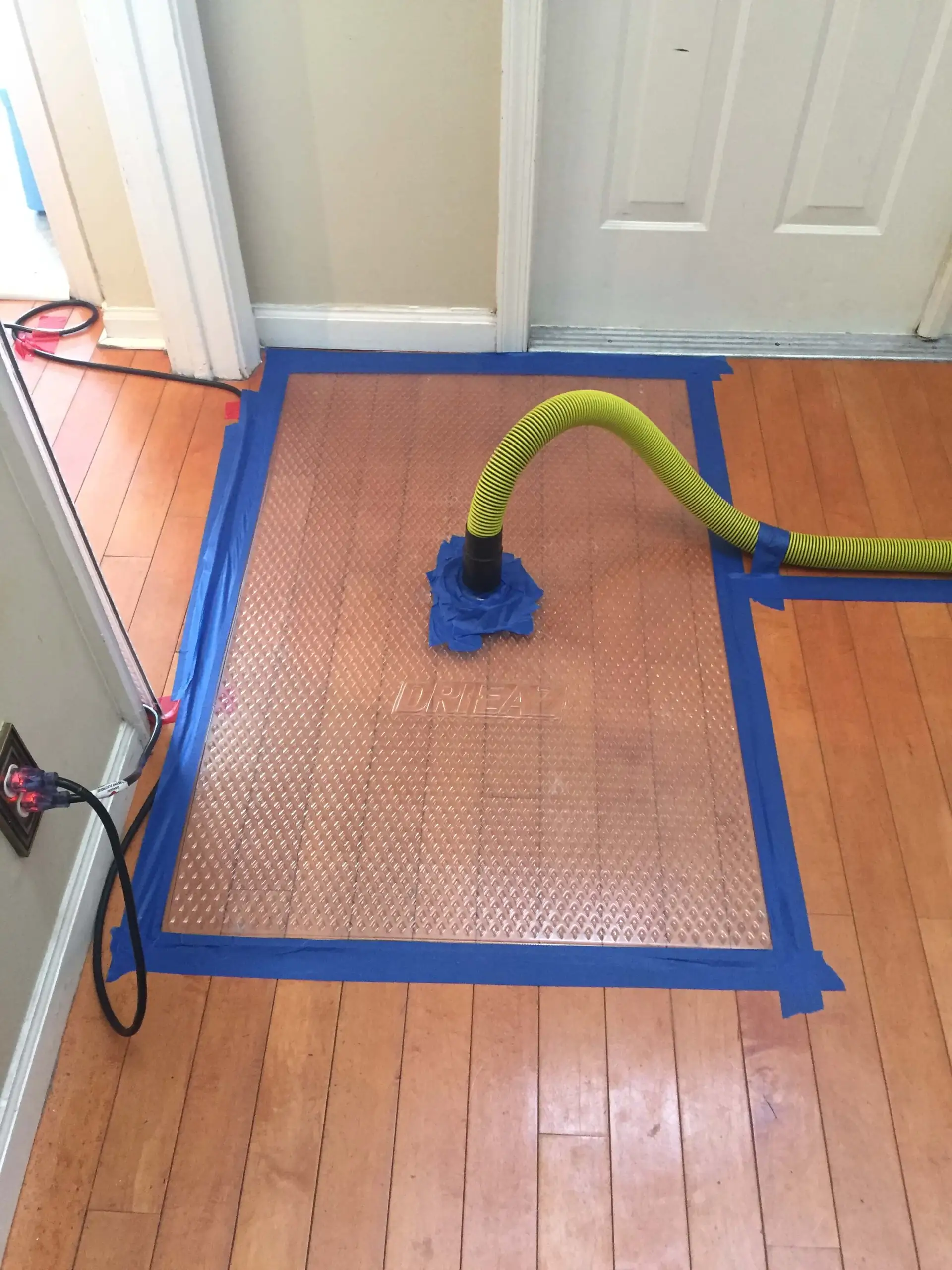
- Floor drying mats for hardwood
- Most time-intensive restoration
- Highest skilled technicians needed
How Categories and Classes Work Together
A water damage event has BOTH a category and a class:
Examples:
Category 1, Class 1
- Clean water supply line break
- Caught within an hour
- Affected only kitchen floor
- Simplest restoration scenario
Category 1, Class 3
- Water heater failure on second floor
- Clean water but flooded entire first floor ceiling
- More complex due to volume despite clean water
Category 3, Class 2
- Sewage backup in bathroom
- Affected bathroom and adjacent hallway
- Contamination is the primary concern
Category 3, Class 4
- Flooding from storm surge
- Saturated crawl space and hardwood floors
- Most complex: high contamination + specialty drying
Why Classification Matters
For Restoration Approach
Classification determines:
- Safety equipment requirements
- Materials that can be saved vs. must be removed
- Cleaning and treatment protocols
- Equipment types and quantities
- Timeline expectations
- Team training requirements
For Insurance Claims
Classification affects:
- Covered vs. excluded damages
- Scope of work approval
- Cost expectations
- Documentation requirements
For Your Health
Understanding classification helps you:
- Know what areas to avoid
- Understand why certain steps are taken
- Make informed decisions about your property
- Appreciate the importance of proper remediation
Degradation Over Time
A critical concept: Water category degrades without treatment
| Time | Category Change |
|---|---|
| 0-48 hours | Category 1 remains Category 1 |
| 48-72 hours | Category 1 → Category 2 |
| 72+ hours | Category 2 → Category 3 |
This is why fast response is essential. What starts as clean water damage can become a contaminated, expensive nightmare if not addressed quickly.
What This Means for You
Act Immediately
Don't wait to call for help. The clock starts the moment water enters your property.
Don't Assume It's "Just Water"
Even clear, clean-looking water:
- May have picked up contamination
- Degrades quickly
- Supports mold growth within 24-48 hours
Trust Professional Assessment
Restoration professionals:
- Properly classify your damage
- Apply appropriate protocols
- Document for insurance
- Ensure thorough restoration
Conclusion
Understanding water damage categories and classes helps you appreciate why restoration professionals take specific approaches to your situation. Category indicates contamination risk, while class indicates the extent and complexity of drying required.
The key takeaway? Time is critical. The sooner professional restoration begins, the simpler and less expensive the remediation—and the more of your property and belongings can be saved.
At Total Care Restoration, our IICRC-certified technicians properly classify every water damage event and apply the appropriate restoration protocols. We respond 24/7 throughout South Florida.
Water damage? Call (786) 610-6317 immediately. Every hour matters.
Want to Learn More?
Read our comprehensive guide covering everything you need to know about this topic.
The Complete Guide to Water Damage Restoration in South FloridaNeed Professional Help?
Our expert team is ready to assist with your water damage restoration needs.
View Water Damage Restoration Services