Sewage Backup Cleanup Costs: Why Category 3 Jobs Escalate Fast
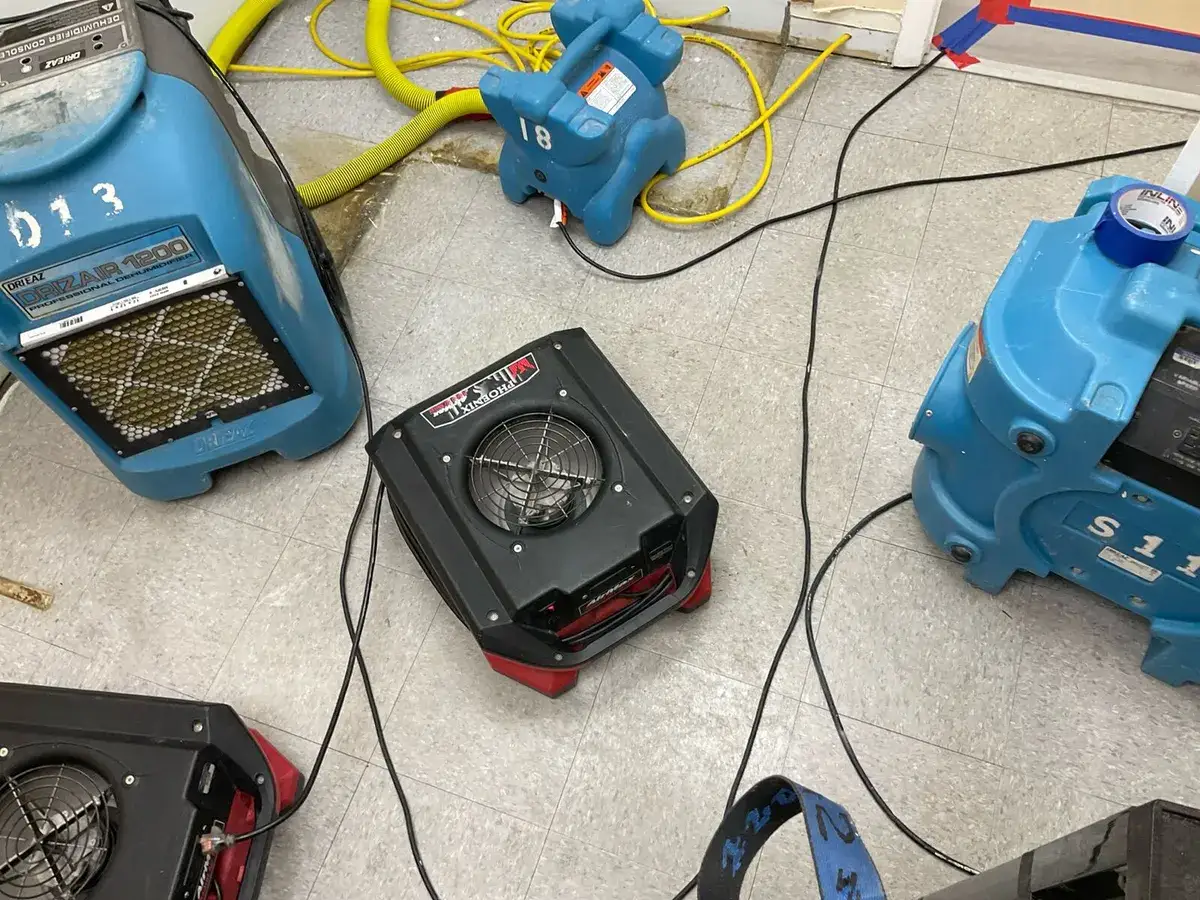
Sewage backup cleanup cost is rarely high because of one dramatic line item. It gets expensive because Category 3 losses are built from several problems at once: contamination, removal of porous materials, controlled cleanup, drying, deodorizing, and then the repair work needed to put the property back together.
That is why the right first question is not "What is the average sewage cleanup cost?" The better question is "What exactly is making this job bigger?" Total Care Restoration's sewage cleanup cost estimator points readers to the real drivers: how far the sewage spread, how deeply it penetrated the assembly, and how much contaminated material has to be removed instead of simply cleaned.
If you understand those drivers before comparing bids, you are much less likely to mistake a thin estimate for a good estimate. A cheaper number can mean the scope is missing containment, disposal, drying, or rebuild work that the property will still need two days later.
| Cost driver | Why it matters | What it usually changes |
|---|---|---|
| Water category | Sewage is Category 3, so health risk and cleanup controls rise immediately | PPE, containment, sanitation, disposal |
| Spread | One bathroom is different from a hallway, multiple rooms, or a lower level | Labor time, equipment moves, demolition footprint |
| Penetration | Surface contamination is cheaper than sewage reaching pad, drywall, cabinets, or subfloor | Removal volume, drying plan, rebuild cost |
| Time before response | Delay lets contamination wick farther and odor set deeper | Salvage potential, drying days, deodorizing scope |
| Property use | Homes, retail, restaurants, offices, and warehouses recover differently | Documentation, scheduling, shutdown planning, compliance steps |
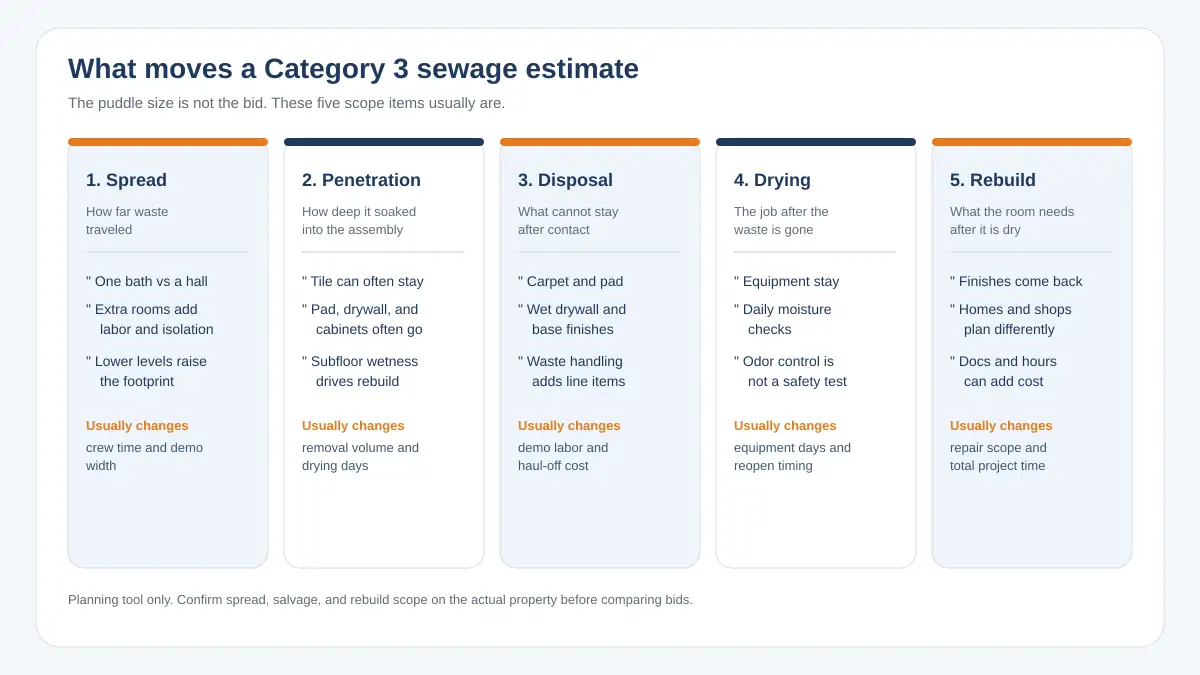
The strongest sewage estimates explain the variables before they present the number. Spread, penetration, disposal, drying, and rebuild usually matter more than the initial puddle size.
Why sewage backup cleanup costs more than a clean-water loss
Not all water losses are priced the same, and TCR's complete water-damage guide makes that distinction clearly. Clean water and gray water can still be serious, but sewage is Category 3 black water. That means the job is no longer only about getting things dry. It is also about controlling contamination and deciding what cannot stay in place.
On TCR's Broward County pricing guide, the company says Category 3 losses can cost 50 to 100 percent more than Category 1 jobs because of the specialized handling required. That same guide gives a sample sewage-backup scenario range of $5,900 to $12,600 and breaks it into the kind of work that changes the total: emergency response, sewage extraction, biohazard disposal, sanitization and disinfection, drying equipment, material removal, antimicrobial treatment, and restoration repairs.
That sample range is useful for planning, not because it predicts your exact bill, but because it shows where the money goes. A sewage loss is expensive when the scope has to protect people first and materials second.
The public-health side matters here too. EPA says contaminated flood conditions can expose occupants to microorganisms and other harmful substances, and CDC says floodwater may contain human waste, chemicals, and debris that can lead to illness or injury. Once a loss moves into that contamination lane, the estimate has to account for more than a wet floor and a few fans.
The short version is simple:
- clean-water jobs often lean toward extraction, drying, and selective repairs
- sewage jobs lean toward containment, disposal, sanitation, drying, deodorizing, and then repairs
That difference is why homeowners are often surprised by the jump between a pipe leak estimate and a sewage estimate, even when the affected square footage seems similar.
What spread and penetration really change inside the estimate
TCR's estimator does a good job of forcing the reader to think in two dimensions: spread and penetration.
Spread is the footprint problem. One contained bathroom backup is not the same as waste traveling through a doorway, along baseboards, down a hall, or into a lower room. The more rooms or travel paths involved, the more crews have to isolate, remove, clean, document, and dry.
Penetration is the assembly problem. A sealed tile floor that can be cleaned is one kind of job. A carpet-and-pad assembly, base drywall, cabinet toe-kicks, or subfloor that soaked up contamination is a different job entirely. TCR says deep multi-layer saturation almost guarantees heavier demolition and rebuild. That is the sentence many estimates are really built around.
A useful way to think about it:
- surface spread tends to increase cleanup labor
- deep penetration tends to increase demolition and rebuild cost
- both at once produce the fast-escalating jobs people remember
This is also where hidden moisture matters. TCR's water-damage guide says water can hide behind walls, under floors, and behind cabinets, with daily moisture checks used until drying is complete. That matters for sewage losses because a room can look better after extraction while contaminated moisture remains in the materials below the visible surface.
Owners sometimes compare two estimates and assume the higher bid is inflated when it actually includes the deeper-penetration assumption the lower one skipped. If one contractor is pricing only the visible wet carpet and another is pricing the carpet, pad, base drywall, cabinet bases, and monitored drying below, they are not bidding the same job.
What usually has to be removed instead of cleaned
This is where many sewage backup cleanup costs stop feeling abstract.
TCR's sewage cleanup pages say porous materials that touched sewage, including carpet, padding, and drywall, usually cannot be saved. EPA says a similar thing in broader cleanup language: materials that soak up a lot of water, such as drywall and carpets, should generally be thrown away, while non-absorbing materials such as metal, glass, and hard plastic can often be cleaned and dried. CDC likewise says items such as wall coverings, cloth, rugs, and drywall should be discarded if they cannot be disinfected.
That clean-versus-discard decision affects nearly every part of the budget:
- Demolition labor increases because crews must remove contaminated finishes carefully.
- Disposal cost rises because the job creates more waste.
- Cleaning scope still remains for the structure or surfaces that stay.
- Drying time can expand when deeper layers were wet.
- Rebuild cost appears later because the room now needs replacement materials.
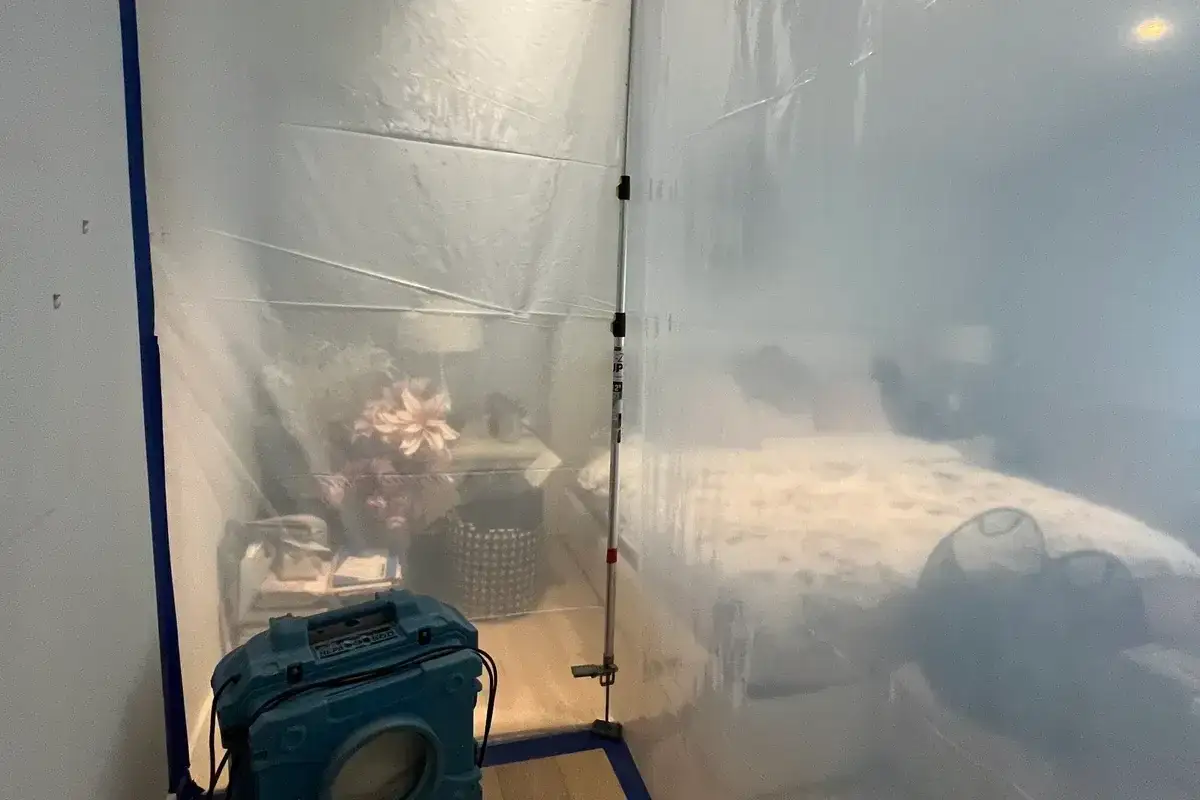
Once sewage reaches absorbent finishes, the estimate often grows in two directions at once: removal now, then rebuild later after cleaning and drying are complete.
Time also matters. EPA says most materials that cannot be thoroughly cleaned and dried within 24 to 48 hours should be discarded. TCR's sewage service pages echo that urgency by warning that waiting more than 24 to 48 hours can increase odor, replacement needs, and risk. In practice, delay gives contamination more time to wick farther into the assembly and makes the "maybe salvageable" category much smaller.
If you want a realistic estimate, ask the contractor to walk room by room and tell you what they believe is:
- cleanable and remaining in place
- removable and disposable
- dryable but still under monitoring
- likely part of the later repair scope
That conversation does more to explain the price than a generic "$X per square foot" number by itself.
How containment PPE and sanitation change the labor plan
Category 3 jobs cost more because they require more controlled work. TCR's estimator and sewage service pages both emphasize PPE, containment, engineering controls, and sanitation. Those are not decorative words in a proposal. They are part of the labor plan.
EPA says that, at minimum, people entering contaminated flood cleanup conditions should use an N-95 respirator, goggles, and gloves. TCR goes further in the restoration context by describing trained crews, controlled cleanup, and disposal pathways that most households are not set up to manage safely.
That affects price in ways owners sometimes miss:
- setup time is longer because the work zone has to be controlled
- crews may need additional protective gear and change-out procedures
- surfaces must be cleaned and disinfected in sequence, not skipped
- odor control is part of the job, but not a substitute for contamination removal
- documentation often becomes more detailed because the job risk is higher
This is one reason a suspiciously cheap sewage bid should make you nervous. If the estimate barely budgets for removal, disinfection, drying, and containment, it may be pricing a cleaner water category than the one you actually have.
Sanitation is also not the same thing as "spraying something and leaving." TCR's process breaks the work into safety assessment, containment, sewage removal, sanitization, drying and deodorizing, and restoration. That sequencing matters. If the bid compresses those steps into one vague line, ask what is really included.
Why drying and deodorizing still matter after the waste is gone
One of the most common estimate mistakes is treating sewage removal as the end of the job instead of the midpoint.
Once solids and visibly contaminated materials are out, the building still has to be dried. CDC says fans, air-conditioning units, and dehumidifiers can be used during drying, and TCR's water-damage guide says moisture levels should be checked daily until drying is complete. That matters because moisture trapped in subfloors, framing, or lower wall sections can keep driving odor, material damage, and secondary microbial growth even after the obvious waste is removed.
Drying cost depends on what remains, how wet it is, and how long it takes to reach a stable condition. TCR's Broward pricing guide lists drying equipment, antimicrobial treatment, and restoration repairs as separate contributors inside a sewage-loss scenario. That separation is important. Extraction is one phase. Drying is another. Repair is another.
A sewage job does not become inexpensive once the visible waste is removed. Controlled drying, deodorizing, and documentation are part of what keeps the property from reopening too early or rebuilding over hidden moisture.
Deodorizing also deserves realistic expectations. Odor control can help after contaminated materials are removed and the space is cleaned, but smell is not a reliable safety test. A room can smell better before it is actually ready for rebuild. That is why TCR pairs drying with moisture monitoring rather than appearance alone.
If a proposal does not clearly explain drying duration, monitoring, or what conditions have to be met before rebuild, the total number may be hiding uncertainty rather than reducing it.
What a sewage cleanup estimate should document before demolition starts
TCR's estimator explicitly tells owners to keep time-stamped photos, notes about when the event was discovered, and records from a plumber or municipality when relevant. TCR's emergency water-damage checklist also says to document the damage before cleanup and not wait for perfect claim clarity before starting mitigation.
That documentation matters for two reasons. First, it helps the contractor scope the loss correctly. Second, it helps the owner explain later why particular materials were removed, why drying continued, and why the job cost more than a superficial cleanup.
A strong file usually includes:
- wide and close-up photos before major removal
- notes on when the backup was discovered and when the source was stopped
- room-by-room notes about what sewage touched directly
- plumbing or building-system observations if a line, stack, ejector, or municipal backup is involved
- moisture readings and demolition photos as the work progresses
- invoices for emergency services, disposal, equipment, and temporary protection
For commercial properties, the file often gets broader. TCR's commercial sewage page says business clients may need photos, reports, cleaning logs, and documentation tied to insurance or compliance requirements. That does not mean every business has the same obligations, but it does mean the estimate may include a documentation burden that a simple residential loss does not.
How homeowner and commercial sewage jobs diverge
The square footage may look similar on paper, but commercial sewage cleanup is often more expensive to manage than a residential loss because the operating context changes the scope.
TCR's commercial sewage cleanup page highlights business downtime, after-hours or weekend service, multi-location coordination, and compliance documentation. It also says some business sewage events may require immediate closure because staff and customers cannot remain near the contaminated area. That is a different planning problem than a one-bathroom backup in a house.
Commercial jobs can add cost through:
- tighter isolation needs around customer or employee traffic
- after-hours scheduling to reduce disruption
- more documentation for management, landlords, or carriers
- larger common-area or corridor spread
- multiple affected functions such as restrooms, receiving, retail floor access, or food-service space
Homeowners should not read that list and assume their estimate should be lower simply because they are not a business. Deep residential penetration can still be expensive. But the comparison helps explain why two Category 3 jobs with similar visible footage can price very differently.
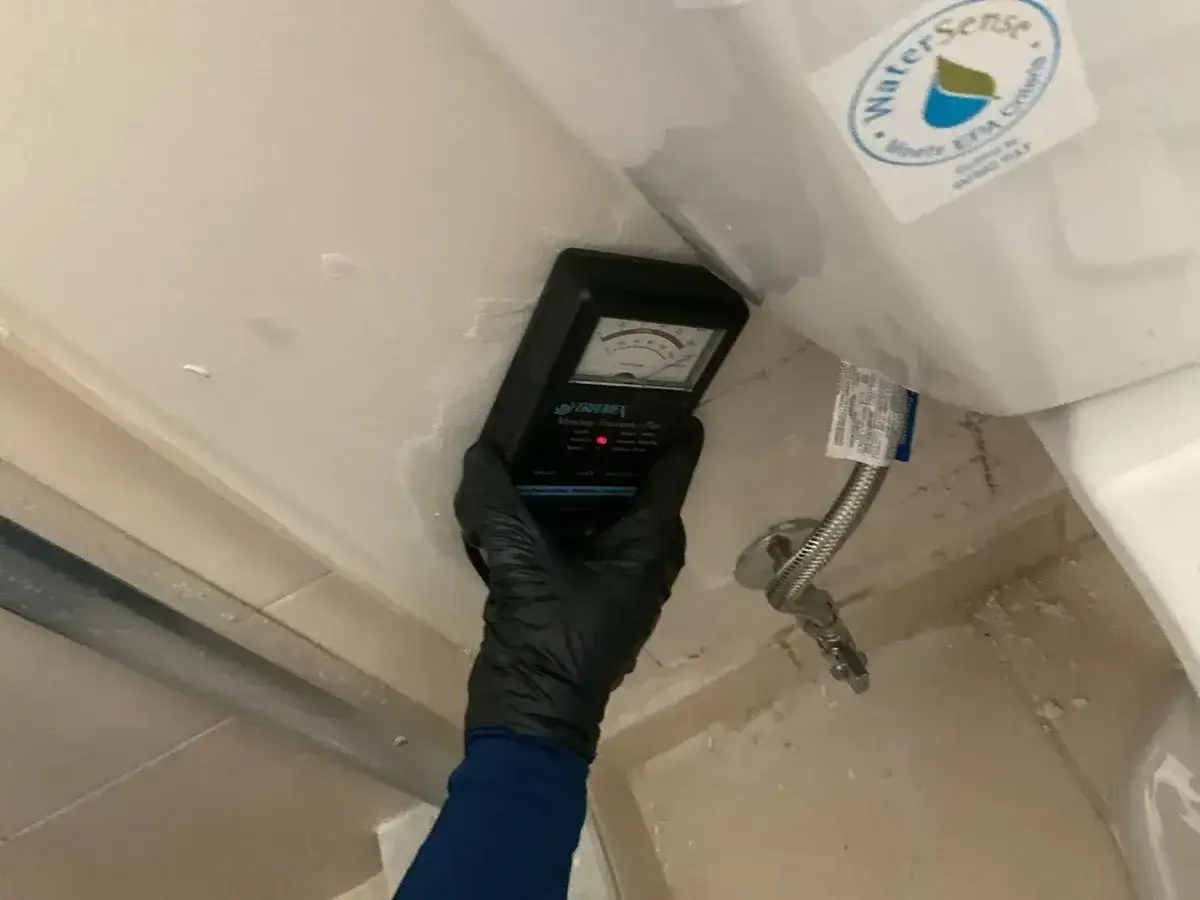
TCR's sample sewage-backup scenario range is best used as a planning reference. The real number moves with spread, penetration, demolition, drying time, and whether the property use adds more scheduling or documentation complexity.
Questions to ask before comparing sewage cleanup bids
If you only compare the total at the bottom of the page, you will miss the details that actually decide whether the number is realistic. Ask:
- What water category are you pricing, and why?
- What contaminated porous materials do you expect to remove?
- What can stay in place and be cleaned instead of replaced?
- How are spread and penetration changing the demolition footprint?
- What containment, PPE, sanitation, and disposal steps are included?
- How will drying be monitored, and what ends the drying phase?
- What documentation will you provide for the file as work progresses?
- What part of the estimate covers later restoration repairs versus mitigation only?
Those questions do not make the cleanup slower. They make the number easier to trust.
If you are dealing with a Category 3 backup in South Florida, use TCR's sewage cleanup service and estimator resources as planning tools, then get the actual property assessed before assuming the low end of any published range applies to your building. The right estimate is the one that matches the contamination path, not the one that sounds easiest to hear on day one.
This article is for general education, not medical, legal, or insurance coverage advice. Cleanup scope, salvage decisions, and documentation needs can vary by the property, the contamination path, and the people using the building, so confirm site-specific details with qualified professionals and the official sources that apply to your loss.
Want to Learn More?
Read our comprehensive guide covering everything you need to know about this topic.
The Complete Guide to Water Damage Restoration in South FloridaNeed Professional Help?
Our expert team is ready to assist with your water damage restoration needs.
View Water Damage Restoration Services