Retail Water Loss: How to Reopen Without Skipping Drying Steps
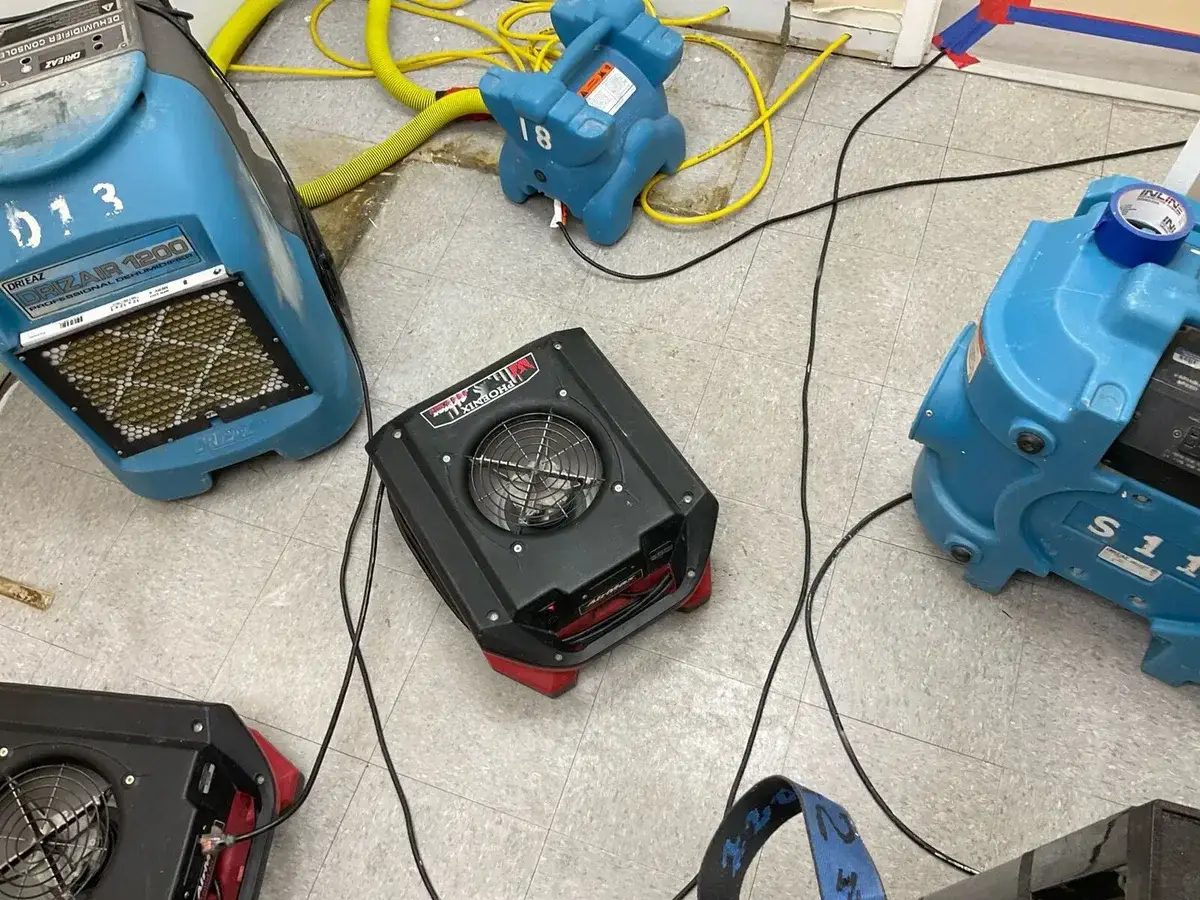
Retail water damage restoration is not only a cleanup problem. A retail water damage restoration plan is an operations problem. A store manager has to protect people, isolate wet areas, keep saleable inventory from getting worse, decide whether customer traffic can still move safely, and document enough of the loss that the recovery file still makes sense a week later.
That is why the hardest question is usually not "How fast can we reopen?" It is "What has to be true before reopening does more good than harm?" Total Care Restoration's commercial water damage restoration page frames the job around minimizing downtime while protecting inventory and equipment. That sounds simple until the wet area sits beside your front register, fitting room wall, stockroom shelving, or a back-of-house electrical panel.
The practical answer is to reopen in phases only when the wet zone is truly controlled, the dry zone can operate without new damage, and the drying plan is being verified instead of guessed. If that sounds slower than some emergency promises you hear after a loss, good. Slow enough to be accurate is usually faster than reopening twice.
| If the store looks like this | Better first move | Why |
|---|---|---|
| Water is localized, the source is stopped, and traffic can be rerouted away from the wet zone | Consider a partial reopen plan | Some revenue-producing areas may stay usable while mitigation continues |
| Water reached POS equipment, power locations, display walls, or the main customer path | Pause reopening and stabilize first | Restricted access and damaged systems create bigger operating risk than one lost day |
| There is floodwater, sewage, or uncertain contamination | Close and treat it as a controlled cleanup site | Safety steps, material removal, and disposal rules change fast |
| The floor looks dry but walls, shelving bases, or stockroom materials still test wet | Keep drying and verification going | Appearance is not proof that the structure or finishes are ready |
Commercial water losses usually become expensive when operators rush past containment and verification. The goal is not to keep every square foot open. It is to reopen the right square footage safely and defensibly.
What to secure in the first hour after retail water damage
The first hour decides whether the rest of the week feels organized or chaotic. Treat it like a sequence:
- make the area safe
- stop or isolate the source if you can do it safely
- protect customers and staff from the wet zone
- document before major cleanup starts
- start mitigation fast enough that the damage does not spread
For retail teams, "make the area safe" usually means more than putting out caution signs. OSHA says that if water has been present near electrical circuits or equipment, power should be shut off at the main breaker or fuse panel and people should not enter flooded wet areas around electrical equipment. If the leak is near registers, cooler lines, lighting, or back-room equipment, that step comes before almost everything else.
The next decision is whether this is a store problem or a building problem. Ready.gov's Business Impact Analysis guidance says disruptions should be evaluated for building damage, restricted site access, utility outages, damaged equipment, and lost information technology or data. That is a useful lens for retailers because a leak can damage much more than flooring. If customers cannot reach the sales floor, if the internet or POS system is down, or if key stock cannot be accessed, the store may be "partially open" on paper but not truly functional.
Total Care Restoration's commercial emergency restoration page says the first steps are emergency call, rapid response, immediate mitigation, assessment, and then a restoration plan. That sequence is worth copying even before a crew arrives. Do not let everyone start moving stock in random directions. Assign one person to photos and notes, one person to customer routing, and one person to inventory protection or vendor coordination.
The other first-hour mistake is assuming you can wait for perfect clarity before acting. TCR's emergency water damage checklist says to document the damage and start drying promptly instead of waiting around for the claim process to catch up. That does not mean tearing out materials recklessly. It means not letting standing water sit while people debate whose budget line will own it.
How to protect inventory POS systems and customer-facing areas
Retailers lose time twice during a water loss: once when the water hits, and again when nobody can tell what was actually damaged. Inventory protection is how you avoid the second loss.
Start by separating merchandise into three groups:
- clearly wet or directly impacted
- likely unaffected but at risk if left nearby
- dry and sellable if moved to a protected zone
That separation should happen by zone, not by memory. If a shoe wall, gondola, or folded-apparel table sat in the splash area, photograph it before you strip it. If back-stock cartons wicked water from the bottom, mark the shelf row or pallet position before moving them. If electronics, barcode scanners, receipt printers, or network gear were in the affected area, document serial numbers and cable connections before unplugging or relocating anything.
TCR's commercial water page says the goal is to protect inventory and equipment while reducing downtime. In practice, that usually means you do not wait until the entire store is perfect before protecting the most fragile or high-margin items. Move saleable stock to a clean dry zone. Get product off the floor. Keep damaged and undamaged items from blending together. If you must relocate displays, label where the product came from so the rebuild of the sales floor is not based on guesswork later.
Customer-facing areas need the same discipline. A manager is often tempted to rope off a corner and keep business moving. That can work, but only when the wet area is genuinely isolated. If customers still need to pass through the zone to reach fitting rooms, checkout, or a primary aisle, you have not really contained the problem.
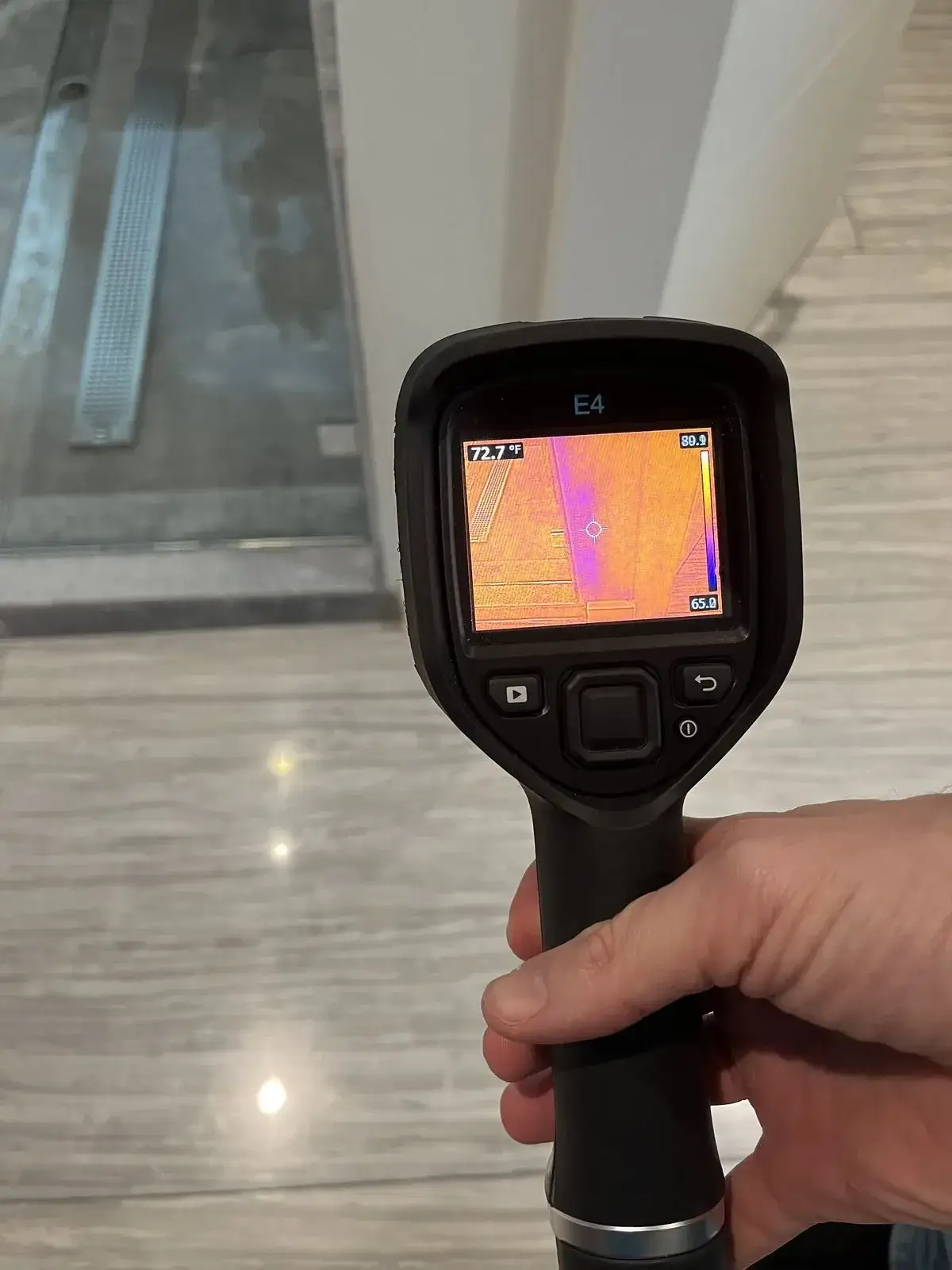
What matters is not only where water pooled. It is where moisture traveled behind finishes, under fixtures, or into equipment bases that still look normal from the sales floor.
One good operating question is: what must stay dry for the store to function tomorrow? For one retailer, that is the front register and network closet. For another, it is refrigerated display power, pharmacy stock, fitting-room access, or back-room receiving. Ready.gov says a disruption plan should identify critical business functions and the resources needed to continue operating at different levels. That is exactly the mindset retailers need in the middle of a loss: define the minimum viable store, then protect that first.
When a retail space can stay partially open and when it should close
Retailers rarely need a theoretical answer here. They need a hard, unglamorous operating call.
A partial reopen is usually more realistic when all of these are true:
- the water source has been stopped or isolated
- the wet area can be separated from customer traffic
- utilities supporting open areas are functioning safely
- affected inventory is documented and moved
- mitigation crews can work without crossing through active shoppers
- staff can supervise the rerouted layout without creating confusion
If those conditions are not true, the store is not ready for a meaningful partial reopen. It is just trying to act open.
Ready.gov says businesses should assess operational and financial impacts such as lost sales, delayed income, increased expenses, and customer dissatisfaction. That is helpful because it pushes managers to compare two real costs: the cost of staying closed longer versus the cost of reopening into a layout that creates more damage, more shrink, more confusion, and a worse documentation trail.
Stores usually need a fuller closure when the main sales path is wet, the back room is still unstable, the HVAC or electrical situation is uncertain, or the affected area touches critical systems that staff cannot safely bypass. TCR's commercial emergency page says business operations may sometimes be phased and prioritized by area. The key word is "sometimes." Phasing is a strategy, not a requirement.
There is also a difference between "customers can walk in" and "the store has reopened well." If your staff is still moving wet stock by hand through open aisles, if register equipment is running on temporary improvisation, or if a contractor has to cross public space every few minutes with extraction hoses and demo debris, the store may be technically accessible but operationally messy.
Why drying verification matters more than how the floor looks
Retail losses get underestimated when operators trust the eye test. The surface looks dry. The puddle is gone. The smell faded. People want to move on.
That is exactly when hidden moisture wins.
Total Care Restoration's water-damage guide says moisture often hides behind walls and under floors and that technicians use thermal imaging and moisture meters to track it. The same guide says those readings should be checked daily until drying is complete. Its dry-out process article adds a detail retail operators often need to hear plainly: many standard water-damage jobs still take three to five days to dry thoroughly, and meters guide technicians on when drying is actually complete.
That matters in stores because finishes and fixtures hide the problem better than open residential rooms do. Base cabinets, wall displays, slatwall, dressing platforms, stockroom shelving, and laminate or LVP flooring can all make the area look improved while moisture remains trapped below or behind them.
EPA's flood cleanup guidance makes the same point from a different angle. It says moisture meters can help determine whether walls, cabinets, and flooring are dry enough for refinishing and notes that wet materials should be fully dried before that rebuild step. In other words, reopening and rebuilding are not the same milestone.
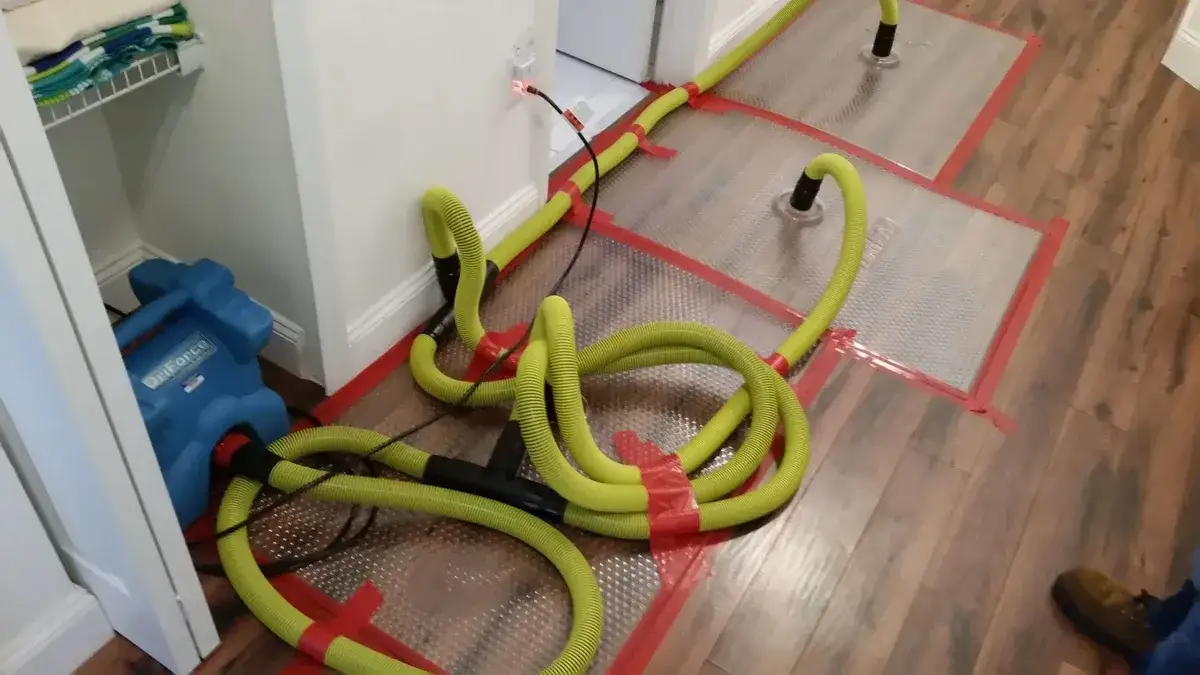
A floor that no longer shines with standing water may still be part of an active dry-out. The smarter question is not “Does it look better?” but “What readings say this assembly is actually ready?”
Ask for the logic behind the drying call:
- What materials were wet?
- Which ones are still being monitored?
- Where were the highest readings?
- What changed since yesterday?
- What still needs removal, not just air movement?
You do not need to become a restoration technician to manage a retail loss. You do need enough measurement-backed explanation to know whether the reopening plan is based on real progress or on pressure to make the problem look smaller.
When after-hours mitigation helps and when it does not
After-hours mitigation is one of the most useful commercial tools on TCR's service pages, and it is also one of the easiest promises to misunderstand.
When it helps:
- the store has a stable dry zone that can trade during business hours
- noisy or obstructive work can be pushed to evenings
- crews need uninterrupted access to aisles, stockrooms, or counters
- equipment placement would otherwise interfere with shoppers
- the operator is trying to shorten visible downtime without hiding the wet work
When it does not solve the problem:
- the source is still active
- contaminated water is involved
- electrical or structural conditions remain unsafe
- inventory decisions have not been documented yet
- public paths cannot be separated from the work zone
TCR's commercial pages repeatedly tie after-hours work to minimal disruption and faster business recovery. That is the right frame. After-hours work is valuable because it gives crews space to extract, tear out, monitor, or reset equipment without fighting customer traffic. It is not a magic way to keep a wet store functioning as normal.
A good manager question is: "What work specifically gets easier or safer tonight?" If the answer is targeted demolition, equipment repositioning, deeper extraction, or uninterrupted monitoring access, after-hours mitigation is likely helping. If the answer is just "we do not want customers to see it," you probably still have a decision problem rather than a scheduling solution.
What documentation supports the property and business-interruption file
Good documentation makes the operational story legible. Bad documentation creates a stack of wet receipts, vague staff memories, and photos nobody can match to the right room.
TCR's emergency checklist says to photograph the damage before cleanup and make a detailed list of damaged items. Ready.gov says a disruption plan should capture lost sales, delayed income, increased expenses, and other impacts. The SBA says disaster planning should identify and document critical business functions and processes, and that declared-disaster recovery assistance can apply to damaged inventory, equipment, and other business assets.
That does not mean every retailer should assume one federal checklist or one insurance workflow applies to every loss. It does mean your documentation should be built as if another person will need to understand the loss without having been there.
At minimum, keep:
- dated wide shots and close-ups of each affected area
- a list of damaged or relocated inventory by zone
- serial numbers or asset tags for affected POS, network, or specialty equipment
- manager notes about when the leak was discovered, when the source was stopped, and when drying began
- vendor invoices, emergency purchases, overtime labor notes, and temporary protection receipts
- drying logs, equipment maps, and demolition notes from the mitigation team
- notes on what functions were interrupted first: checkout, receiving, stock access, refrigeration, fitting rooms, or office/admin
Use one running file, not six disconnected conversations. When photos sit in one phone, receipts in another folder, and vendor notes only in text messages, the business file gets weaker just when the costs start rising.
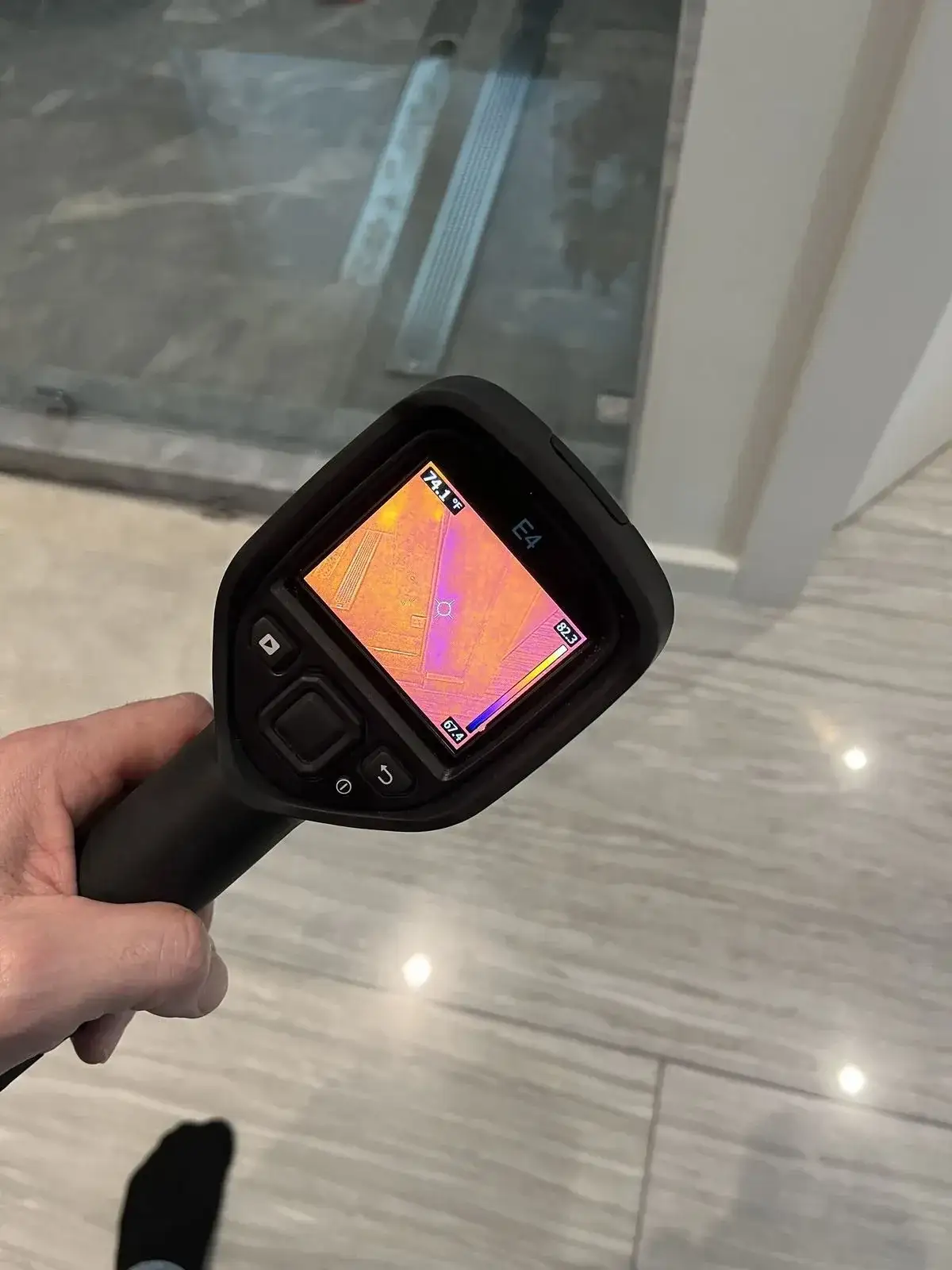
The documentation job starts while the damage still looks fresh and understandable. That is when the store can still show what was wet, what was moved, and what business function each affected area controlled.
How contaminated water changes the reopening plan
This is where optimism gets expensive.
TCR's commercial and residential water pages both divide losses by water category for a reason. Category 1 clean water, Category 2 gray water, and Category 3 black water do not create the same reopening decision. If floodwater, sewage, drain backup, or other uncertain contamination touched the retail area, the store is no longer deciding only how fast it can dry. It is deciding what can stay, what must be removed, and who should be in the space at all.
EPA says materials that soak up a lot of water and cannot be cleaned and dried should be discarded, while non-absorbing materials can often be cleaned and dried. It also says mold can grow when wood, drywall, carpet, or furniture stay wet for more than 24 hours. OSHA adds that mold work areas should be ventilated and that eye, hand, and respiratory protection should be used during cleanup.
The takeaway for retailers is simple: contaminated losses are poor candidates for “keep half the store open and hope the rest catches up.” Once uncertain water quality enters the picture, the reopening threshold gets stricter. Materials decisions, worker protection, and disposal steps all become more important than short-term floor availability.
Questions to ask before reopening the sales floor
Before you reopen, ask the mitigation lead or internal ops team these questions:
- What readings say the reopen zone is actually dry enough to use?
- Which walls, bases, display runs, or stockroom sections are still being monitored?
- Can customers move through the store without crossing the work zone or equipment path?
- Have damaged and undamaged inventory been separated and documented by area?
- What business functions are still impaired even if the front door is unlocked?
- What work is scheduled after hours, and what risk does that work remove?
- If the loss involves contaminated water, what must be removed or professionally cleaned before traffic returns?
Those questions do not slow recovery down. They keep recovery from becoming performance.
If your store is dealing with active moisture spread, inaccessible wet zones, or competing pressure between reopening and proper drying, use a commercial crew that can explain the sequence as clearly as the equipment. Total Care Restoration's commercial water damage restoration service is built for that kind of coordination-first response.
This guide is for general education, not legal, accounting, or coverage advice. Reopening decisions, worker-safety obligations, and claim documentation can vary by the building, the water source, and the policy or lease in play, so confirm the details on the official site and with your own advisors when the loss is significant.
Want to Learn More?
Read our comprehensive guide covering everything you need to know about this topic.
The Complete Guide to Water Damage Restoration in South FloridaNeed Professional Help?
Our expert team is ready to assist with your water damage restoration needs.
View Water Damage Restoration Services