Commercial Roof Leak Emergency During Business Hours: What to Do First
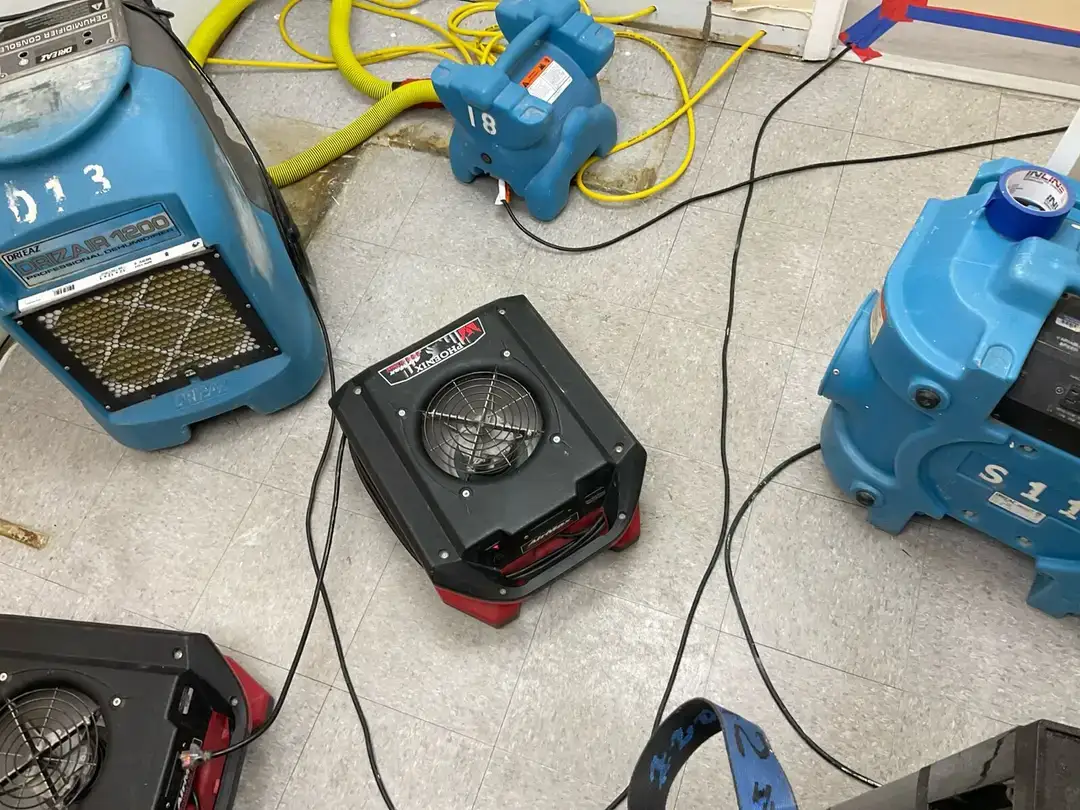
A commercial roof leak emergency becomes an operations problem almost immediately. The leak is not only about roofing. It is about whether customers or tenants can move safely, whether inventory or equipment is taking on water, whether the wet zone can be isolated, and whether the building is still accumulating damage while people argue about the next step.
That is why the best first move is rarely "keep business as normal and hope the drip slows down." Total Care Restoration's commercial emergency restoration page frames the job around rapid stabilization, reduced downtime, and documented response. Ready.gov's Business Impact Analysis guidance gives the same situation a broader business lens: building damage, restricted site access, utility outages, damaged equipment, and IT disruption all affect whether the business can still function at different levels.
So the right question is not "Can we stay open?" It is "What has to be true before staying open stops making the loss worse?"
| If the leak looks like this | Better first move | Why |
|---|---|---|
| Dripping is limited, the wet zone is small, and traffic can be cleanly rerouted | Consider a tightly controlled partial-operations plan | Some revenue-producing space may stay usable while mitigation begins |
| Water reached the main customer path, POS area, server closet, or critical tenant access point | Pause operations and stabilize first | Restricted access and damaged systems can create a bigger loss than one more hour of closure |
| The ceiling is sagging, utilities may be wet, or the source is still active during rain | Treat it as an emergency response event | The building may still be taking damage while people are inside it |
| The puddle looks smaller, but walls, shelving bases, or ceiling materials may still be wet | Keep drying and verification going | Appearance is not proof that the assembly is ready |
The point of a response plan is not to look busy. It is to stabilize the leak, preserve whatever can keep operating, and verify what still needs drying before pressure from customers, tenants, or staff takes over the decision-making.
What to do in the first 15 minutes
The first 15 minutes should feel structured, not dramatic.
Start with people and utilities before property. If water has been near electrical circuits or equipment, OSHA says power should be turned off at the main breaker or fuse panel and flooded wet areas should not be entered around electrical equipment. If the area may be structurally unstable, OSHA's hurricane recovery guidance says access should stay limited until the space has been evaluated and the floors or affected areas are known to be stable.
For a manager, that usually means:
- keep customers, visitors, or non-essential staff out of the wet zone
- shut down exposed electrical areas if it is safe to do so
- protect the primary circulation path so no one is walking under active dripping or sagging materials
- photograph the area before major cleanup changes the scene
- call for the right kind of help: emergency roof protection, water mitigation, electrician, building engineer, or all three
Total Care Restoration's commercial emergency guidance tells businesses to document damage with photos, move valuables if possible, and turn off HVAC when contamination could spread. That matters because a commercial leak often starts looking like a roofing problem and ends up becoming a ceiling, drywall, equipment, or odor problem if air movement or foot traffic spreads it farther than necessary.
A useful first-minute rule is simple: if the route to staying open requires customers to walk under the leak, around extraction hoses, or through a space where the ceiling or floor condition is still uncertain, you do not really have a safe operating plan yet.
How to protect customers tenants inventory and equipment
Once the area is stable enough to work around, the next job is separation.
Do not treat the building as one undifferentiated mess. Divide it into:
- the wet zone
- the threatened zone immediately next to it
- the dry zone you are trying to preserve
That is how you keep a roof leak from turning into a whole-building disruption.
Ready.gov says a disruption plan should identify the critical business processes and resources needed for the business to continue functioning at different levels. In plain English, that means figuring out what absolutely has to stay usable today. For one business, that is a front counter and POS system. For another, it is a pharmacy pickup line, an office server closet, a receiving lane, or a tenant-access corridor.
Protect those functions first. Move portable inventory out of the threatened zone. Get merchandise, files, and electronics off the floor. Photograph shelving runs, display walls, or stored materials before moving them so the loss record still shows what was where. If the leak is affecting a tenant space, shared corridor, or retail entrance, note exactly which path is restricted and when that restriction started.
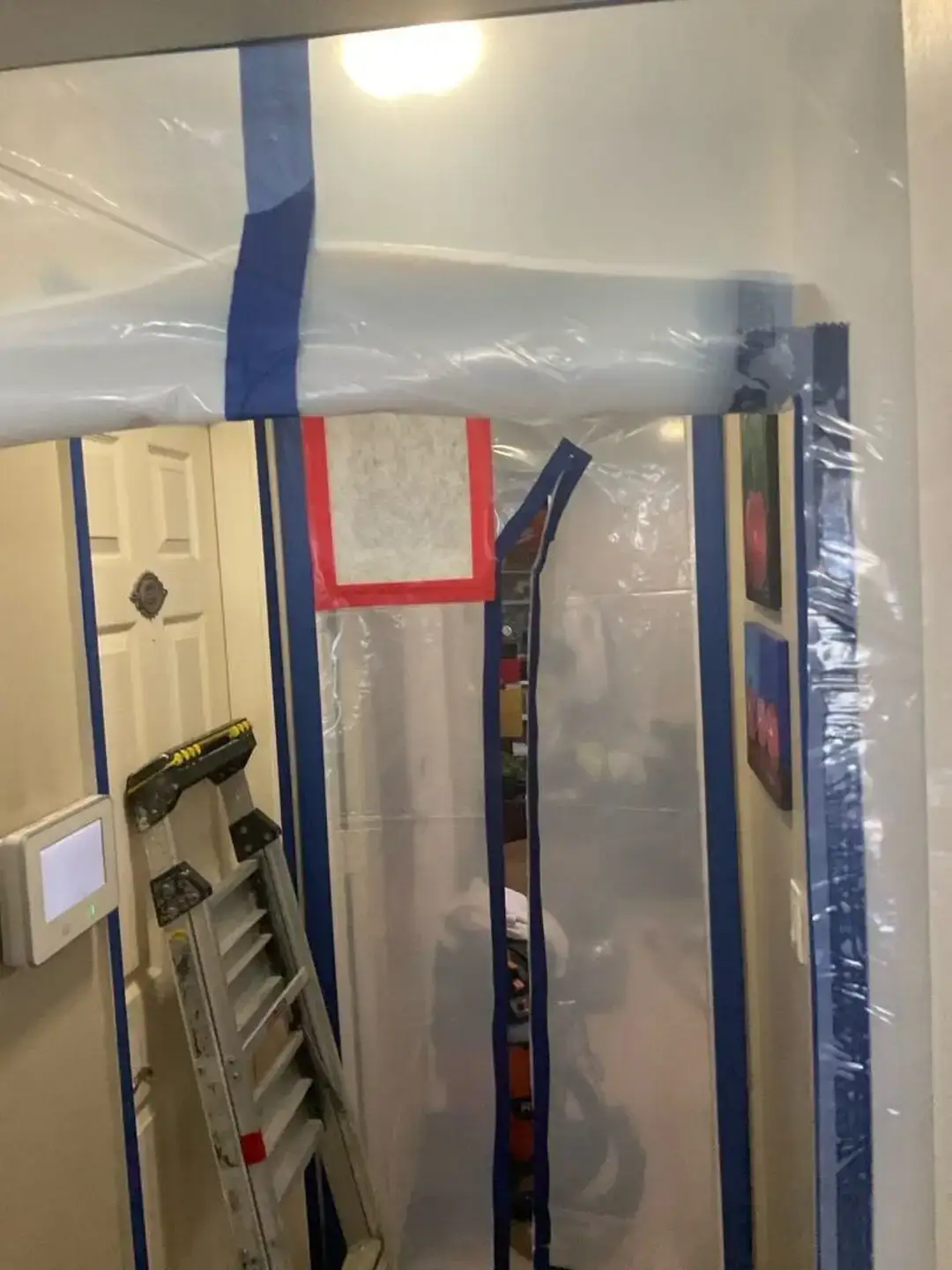
Containment is not cosmetic. It is how you keep customers or tenants out of the work area while preserving whatever part of the building can still operate cleanly.
Containment is often the difference between a real partial-operations plan and wishful thinking. If the public path crosses the work zone, if wet ceiling debris could still fall, or if employees need to cross in and out of the area every few minutes with product carts, the zone is not meaningfully separated.
Total Care Restoration's commercial pages repeatedly tie emergency work to protecting inventory and reducing downtime. That should not be read as "stay open at all costs." It should be read as "protect the business functions that can genuinely be protected while you isolate the rest."
When emergency roof protection is only one part of the response
Emergency roof protection matters because the building may still be losing the race while it is raining.
TCR's commercial roof-tarping page says tarping is a temporary but effective way to stop more rain, wind, and water intrusion while permanent repairs are arranged. The same page also says the commercial process includes emergency assessment, safety setup, installation, secure sealing, and documentation. That is useful because it keeps the scope honest: a tarp is part of the stabilization strategy, not the full solution.
This is especially important on commercial roofs. TCR says the common triggers include low-slope roof leaks, failed drains and scuppers, parapet or coping problems, storm openings, and multi-tenant buildings that need phased emergency weatherproofing. Those are not one-bucket-under-the-drip situations. They are building-envelope problems that can keep feeding the interior loss even after the first visible water slows down.
TCR's Hialeah roof-leak guidance adds another detail managers tend to underestimate: water can travel along rafters and decking before it shows up below. By the time the stain or drip appears in the occupied space, the spread may already include insulation, upper wall areas, ceiling cavities, or adjacent rooms.
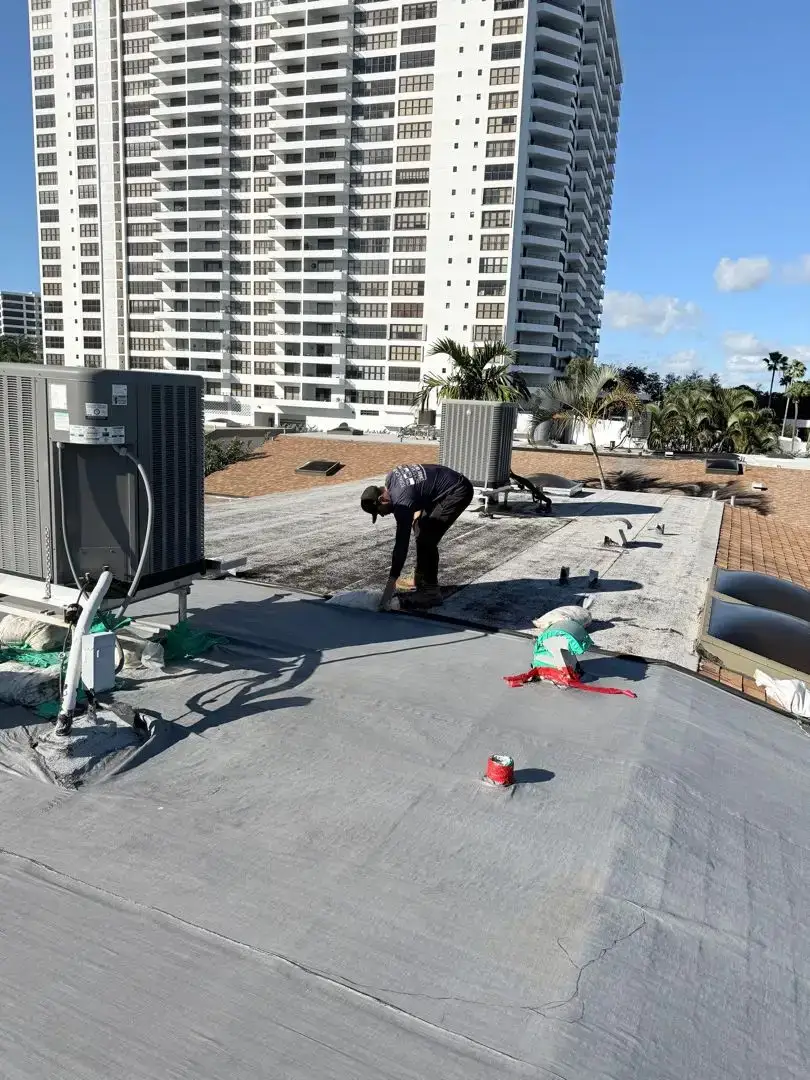
Emergency roof protection buys time against additional weather, but it works best when the business also records what changed before and after the tarp went on inside the building.
So yes, call for emergency roof protection when rain is ongoing or more rain is expected. But do not stop the plan there. The interior side still needs:
- extraction or cleanup where water has collected
- ceiling and wall assessment
- moisture mapping
- containment or access control
- a record of what changed after temporary weatherproofing was installed
That is how you keep the business from mistaking a slower drip for a finished response.
When a business can keep operating and when it should close
There is no badge for reopening too early.
A business can sometimes keep operating in a reduced or phased way when all of these are true:
- the source has been stabilized or is being actively controlled
- the wet zone is separated from customers, tenants, or non-essential staff
- critical utilities serving the open area are safe and functioning
- affected inventory and equipment have been moved, protected, or documented
- crews can work without repeatedly crossing public traffic
- management can clearly explain which areas are open and which are not
If those conditions are not true, a closure or deeper restriction is usually the cleaner decision.
Ready.gov recommends evaluating operational and financial impacts such as lost sales, delayed income, increased expenses, and customer dissatisfaction. It also says the highest-impact functions should be restored first. That framework helps because it changes the question from emotion to sequence. Maybe the showroom can open, but the back stock area cannot. Maybe tenant offices can operate remotely while the lobby and affected suite stay closed. Maybe a restaurant can keep administrative functions moving while the dining room and prep area remain offline.
What should usually force a harder stop?
- wet or unreliable electrical conditions
- dripping above the main customer or tenant route
- active ceiling sagging or unstable finishes
- contamination or uncertain water quality
- no clean way to separate the work zone from normal operations
- critical equipment, IT, or life-safety functions in the affected area
Partial operation is only helpful when it is genuinely controlled. Otherwise, it becomes a slower way to create more downtime.
Why interior drying verification matters after the drip slows down
This is the part many businesses get wrong because the room starts to look better before it is actually ready.
Total Care Restoration's commercial water damage restoration page says crews use thermal cameras and moisture meters to find hidden water behind walls and under floors. TCR's roof-leak guidance also says drying commonly takes about three to five days depending on the extent of damage. That should reset expectations right away. A smaller visible puddle does not mean the ceiling cavity, wall base, insulation, or flooring assembly is done drying.
EPA makes the same point in broader flood-recovery guidance: everything needs to be completely dry before refinishing or replacing walls and flooring, and if the space is not clearly dry, clean, and free of musty odor, a more detailed inspection using moisture and indoor-environment measurements is recommended.
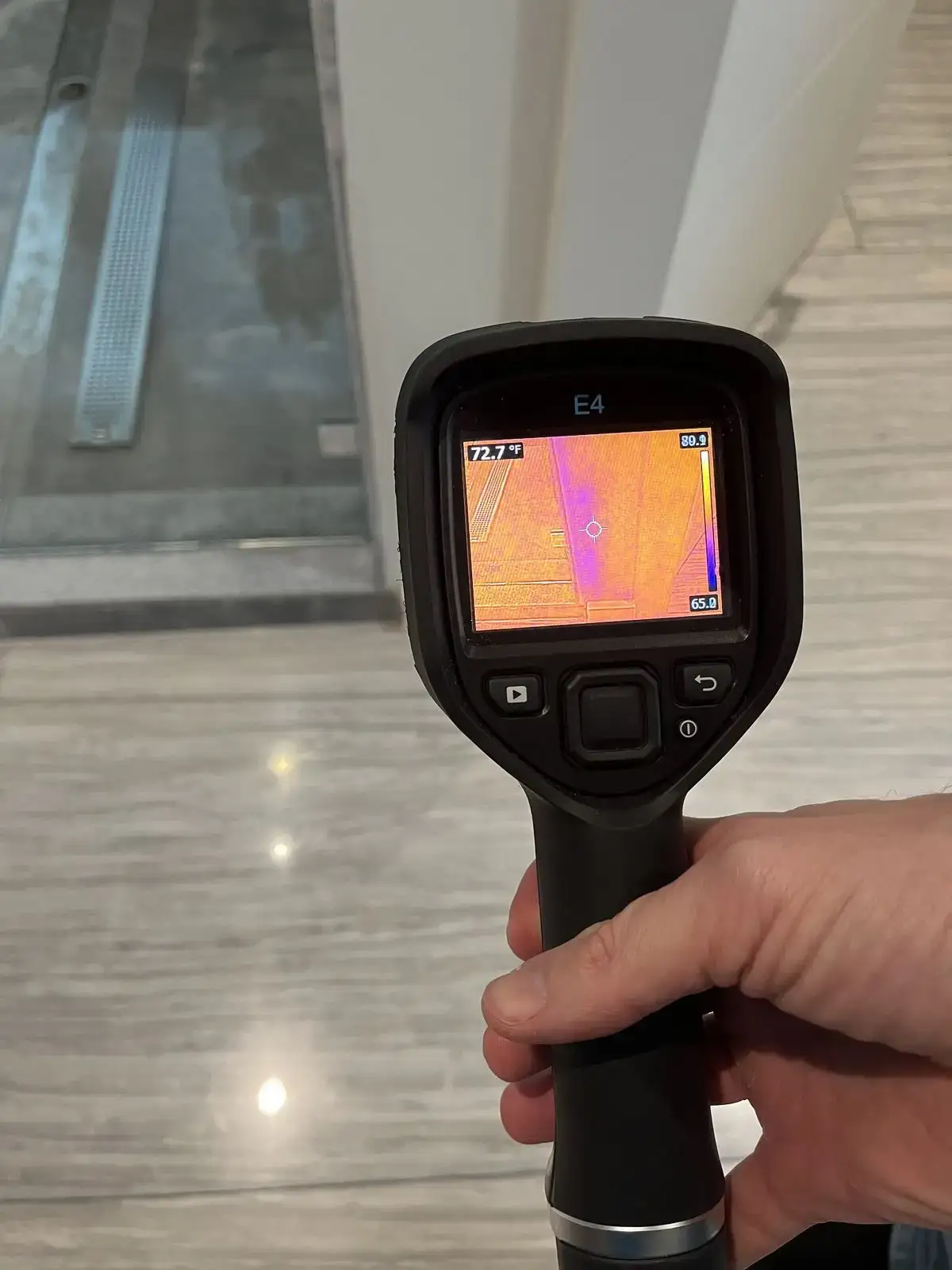
A room can look calmer long before it is ready. Hidden moisture in ceiling cavities, wall bases, and floor assemblies is why measurement matters more than appearance.
Commercial properties have extra hiding places. Water can track above grid ceilings, behind tenant demising walls, inside display bases, into stockroom materials, or under flooring transitions where no one is looking once the bucket is no longer filling. That is why drying verification should answer real questions:
- Which materials were wet?
- Which ones are still being monitored?
- Where were the highest readings?
- What improved since the last check?
- What still needs removal instead of more air movement?
If the answer to those questions is vague, the building is being managed by appearance rather than by evidence.
How after-hours mitigation helps and where it does not
After-hours mitigation is one of the most valuable commercial tools in TCR's service pages, and it is also one of the easiest phrases to misunderstand.
It helps when:
- work would block normal customer or tenant flow during the day
- crews need uninterrupted access for extraction, containment, or drying setup
- demolition, cleanup, or equipment repositioning would be safer without public traffic
- the business has a true dry zone that can operate once the active work pauses
It does not solve the problem when:
- the leak is still actively feeding the interior loss
- the building is not yet safe to occupy
- contamination changes the cleanup rules
- the open area still depends on utilities or access routes inside the wet zone
- management is using night work to avoid acknowledging a needed closure
TCR's commercial emergency guidance says the team can work in phases and use nights or weekends to reduce lost time. That is smart when the business already has a stable operating plan. It is not a substitute for one.
A practical manager question is: what specific risk gets removed tonight? If the answer is deeper extraction, safer demolition, containment reset, or better equipment access, after-hours work is probably doing real good. If the answer is only "customers will not see it," the business may still be avoiding the harder operating decision.
What documentation the manager roofer and mitigation team should keep
Good documentation keeps the business story readable after the leak is no longer in front of everyone's face.
TCR's commercial emergency page says it documents everything for insurance and works with property managers, landlords, and corporate offices. TCR's commercial roof-tarping process also includes photo documentation. Pair that with Ready.gov's reminder to track operational and financial impacts, and the business has a clear starting point for the file.
Keep one running record with:
- time the leak was discovered
- the first photos and videos of the scene
- affected rooms, suites, aisles, or tenant areas
- utilities or systems shut down
- what inventory or equipment was moved and where
- who installed temporary protection and when
- moisture checks, drying updates, and changed conditions
- invoices, emergency purchases, and labor notes
- which functions were interrupted first: sales floor, receiving, POS, office, tenant access, or storage
This does not guarantee how any insurer, landlord, or lease document will treat the loss. It does make the facts easier to follow. And that matters when a roofing contractor, mitigation team, property manager, and business owner are all describing the same event from different angles.
One simple rule helps here: keep temporary weatherproofing, interior mitigation, and permanent repair scope clearly separated. That boundary prevents the file from becoming one vague pile of charges and assumptions.
When contamination electrical risk or structural instability changes the plan
Some leaks stay in the "roof plus water damage" lane. Others do not.
If contamination is involved, if utilities may still be energized, or if structural stability is uncertain, the plan should get stricter fast. TCR's commercial water page separates Category 1, 2, and 3 losses because each needs different safety steps. OSHA's flood and hurricane recovery guidance says access should stay limited when stability is unknown, utilities may need qualified shutdown help, and electrical hazards should be treated carefully until proven safe.
That means the building should move away from a casual partial-operations mindset when:
- dirty water or sewage may have entered the space
- gas or electrical hazards are possible
- ceiling materials, decking, or floors may be unstable
- the wet area cannot be isolated from essential traffic
- people would need to work around hazards they do not fully understand
The bigger practical point is not technical heroics. It is humility. A commercial roof leak during open hours can start looking manageable precisely when it is still spreading where you cannot see it.
If you need a South Florida team that can coordinate commercial emergency restoration and commercial roof tarping in the right order, get help before the building's operating pressure starts writing the plan for you.
This article is for general educational purposes, not legal, lease, accounting, or insurance-coverage advice. Building conditions, worker-safety duties, and claim requirements vary by property and loss type, so confirm next steps with qualified restoration, roofing, electrical, and insurance professionals when the leak is significant.
Want to Learn More?
Read our comprehensive guide covering everything you need to know about this topic.
The Complete Guide to Storm Damage Restoration and Roof Protection in FloridaNeed Professional Help?
Our expert team is ready to assist with your storm damage restoration needs.
View Storm Damage Restoration Services